
Grass Types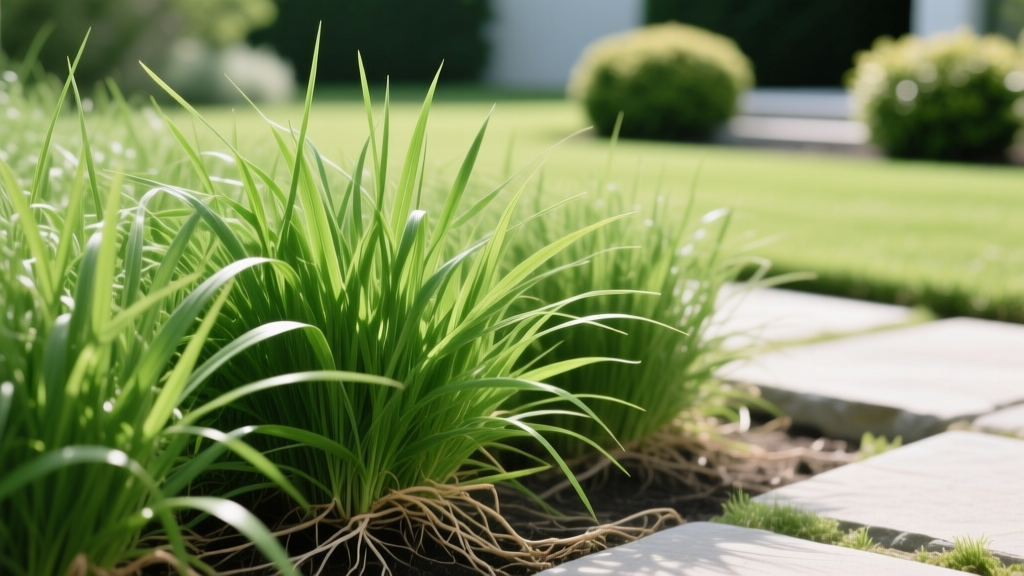
Common Bermuda Grass Pictures: Visual ID, Traits, and Care Guide
Decoding Common Bermuda Grass Pictures: Key Visual Identifiers
When homeowners search for common bermuda grass pictures, they are typically trying to solve a specific lawn mystery: Is my grass common or a sterile hybrid? Is this patch a weed? Is this discoloration a disease? Because Cynodon dactylon (common bermudagrass) spreads aggressively via both above-ground stolons and below-ground rhizomes, accurate visual identification is the first step toward effective warm-season turf management.
To accurately identify common bermuda grass from visual references, focus on the collar region and leaf architecture. Unlike fine-bladed hybrids, common bermuda exhibits distinct botanical markers:
- Ligule: The most definitive visual marker. Common bermuda features a membranous ligule with a distinct fringe of white hairs (ciliate margin). Hybrids typically have a shorter, less hairy ligule.
- Vernation: Emerging leaves are folded in the bud, not rolled.
- Leaf Width: Ranges from 3mm to 5mm, presenting a noticeably coarser texture than improved cultivars.
- Seed Heads: Common bermuda produces 3 to 7 finger-like spikes in a whorl at the top of the stem. If your lawn is constantly throwing up aggressive seed heads even when mowed low, it is almost certainly common bermuda or a seeded variety, not a sterile hybrid like Tifway 419.
- Auricles: Absent. If you see claw-like auricles grabbing the stem, you are looking at a cool-season grass like tall fescue or ryegrass, not bermuda.
Expert Tip: The Pull Test
If pictures of the collar region are too blurry to confirm, perform a physical pull test. Grab a handful of stolons and pull upward. Common bermuda possesses deep, wiry rhizomes that will snap with a distinct 'pop' and resist shallow extraction, whereas annual weeds like crabgrass will pull out easily with shallow, fibrous roots.
If pictures of the collar region are too blurry to confirm, perform a physical pull test. Grab a handful of stolons and pull upward. Common bermuda possesses deep, wiry rhizomes that will snap with a distinct 'pop' and resist shallow extraction, whereas annual weeds like crabgrass will pull out easily with shallow, fibrous roots.
Common vs. Hybrid Bermuda: A Visual Comparison Matrix
Understanding the visual differences between common bermuda and vegetative hybrids is critical for setting proper mowing heights and fertilizer expectations. Hybrids require reel mowers to achieve their intended visual density, while common bermuda thrives under standard rotary mowers.
| Visual Trait | Common Bermuda (C. dactylon) | Tifway 419 (Hybrid) | Celebration Bermuda |
|---|---|---|---|
| Leaf Texture | Coarse (3-5mm width) | Fine (1-2mm width) | Medium-Fine, stiff |
| Color | Light to medium green | Deep, dark green | Deep blue-green |
| Seed Head Production | Heavy and aggressive | None (Sterile) | Very minimal |
| Ideal Mowing Height | 1.5 to 2.5 inches | 0.5 to 1.5 inches | 0.5 to 1.5 inches |
| Growth Habit | Open, aggressive lateral spread | Dense, tight canopy | Dense, heavy stolon mat |
Diagnosing Visual Stress: What Your Lawn is Telling You
Visual diagnosis extends beyond species identification; it encompasses recognizing environmental and pathological stress. Warm-season turf exhibits specific visual symptoms when nutrient-deficient or under fungal attack.
Nitrogen Deficiency vs. Iron Chlorosis
A common mistake is confusing nitrogen starvation with iron deficiency. If the entire leaf blade, including the vein, turns pale yellow or light green, and older leaves are affected first, your turf lacks nitrogen. Apply a fast-release nitrogen source like urea (46-0-0) at a rate of 0.5 lbs per 1,000 square feet. Conversely, if the leaf veins remain dark green while the interveinal tissue turns yellow (chlorosis), particularly in high-pH soils, you are looking at iron deficiency. Treat this with a chelated iron spray (Fe-EDDHA) rather than granular soil amendments, which will quickly tie up in alkaline soils.
Spring Dead Spot (Ophiosphaerella korrae)
When reviewing pictures of your lawn in early spring, you may notice sunken, bleached, circular patches ranging from 6 inches to several feet in diameter. This is Spring Dead Spot (SDS). The fungus attacks the roots and stolons in the fall when soil temperatures drop below 70°F, but the visual damage only appears during spring green-up. Clemson University Extension emphasizes that fall preventative fungicide applications are the only reliable control method. Apply Azoxystrobin or Propiconazole in September and October when soil temperatures are between 70°F and 80°F.
Dollar Spot (Clarireedia jacksonii)
Look for small, silver-dollar-sized bleached lesions on the leaves, often with a distinct hourglass shape and dark brown borders. During early mornings with heavy dew, you may visually spot mycelium resembling cobwebs spanning the lesions. Immediate treatment with a contact fungicide like Chlorothalonil or a systemic like Fluxapyroxad will halt the spread.
Warning: The Thatch Trap
Common bermuda grass produces massive amounts of lignin-rich stolon tissue. If your visual inspection reveals a spongy feel underfoot and a thatch layer exceeding 0.5 inches, water and fungicides will not penetrate the soil profile. You must perform aggressive vertical mowing (dethatching) in late May or early June when the grass is actively growing and can recover rapidly.
Common bermuda grass produces massive amounts of lignin-rich stolon tissue. If your visual inspection reveals a spongy feel underfoot and a thatch layer exceeding 0.5 inches, water and fungicides will not penetrate the soil profile. You must perform aggressive vertical mowing (dethatching) in late May or early June when the grass is actively growing and can recover rapidly.
Step-by-Step Visual Maintenance Calendar
Maintaining the visual density and color of common bermuda requires strict adherence to soil temperature triggers rather than calendar dates.
- Pre-Emergent Application (Soil at 55°F): Apply Prodiamine at 1.5 oz per 1,000 sq ft to create a chemical barrier against crabgrass and goosegrass before they visually emerge.
- Initial Green-Up (Soil at 65°F): Do not apply nitrogen while the grass is still visually dormant. Wait until you see 50% green-up to apply a 15-0-15 starter fertilizer with 2% iron to boost early color without forcing tender growth that could be killed by a late frost.
- Peak Summer (June-August): Mow every 4 to 5 days at 1.5 inches. Apply 1 lb of nitrogen per 1,000 sq ft monthly. Visually monitor for white grubs; if you count more than 5 per square foot by lifting the sod, apply Imidacloprid immediately.
- Fall Transition (September-October): Lower the mowing height to 1 inch to reduce the canopy that harbors SDS fungus. Apply the aforementioned preventative fungicides. Stop all nitrogen applications to force the plant to store carbohydrates in its rhizomes for winter.
Look-Alike Weeds: Don't Confuse These in Your Pictures
When comparing your lawn to common bermuda grass pictures online, ensure you aren't accidentally identifying invasive warm-season weeds that mimic bermuda's growth habit.
Dallisgrass (Paspalum dilatatum): Often mistaken for bermuda due to its aggressive stoloniferous spread. However, Dallisgrass has a prominent, pointed, membranous ligule with no hairs, and its seed heads are arranged alternately along the stem rather than in a whorl. It also features a distinct clumping growth habit in the center of the patch. Control requires selective herbicides containing MSMA or careful spot-treatment with glyphosate, as standard 2,4-D blends will not kill it.
Crabgrass (Digitaria sanguinalis): Visually, crabgrass is lighter green, grows in a star-shaped pattern from a central taproot, and lacks the deep, wiry rhizomes of bermuda. According to Texas A&M Aggie Turf, maintaining a dense bermuda canopy mowed at 2 inches is the best visual and physical deterrent against crabgrass invasion, as crabgrass seeds require direct sunlight to germinate.
Summary: Mastering Your Turf's Visual Language
Key Takeaways for Common Bermuda Care:
- Verify the hairy ligule and whorled seed heads to confirm common bermuda over sterile hybrids.
- Maintain a 1.5 to 2.5-inch mowing height using a sharp rotary blade to prevent tip shredding and gray visual decay.
- Treat Spring Dead Spot preventatively in the fall, not reactively in the spring when the visual damage is already done.
- Differentiate between nitrogen deficiency (uniform yellowing) and iron chlorosis (interveinal yellowing) before applying fertilizers.
By training your eye to read the specific visual cues of Cynodon dactylon, you transition from reactive lawn care to proactive turf management. Accurate identification dictates your mowing strategy, your chemical inputs, and ultimately, the long-term resilience of your warm-season landscape.

