Grass Types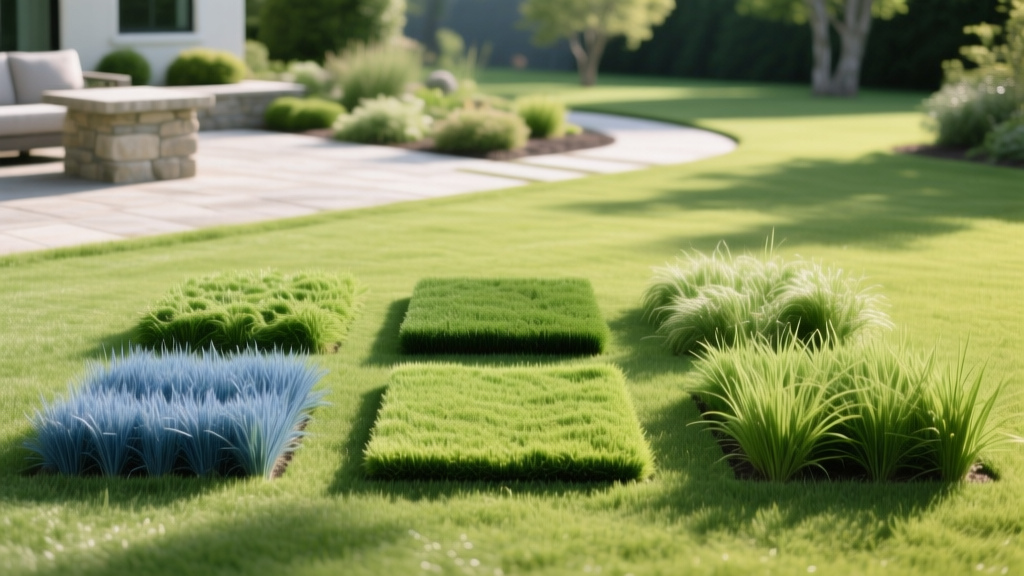
2026 Cost of Laying Sod Grass: Pricing, Coverage, and Hidden Fees
The 2026 Baseline: Material vs. Labor Costs
When calculating the cost of laying sod grass, homeowners often only look at the price tag at the local garden center. In 2026, supply chain shifts, diesel surcharges, and increased fertilizer costs have pushed farm-direct sod prices higher than historical averages. The national average cost of laying sod grass ranges from $1.00 to $2.50 per square foot fully installed. However, breaking this down into material and labor reveals where your budget is actually going.
2026 Quick Cost Snapshot:
• Sod Material Only: $0.35 – $0.90 per sq. ft.
• Professional Labor (Installation): $0.50 – $1.20 per sq. ft.
• Soil Prep & Grading: $0.25 – $0.80 per sq. ft.
• Average 5,000 sq. ft. Lawn Total: $5,000 – $12,500
• Sod Material Only: $0.35 – $0.90 per sq. ft.
• Professional Labor (Installation): $0.50 – $1.20 per sq. ft.
• Soil Prep & Grading: $0.25 – $0.80 per sq. ft.
• Average 5,000 sq. ft. Lawn Total: $5,000 – $12,500
According to industry data tracked by Forbes Home Improvement, regional availability heavily dictates your baseline material cost. Warm-season grasses grown in the Sunbelt are significantly cheaper to harvest and transport locally than cool-season grasses shipped across state lines.
Sod Grass Cost by Species and Cultivar
Not all sod is priced equally. Premium, genetically improved cultivars command a higher price per square foot but offer superior drought tolerance, disease resistance, and shade adaptability. Below is the 2026 pricing matrix for the most requested residential turfgrasses.
| Grass Species | Popular Cultivars | Material Cost (per sq. ft.) | Climate Zone | Key Trait |
|---|---|---|---|---|
| Bermuda | TifTuf, Celebration | $0.35 – $0.65 | Warm-Season (Zones 7-10) | Extreme drought & traffic tolerance |
| Zoysia | Zeon, Geo, Emerald | $0.50 – $0.90 | Warm/Transition (Zones 6-9) | Dense, weed-resistant, slow grow-in |
| St. Augustine | Palmetto, CitraBlue | $0.45 – $0.85 | Warm-Season (Zones 8-10) | Best shade tolerance for warm zones |
| Kentucky Bluegrass | Midnight, Blue Note | $0.40 – $0.75 | Cool-Season (Zones 3-6) | Rich color, self-repairing rhizomes |
| Tall Fescue | RTF, Titan Ultra | $0.35 – $0.65 | Cool/Transition (Zones 4-8) | Deep roots, heat-tolerant cool grass |
Calculating Coverage: Pallets, Rolls, and the 10% Waste Rule
Sod is typically sold by the pallet or by individual rolls. Understanding coverage metrics prevents both material shortages and expensive over-ordering.
- Standard Pallet Coverage: Most commercial sod farms stack pallets to cover exactly 450 to 500 square feet. Always confirm with your supplier, as some regional farms stack 400 sq. ft. pallets.
- Roll Dimensions: Standard rolls are usually 2 feet wide by 4.5 feet long (9 sq. ft.) or 16 inches wide by 72 inches long (8 sq. ft.).
- The 10% Waste Rule: Never order your exact measured square footage. Curved garden beds, angled property lines, and cutting around trees will generate offcuts. Always multiply your total measured area by 1.10 to account for waste.
The Pallet Weight Reality Check
A critical logistical failure for DIYers is underestimating sod weight. A 500 sq. ft. pallet of freshly cut, water-heavy sod weighs between 2,500 and 3,000 pounds. You cannot safely transport this in a standard half-ton pickup truck (like an F-150 or Silverado 1500) without risking suspension damage or tire blowouts. You must either rent a 3/4-ton truck, use a heavy-duty trailer, or pay the farm's flatbed delivery fee (typically $75 to $150 per load).
The Hidden Costs That Destroy Sod Budgets
The Angi Lawn Care Guide notes that the most common budget overruns occur before the sod is even unrolled. If you are budgeting for a sod project, you must account for these site-preparation variables:
- Old Turf Removal: Renting a walk-behind sod cutter costs roughly $85 to $110 per day. Skipping this and laying sod over dead grass guarantees root failure.
- Rototilling & Aeration: Tilling the soil 4 to 6 inches deep is mandatory to break up compaction. Tiller rentals run $60 to $80 per day.
- Topsoil & Amendments: If your native soil is heavy clay or pure sand, you will need to spread 1 to 2 inches of screened topsoil. Bulk topsoil delivery costs $25 to $40 per cubic yard, plus a $50+ delivery fee.
- Starter Fertilizer: A high-phosphorus starter fertilizer (e.g., 10-18-10 NPK) is required to stimulate root growth. Budget $40 to $60 per 5,000 sq. ft. bag.
⚠️ Critical Failure Mode: Laying sod directly over compacted, untilled clay soil is the #1 reason new lawns die in their first summer. The roots will hit the hardpan clay barrier, fail to penetrate, and burn out during the first 90-degree heatwave. Soil prep is non-negotiable.
DIY vs. Professional Installation Matrix
Deciding whether to sweat the work yourself or hire a landscaping crew depends on your physical capability, timeline, and access to equipment.
| Factor | DIY Installation | Professional Installation |
|---|---|---|
| Total Cost (per sq. ft.) | $0.60 – $1.10 (Materials + Rentals) | $1.50 – $2.50 (Turnkey) |
| Time to Complete (5k sq ft) | 2 to 4 full days (exhausting) | 1 to 2 days (crew of 3-4) |
| Equipment Sourcing | You rent cutters, tillers, and trailers | Crew brings commercial-grade gear |
| Warranty / Guarantee | None (you assume all risk) | 30 to 90-day establishment warranty |
| Best For... | Small yards (<2,000 sq ft), tight budgets | Large lawns, steep slopes, tight deadlines |
The 30-Minute Root Establishment Protocol
Once the sod is laid, your financial investment is entirely dependent on your watering protocol. Sod farms harvest grass with only a fraction of its root system intact. The moment it is cut, the clock starts ticking.
- The 30-Minute Rule: You must apply water within 30 minutes of the sod being laid down. In 85°F+ weather, unwatered sod edges will begin to desiccate and turn brown within an hour.
- Week 1 (Shallow Rooting): Water 2 to 3 times daily for 10-15 minutes. The goal is to keep the top 1 inch of soil constantly moist, not flooded. Place an empty tuna can on the lawn to measure exactly 0.5 inches of water per session.
- Week 2 (Root Penetration): Reduce frequency to once daily, but increase duration to 20-30 minutes. This forces the new roots to stretch downward into the native soil seeking moisture.
- The "Tug Test": Around day 10 to 14, gently grab a handful of grass and pull upward. If you feel resistance, the roots have successfully knit into the soil. You can now transition to a standard deep-and-infrequent watering schedule.
"The most expensive sod in the world will turn into dead straw if you leave half-inch air gaps between the rolls. Seams must be pushed tightly together like brickwork, and you must roll the entire lawn with a water-filled ballast roller to eliminate air pockets beneath the roots."
Accurately forecasting the cost of laying sod grass requires looking past the per-square-foot sticker price. By budgeting for proper soil amendments, accounting for the 10% waste factor, and committing to the rigorous establishment watering schedule, you ensure your 2026 lawn investment takes root and thrives for decades.