
Grass Types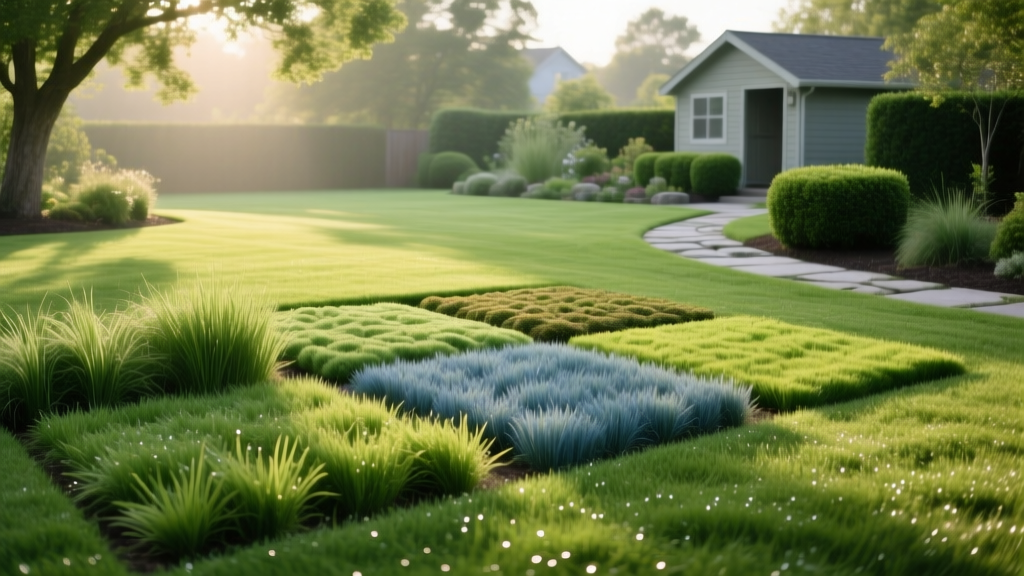
The True Cost to Sod a Yard in 2026: Pricing & Coverage Guide
The 2026 Baseline: What is the Cost to Sod a Yard?
Installing sod transforms a barren yard into a lush lawn in hours, but the financial commitment requires precise calculation. In 2026, the national average cost to sod a yard ranges from $1.50 to $3.50 per square foot fully installed. For a standard 5,000-square-foot suburban lawn, homeowners should budget between $7,500 and $17,500. This wide variance is driven by three primary factors: the specific grass cultivar selected, the extent of soil remediation required, and regional labor rates.
National Cost Snapshot (5,000 Sq Ft Yard)
- Materials Only (Sod): $1,500 – $4,000 ($0.30 – $0.80 per sq ft)
- Site Preparation: $1,000 – $3,500 ($0.20 – $0.70 per sq ft)
- Professional Labor: $5,000 – $10,000 ($1.00 – $2.00 per sq ft)
- Total Installed Cost: $7,500 – $17,500
Material vs. Labor: Where Your Money Goes
Understanding the breakdown between materials and labor is critical for accurate budgeting. While the sod itself is a fixed commodity cost, labor and site preparation are highly variable. If your yard features heavy, compacted clay or significant grading issues, site preparation costs can easily eclipse the cost of the sod itself.
| Cost Component | Price Per Sq Ft (2026) | 5,000 Sq Ft Estimate | Variables & Edge Cases |
|---|---|---|---|
| Sod Material | $0.30 – $0.80 | $1,500 – $4,000 | Standard vs. premium cultivars; pallet delivery fees ($50-$150 per load). |
| Old Lawn Removal | $0.20 – $0.50 | $1,000 – $2,500 | Sod cutting vs. chemical kill; hauling and dump fees. |
| Soil Tilling & Grading | $0.30 – $0.75 | $1,500 – $3,750 | Rocky soil requires heavy machinery; slope correction adds time. |
| Topsoil / Compost | $0.15 – $0.40 | $750 – $2,000 | Adding 2 inches of organic matter; bulk delivery vs. bagged. |
| Installation Labor | $1.00 – $2.00 | $5,000 – $10,000 | Backyard access (wheelbarrow vs. machinery); complex curves. |
Sod Pricing by Grass Species
The botanical classification of your chosen turfgrass dictates the baseline material cost. Warm-season grasses generally require vegetative propagation (sprigging or sodding) and take longer to establish at the farm, often resulting in higher per-pallet prices compared to cool-season grasses.
Cool-Season Grasses (Northern & Transition Zones)
- Kentucky Bluegrass: $0.40 – $0.65 per sq ft. The industry standard for northern lawns. Premium rhizomatous cultivars (e.g., 'Midnight' or 'NuGlide') sit at the top of this range.
- Tall Fescue: $0.35 – $0.55 per sq ft. Highly drought-tolerant and shade-adaptive. Often sold as a mix with 5-10% Kentucky Bluegrass for rhizome repair.
- Perennial Ryegrass: $0.30 – $0.50 per sq ft. Fastest germination and establishment, but lower long-term durability. Often used for quick erosion control or overseeding.
Warm-Season Grasses (Southern & Transition Zones)
- Bermudagrass: $0.35 – $0.60 per sq ft. Highly traffic-tolerant. Hybrid varieties (like 'TifTuf') command a 20% premium over common seeded Bermudagrass sod due to superior drought resistance.
- Zoysiagrass: $0.55 – $0.95 per sq ft. The most expensive standard warm-season option. Slow-growing at the sod farm, resulting in higher production costs. Cultivars like 'Zeon' or 'Geo' offer superior shade tolerance.
- St. Augustine: $0.45 – $0.75 per sq ft. The dominant shade-tolerant grass for the deep South. Requires wider mower decks due to thick, coarse leaf blades.
Calculating Coverage: Pallets, Square Footage, and the 10% Rule
Sod is sold by the pallet, but pallet coverage is not universally standardized. While the industry baseline is 450 square feet per pallet, some regional farms harvest at 500 square feet. Always verify the exact square footage with your local supplier before calculating your order.
The 10% Overage Mandate
Never order the exact square footage of your lawn. You must account for cutting waste around curved garden beds, trees, and property lines. Always add 5% to 10% to your total square footage. If your yard measures exactly 4,500 sq ft, calculate for 4,950 sq ft. At 450 sq ft per pallet, you will need 11 pallets (4,950 / 450 = 11). Ordering short means paying exorbitant secondary delivery fees or forcing the installer to stretch the sod, creating gaps that will dry out and die.
Hidden Site Preparation Costs That Derail Budgets
The most common reason landscaping quotes exceed initial estimates is hidden site preparation. According to turfgrass establishment guidelines from the NC State Turfgrass Program, sod placed directly over compacted, unamended soil will fail to establish deep roots, leading to drought stress and winter kill within the first year.
To avoid this, professional installation must include:
- Rototilling: Breaking up the top 4 to 6 inches of soil to relieve compaction.
- Amending: Incorporating 2 to 3 cubic yards of organic compost per 1,000 square feet to improve water retention and microbial activity.
- Final Grading: Using a lawn roller or drag mat to create a smooth, firm surface. Any dips or mounds left in the soil will be permanently mirrored in the finished sod surface.
If your contractor's quote does not explicitly list tilling and soil amendment, you are likely receiving a "drop-and-roll" installation, which is a primary cause of sod failure.
DIY vs. Professional Installation: The True ROI
Can you save money by installing sod yourself? Yes, but the physical toll and logistical complexity are severe. A single pallet of sod weighs between 2,500 and 3,000 pounds. For a 5,000 sq ft yard requiring 11 pallets, you are manually moving over 14 tons of wet soil and grass.
- The DIY Route: You will pay roughly $0.30 to $0.80 per sq ft for materials, plus $200-$400 for a skid steer rental and $150 for a heavy-duty rototiller. Total cost: ~$2,500 - $5,000. Warning: Sod must be laid within 24 hours of delivery. If it sits on the pallet for 48 hours in summer heat, the center of the pallet will "sweat" and die from fungal combustion.
- The Professional Route: You pay $1.50 to $3.50 per sq ft. Total cost: ~$7,500 - $17,500. The ROI comes with guaranteed grading, proper soil prep, and often a 1-year establishment warranty. For yards with severe slopes or poor access, professional installation is not a luxury; it is a structural necessity.
Three Fatal Sodding Mistakes That Waste Your Investment
Even with premium materials, poor execution will kill a $10,000 investment in weeks. The University of Minnesota Extension highlights several critical failure modes in new turf establishment:
1. Shallow, Frequent Watering
New sod requires immediate, deep saturation. On day one, you must apply 1 inch of water across the entire surface. Mathematically, 1 inch of water equals 0.62 gallons per square foot. For a 5,000 sq ft yard, that requires 3,100 gallons of water on the first day. Watering for just 15 minutes a day only wets the grass blades and the top millimeter of soil, forcing roots to stay near the surface where they will scorch in the sun.
2. Leaving Gaps Between Rolls
Installers must push sod pieces tightly together without overlapping. If gaps are left, the exposed soil edges will dry out rapidly, preventing the stolons and rhizomes from knitting together. The edges will turn brown and die back, leaving permanent seams in your lawn.
3. Walking on Fresh Sod
Foot traffic on newly laid sod creates depressions in the soft underlying soil. Once the soil settles unevenly, the sod above it loses contact with the earth, creating air pockets that dry out the roots. Restrict all foot traffic for a minimum of 14 days, or until the turf resists being pulled up by hand.
Frequently Asked Questions
How long does it take for sod to root?
Under optimal conditions (consistent moisture and soil temperatures above 55°F), sod will develop initial shallow root attachment in 10 to 14 days. Deep, structural root establishment that anchors the turf firmly into the subsoil takes 4 to 6 weeks.
Is it cheaper to seed or sod a yard?
Seeding is significantly cheaper upfront, costing $0.10 to $0.25 per square foot compared to sod's $1.50 to $3.50. However, seed requires 3 to 6 months of intensive daily watering, weed management, and erosion control. Sod provides an instant, weed-free lawn and immediate erosion stabilization, justifying the premium for high-traffic areas or sloped yards.
What is the best time of year to lay sod?
For cool-season grasses (Fescue, Bluegrass), early fall (late August to October) is ideal, as warm soil promotes root growth while cool air reduces heat stress. For warm-season grasses (Bermuda, Zoysia), late spring to early summer (May to June) provides the necessary heat for rapid stolon expansion. Avoid laying sod during the peak heat of July or the freezing depths of winter.

