
Grass Types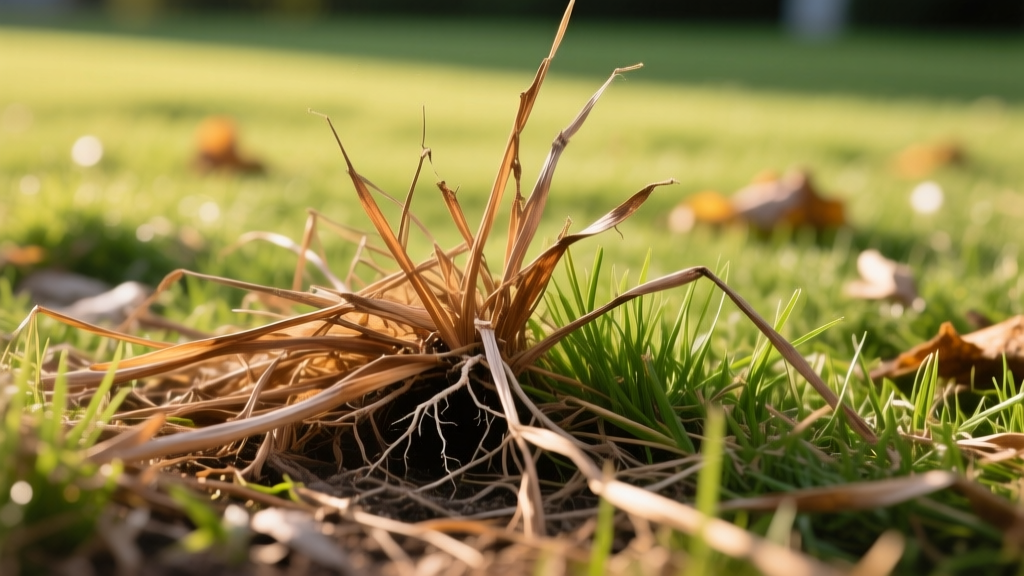
Dead Ryegrass Diagnosis: Why It Turns Brown and How to Fix It
Ryegrass (Lolium species) is a high-performance cool-season grass prized for its rapid germination, dark green color, and heavy traffic tolerance. However, it is also notoriously susceptible to environmental stress and fungal pathogens. When homeowners encounter dead ryegrass, the immediate reaction is often to overwater or apply generic fertilizers, which can accelerate the decline. Accurate diagnosis requires distinguishing between natural dormancy, lifecycle completion, and active pathological decay.
The Tug Test: Dead vs. Dormant Ryegrass
Before purchasing fungicides or scheduling aeration, you must determine if the grass is biologically dead or simply dormant. Perennial ryegrass enters summer dormancy when soil temperatures consistently exceed 85°F, turning brown to conserve energy. Annual ryegrass, conversely, completes its lifecycle and dies completely in late spring.
The 3-Second Tug Test: Grab a handful of the brown grass near the base and pull firmly. If the grass resists and the roots hold fast in the soil, the crown is likely alive and the grass is dormant. If the grass pulls up effortlessly with dry, brittle, or missing roots, the plant is dead and requires overseeding.
4 Primary Causes of Dead Ryegrass (And Exact Fixes)
1. Fungal Pathogens: Brown Patch and Pythium Blight
Perennial ryegrass is highly vulnerable to Rhizoctonia solani (Brown Patch) and Pythium aphanidermatum (Pythium Blight). Brown patch manifests as irregular, tan-to-brown circular patches ranging from 6 inches to several feet in diameter, often featuring a dark 'smoke ring' border during early morning hours. Pythium blight is more aggressive, appearing as greasy, dark, matted patches that rapidly expand during hot, humid nights.
The Fix: Halt nitrogen applications immediately, as excess nitrogen fuels fungal growth. Apply a preventative or curative fungicide containing azoxystrobin (e.g., Scotts DiseaseEx at 2.2 lbs per 1,000 sq ft) or propiconazole (e.g., BioAdvanced Fungus Control). For severe Pythium outbreaks, a professional application of a metalaxyl-based product is often required. According to pathology data from NC State TurfFiles, rotating chemical classes (FRAC codes) every 14 to 21 days is critical to prevent pathogen resistance.
2. Summer Heat Stress and Root Asphyxiation
Ryegrass possesses a shallow root system compared to tall fescue or Kentucky bluegrass. When subjected to prolonged temperatures above 90°F, the roots begin to die back. If combined with heavy clay soils and overwatering, the roots suffer from asphyxiation due to a lack of soil oxygen, leading to widespread turf collapse.
The Fix: Transition to deep, infrequent watering. Deliver 1 to 1.5 inches of water per week, split into two early-morning sessions (between 4:00 AM and 8:00 AM) to ensure moisture penetrates the 4-to-6-inch root zone without waterlogging the thatch layer. Raise your mower deck to 3.0 inches; scalping ryegrass below 2.5 inches removes over 40% of its photosynthetic leaf tissue, triggering immediate thermal stress.
3. The Annual Ryegrass Lifecycle Trap
Many homeowners unknowingly plant annual ryegrass (often sold cheaply as 'nurse grass' or 'quick cover') expecting it to survive the summer. Annual ryegrass is a true annual; it will inevitably turn brown and die as day lengths increase and temperatures rise in late May and June, regardless of your watering or fertilization regimen.
The Fix: There is no chemical rescue for annual ryegrass in summer. Rake out the dead thatch using a metal thatching rake or a power dethatcher, and prepare the soil for a late-summer overseeding with a perennial cool-season grass or a warm-season alternative like Bermuda or Zoysia, depending on your USDA Hardiness Zone.
4. Grub and Chinch Bug Infestations
White grubs (Japanese beetle and masked chafer larvae) feed aggressively on ryegrass roots in late summer and early fall. The symptom profile mimics drought stress: the turf turns brown, wilts, and feels spongy underfoot. Chinch bugs, conversely, pierce the grass blades and inject a salivary toxin that blocks water transport, causing rapid yellowing and death in sunny, hot areas.
The Fix: Peel back a 1-square-foot section of the damaged turf. If you count more than 8 to 10 grubs per square foot, apply a curative insecticide containing trichlorfon (e.g., Dylox) or carbaryl, followed by immediate irrigation to move the chemical into the soil profile. For preventative control the following year, apply chlorantraniliprole (e.g., Acelepryn) in April or May. For chinch bugs, a bifenthrin-based liquid spray applied directly to the foliage provides rapid knockdown.
Annual vs. Perennial Ryegrass: Diagnostic Matrix
Misidentifying your ryegrass type leads to wasted money on treatments for a naturally dying plant. Use this matrix to confirm your grass species based on visual and behavioral traits.
| Trait | Annual Ryegrass | Perennial Ryegrass |
|---|---|---|
| Leaf Blade | Coarse, highly glossy on the underside, prominent midrib | Fine-to-medium texture, folded in the bud, distinct parallel veins |
| Ligule | Short, membranous, jagged edge | Short, membranous, smooth edge |
| Summer Behavior | Completely dies, turns brittle white/brown | Enters dormancy (brown but roots hold firm) |
| Primary Use | Winter overseeding in the South, erosion control | Permanent northern lawns, sports fields, high-traffic zones |
The 5-Step Ryegrass Rescue Protocol
If your tug test confirms the grass is alive but struggling, or if you are treating an active fungal/insect outbreak, follow this sequential recovery plan. According to turf management guidelines from University of Minnesota Extension, sequencing these steps correctly prevents compounding stress on the recovering root system.
- Week 1: Chemical Intervention. Apply the appropriate targeted fungicide or insecticide based on your diagnosis. Do not apply broad-spectrum weed-and-feed products during this phase, as the herbicides will stress the compromised ryegrass.
- Week 2: Hydration Calibration. Place 3 to 4 empty tuna cans across the lawn zones. Run your sprinklers until the cans collect exactly 0.75 inches of water. Record the time it takes. This becomes your baseline watering duration to achieve the 1.5-inch weekly target without guesswork.
- Week 3: Soil Aeration. Once the active disease or pest pressure is controlled, perform core aeration. Pulling 2-to-3-inch soil plugs relieves compaction, increases oxygen to the suffocating roots, and improves water infiltration. Leave the cores on the lawn to decompose.
- Week 4: Targeted Nutrition. Apply a slow-release, nitrogen-heavy fertilizer (e.g., 24-0-6 or 30-0-0) at a rate of 1 lb of actual nitrogen per 1,000 square feet. Avoid quick-release urea, which causes rapid, weak top-growth that invites secondary fungal infections.
- Week 5: Mowing Normalization. Resume mowing only when the grass reaches 4.0 inches, cutting it back to exactly 3.0 inches. Ensure mower blades are freshly sharpened; dull blades tear the ryegrass tips, creating open wounds for Dollar Spot and Red Thread pathogens to enter.
Frequently Asked Questions
Can I overseed dead ryegrass in the middle of summer?
No. Ryegrass seed requires soil temperatures between 50°F and 65°F for optimal germination. Seeding in summer results in rapid seedling death due to heat stress and Pythium damping-off disease. Wait until late August or early September, depending on your region, to overseed bare patches.
Why is my ryegrass dying in patches despite regular watering?
Patchy death in well-watered lawns is the hallmark of soil-borne fungal diseases like Summer Patch or Brown Patch, or localized insect feeding. Overwatering actually exacerbates these issues by creating the high-humidity microclimate at the soil line that these pathogens require to sporulate and spread.
Is perennial ryegrass a good choice for shady lawns?
Perennial ryegrass has poor shade tolerance compared to fine fescues. In heavily shaded areas where it receives less than 4 hours of filtered sunlight, ryegrass will thin out and die due to an inability to photosynthesize adequately, leaving the lawn vulnerable to moss and weed encroachment. For dense shade, transition to a fine fescue blend or a shade-tolerant groundcover.

