Grass Types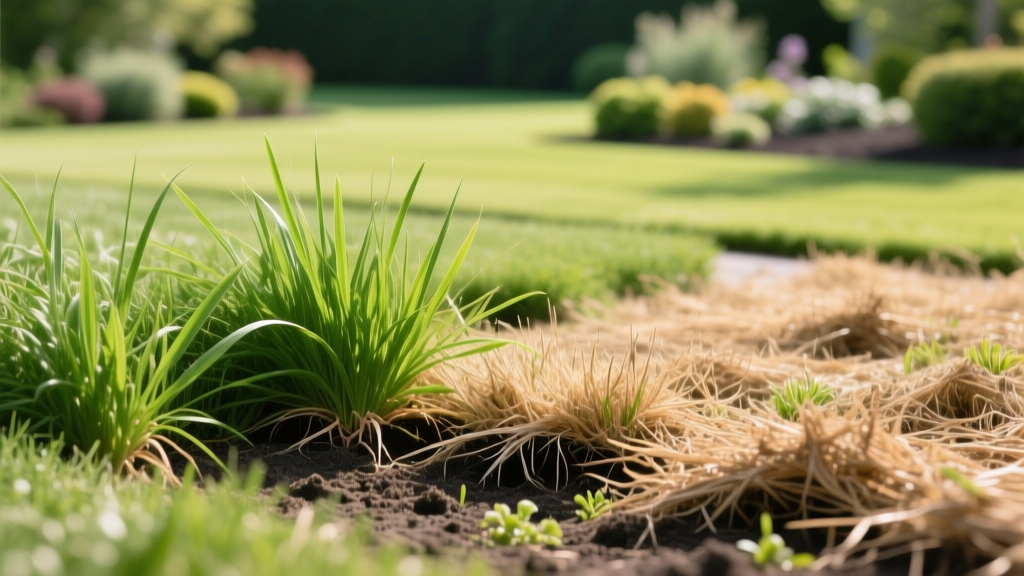
Diagnosing Dead Grass: Top Tools for Removing Turf Fast
Diagnosing the Failure: Why the Turf Must Go
Before selecting the right equipment, you must confirm that the lawn is actually dead and beyond recovery. Many homeowners mistake dormant warm-season grasses or localized fungal outbreaks for total turf failure. Perform the Tug Test: grab a handful of brown grass and pull upward. If the roots snap cleanly at the soil line with minimal resistance, you likely have grub damage or severe shallow compaction. If the grass pulls up in thick, spongy mats, you are dealing with extreme thatch buildup or sod webworms.
Diagnostic Screwdriver Test: Push a standard 6-inch flathead screwdriver into the soil. If you cannot penetrate past 2 inches without extreme force, your soil is heavily compacted. Mechanical removal and deep tilling will be mandatory before replanting.
Once you confirm the turf is dead or irreparably diseased, complete extraction is required. Leaving dead root mass invites fungal pathogens like Pythium and creates an uneven seedbed. According to turf management specialists at the University of Minnesota Extension, complete removal of the existing sod layer ensures proper seed-to-soil contact and eliminates competition from deep-rooted perennial weeds.
Matrix: Selecting Tools for Removing Turf
The ideal tool depends on your lawn size, soil composition, and budget. Below is a decision matrix comparing the primary extraction methods available to homeowners and landscaping contractors in 2026.
| Tool / Method | Best For | Est. Cost (2026) | Speed (per 1,000 sq ft) | Soil Disruption |
|---|---|---|---|---|
| Manual Sod Kicker | Small patches, tight gates | $45 - $75 (Purchase) | 3 - 4 Hours | None |
| Walk-Behind Sod Cutter | Lawns 500 - 5,000 sq ft | $140 - $190 / Day (Rental) | 45 - 60 Minutes | Minimal |
| Skid Steer + Harley Rake | Large estates, full grading | $350+ / Day (Rental) | 15 - 20 Minutes | Severe |
| Solarization (Clear Poly) | Deep rhizomes, heavy weeds | $80 - $120 (Materials) | 4 - 6 Weeks | None |
Executing Mechanical Removal: The Motorized Sod Cutter
For standard residential lawns, a walk-behind sod cutter is the industry standard. Models like the Classen SC-18 or the hydrostatic-drive Billy Goat SC1801H use an oscillating blade to slice horizontally beneath the root zone.
Calibrating Blade Depth for Specific Grass Types
The most common failure mode when using a sod cutter is setting the blade too shallow, which leaves behind rhizomes that will aggressively regrow. Conversely, setting it too deep creates unnecessarily heavy sod rolls and exposes sterile subsoil.
- Cool-Season Grasses (Kentucky Bluegrass, Tall Fescue): Set the depth lever to 1.5 inches. These grasses have fibrous, shallow root systems.
- Warm-Season Grasses (Bermudagrass, Zoysia): Set the depth to 2.5 to 3.0 inches. These species spread via deep rhizomes and stolons. If you leave even 10% of Bermudagrass rhizomes in the soil, the weed pressure on your new lawn will be unmanageable.
Hidden Infrastructure Hazard: Always call 811 before cutting. Sod cutter blades will instantly sever shallow drip irrigation lines, fiber optic cables, and invisible dog fence wires. If your soil is heavily rocky (stones larger than 2 inches), the oscillating blade will stall and shear the drive belt. In rocky soils, chemical removal or manual excavation is required.
The Hidden Bottleneck: Disposal and Hauling Logistics
Most guides on tools for removing turf ignore the massive weight of the extracted material. Sod is essentially a slab of wet soil held together by roots.
The Weight Calculation: One square foot of sod cut at 1.5 inches thick weighs between 10 and 15 pounds when dry, and up to 20 pounds when saturated. If you are removing a 2,000-square-foot front lawn, you are extracting 20,000 to 30,000 pounds (10 to 15 tons) of material. A standard half-ton pickup truck (like a Ford F-150) has a maximum payload capacity of roughly 1,800 pounds. You cannot haul this in a pickup. You must rent a 14-foot dump trailer or hire a junk removal service equipped with a skid steer and a 10-yard dump truck.
Chemical and Solarization Alternatives for Edge Cases
Mechanical tools fail when dealing with highly invasive, deep-rooted perennial weeds intertwined with dead grass, such as Quackgrass or Torpedograss. In these scenarios, physical removal simply chops the rhizomes, stimulating aggressive regrowth.
Solarization Protocol
The University of California Integrated Pest Management (UC IPM) program recommends soil solarization for eradicating persistent weeds and soil-borne pathogens without chemicals.
- Mow the dead turf as low as your mower allows (under 1 inch).
- Irrigate the bare soil to a depth of 12 inches. Moist soil conducts heat significantly better than dry soil.
- Cover the area with clear, 2-mil thick polyethylene plastic. Do not use black plastic; black plastic blocks sunlight but fails to create the greenhouse effect required to raise soil temperatures to the lethal 140°F threshold at a 2-inch depth.
- Seal the edges completely with soil trenches and leave for 4 to 6 weeks during peak summer heat.
Post-Removal Soil Preparation
Once the tools for removing turf have done their job, you are left with bare, compacted subsoil. Do not seed directly onto the sliced hardpan left by the sod cutter. Use a rear-tine rototiller to fracture the top 4 to 6 inches of soil. Incorporate 2 cubic yards of screened organic compost per 1,000 square feet to restore microbial life and improve drainage. Rake the surface smooth, allow it to settle for 48 hours, and proceed with your new grass seed or sod installation.