
Grass Types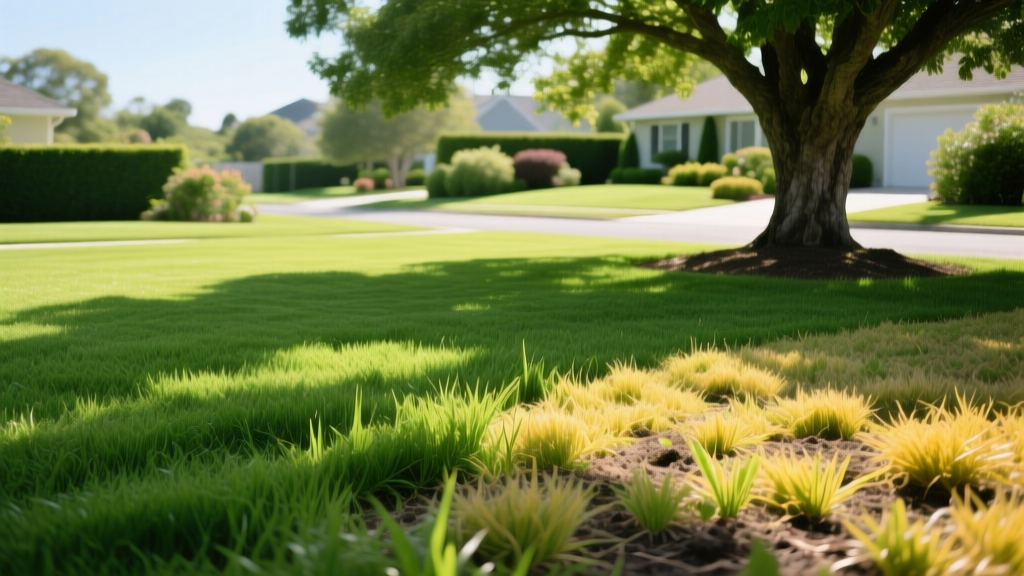
Does Bermuda Grass Grow in Shade? Truth & Solutions
The Short Answer: Does Bermuda Grass Grow in Shade?
The direct answer is no. Bermuda grass (Cynodon dactylon) is a warm-season C4 grass species biologically engineered for high-light, high-heat environments. It requires a minimum of 8 hours of direct, unfiltered sunlight daily to maintain a dense, healthy turf. When placed in shaded environments, Bermuda grass does not merely slow its growth; it actively starves, thins out, and eventually dies. According to the NC State Extension TurfFiles, attempting to grow common Bermuda in areas with less than 6 hours of direct sunlight will consistently result in turf failure.
The 8-Hour Rule: For Bermuda grass to thrive, it needs 8+ hours of direct sun. If your lawn receives less than 6 hours, you must either alter the landscape to increase light penetration or transition to a true shade-tolerant grass species.
The Science of C4 Photosynthesis and Light Deprivation
To understand why Bermuda grass fails in the shade, you have to look at its cellular biology. Bermuda is a C4 plant. Unlike C3 plants (such as fescues or ryegrass), C4 plants have evolved a specialized photosynthetic pathway that concentrates CO2 around the enzyme RuBisCO. This adaptation allows them to photosynthesize rapidly and efficiently in intense, direct sunlight and high temperatures without losing excessive water.
However, this biological superpower comes with a strict trade-off: a high light compensation point. The light compensation point is the exact light intensity where the rate of photosynthesis equals the rate of respiration. For Bermuda grass, this threshold is exceptionally high. When a tree canopy or structural shadow reduces Photosynthetically Active Radiation (PAR) below this threshold, the grass expends more energy maintaining its cellular structure than it can produce through photosynthesis. The result is a negative carbon balance, leading to etiolation (stretching), root system collapse, and eventual death.
Identifying Shade Stress Symptoms in Bermuda
Before the grass dies completely, it will exhibit specific, measurable symptoms of light deprivation. Watch for these failure modes:
- Etiolation and Thinning: The grass blades will grow unusually long, thin, and pale as they stretch toward the light source. The overall turf density drops, revealing bare soil.
- Reduced Rhizome and Stolon Growth: Bermuda spreads via above-ground stolons and below-ground rhizomes. In shade, lateral growth halts entirely, preventing the lawn from recovering from foot traffic or damage.
- Increased Disease Susceptibility: Shaded areas retain morning dew longer. A thinning Bermuda canopy combined with high moisture creates the perfect microclimate for dollar spot and spring dead spot.
- Weed Invasion: As the Bermuda canopy opens up, shade-tolerant weeds like goosegrass, annual bluegrass, and nutsedge will rapidly colonize the bare patches.
"Shade-Tolerant" Bermuda Cultivars: Fact vs. Marketing
Turfgrass breeders have spent decades attempting to improve the shade tolerance of Bermuda grass. While newer hybrid cultivars perform better than common Bermuda, the term "shade-tolerant" in Bermuda marketing is strictly relative. These improved varieties still require a minimum of 4 to 6 hours of direct sunlight. They will survive in dappled shade or partial afternoon shade, but they will not survive deep, full-day shade.
| Cultivar | Minimum Direct Sun | Shade Performance Notes | Estimated Sod Cost (per sq. ft.) |
|---|---|---|---|
| Common Bermuda | 8+ Hours | Fails rapidly in any shade; highly aggressive in full sun. | $0.30 - $0.45 |
| TifGrand | 5 - 6 Hours | Developed by UGA; finest leaf texture among shade-adapted Bermudas. | $0.55 - $0.75 |
| Celebration | 6 Hours | Deep blue-green color; excellent drought and moderate shade tolerance. | $0.50 - $0.65 |
| Latitude 36 | 6 Hours | Bred for cold tolerance; decent shade survival but requires good airflow. | $0.50 - $0.70 |
Actionable Solutions for Shaded Lawns
If your Bermuda lawn is failing due to shade, you have two primary paths forward: alter the environment to increase light, or replace the grass. The University of California IPM recommends evaluating the cost-benefit ratio of tree maintenance versus turf renovation before making a decision.
Path 1: Canopy Management and Pruning
Before killing your lawn, assess if you can manipulate the light environment. This is only viable if the shade is caused by trees, not structures (like houses or fences).
- Crown Raising: Remove the lower branches of your trees to a height of 8 to 10 feet. This allows low-angle morning and late-afternoon sunlight to penetrate under the canopy. Cost: $250–$600 per mature tree when hired to a certified arborist.
- Selective Crown Thinning: Remove 15% to 20% of the inner canopy branches to allow dappled light to reach the turf. Do not exceed 25% thinning in a single year, as this can shock the tree and trigger aggressive water-sprout growth.
- The Shadow Audit: On a sunny summer day, observe the shaded area at 9 AM, 12 PM, and 3 PM. If the area receives zero direct sun across all three checkpoints, pruning will not solve the problem.
Path 2: Transitioning to True Shade-Tolerant Grasses
If pruning is impossible or insufficient, you must transition to a grass species with a lower light compensation point. The right choice depends on your specific climate zone and the exact hours of sunlight available.
Warning on Overseeding: Do not attempt to fix a thinning summer Bermuda lawn by overseeding with cool-season ryegrass or fescue in the spring. The Bermuda will aggressively compete for the limited light and water, resulting in two dead lawns instead of one. Transitions must be done via complete kill and replant, or gradual sod replacement.
| Alternative Species | Climate Type | Minimum Sun | Best Use Case |
|---|---|---|---|
| Zeon Zoysia | Warm-Season | 3 - 4 Hours | Deep shade under mature trees; fine texture similar to Bermuda. |
| Palmetto St. Augustine | Warm-Season | 3 - 4 Hours | Coastal southern regions; handles heavy shade and foot traffic well. |
| Creeping Red Fescue | Cool-Season | 2 - 3 Hours | Transition zone and northern climates; excellent for dry shade areas. |
Frequently Asked Questions
Can I grow Bermuda grass under pine trees?
No. Pine trees create a dual-threat environment for Bermuda grass. First, the dense needle canopy blocks the required 8 hours of direct sunlight. Second, the heavy accumulation of pine needles drastically lowers the soil pH and creates a physical barrier that smothers Bermuda stolons, preventing them from rooting and spreading. If you have pine trees, transition to a mulch bed or plant shade-tolerant groundcovers like liriope or monkey grass.
Will fertilizing my shaded Bermuda grass help it grow thicker?
Applying high-nitrogen fertilizer to shaded Bermuda grass will actually accelerate its decline. Nitrogen forces the plant to push top growth (blades) at the expense of root development. Because the plant lacks the sunlight to photosynthesize enough energy to support this forced growth, it will deplete its root reserves, leading to a rapid collapse of the turf. In shaded areas, reduce nitrogen applications by 50% compared to the sunny areas of your lawn.
How do I kill the shaded Bermuda to plant Zoysia?
To transition from Bermuda to a shade-tolerant Zoysia like Zeon, you must completely eradicate the existing Bermuda. Apply a non-selective herbicide containing glyphosate (at a 2% active ingredient solution rate) to the shaded area. Wait 14 days for the Bermuda to fully translocate the herbicide to its deep rhizomes. If any green shoots appear, apply a second treatment. Once the turf is entirely brown and dead, rototill the top 2 inches of soil, grade the surface, and lay the new Zoysia sod. Expect to pay between $0.60 and $0.85 per square foot for high-quality Zeon Zoysia sod.

