
Grass Types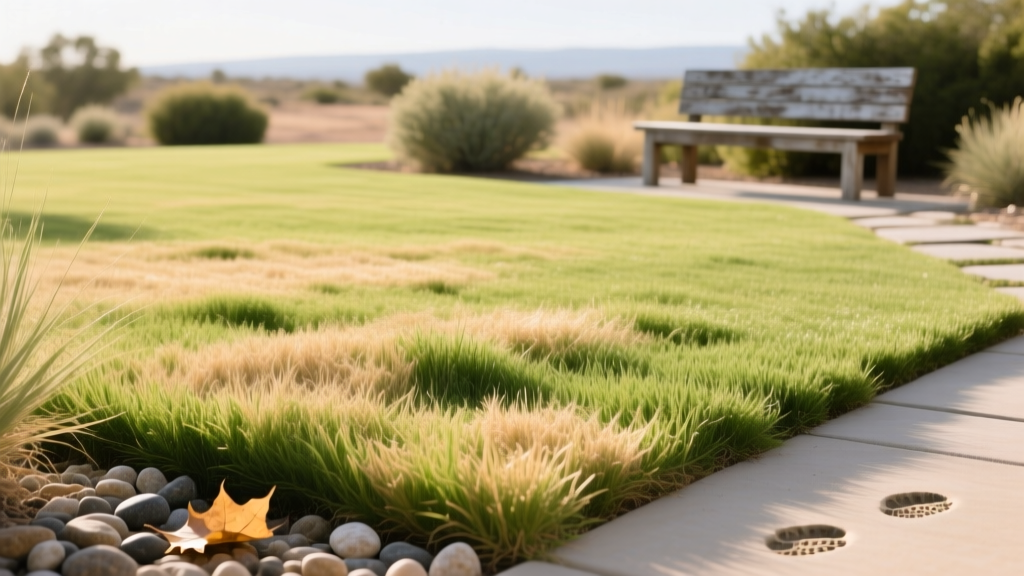
How to Grow and Maintain a Drought-Tolerant Buffalo Grass Lawn
Why Choose Buffalo Grass for a Warm-Season Lawn?
As water restrictions tighten across the Southwest and Great Plains, homeowners are ditching thirsty turfgrasses in favor of Bouteloua dactyloides, commonly known as buffalo grass. Native to the North American prairies, this warm-season perennial is a masterpiece of evolutionary drought resistance. According to the USDA Plants Database, mature buffalo grass root systems can plunge up to 7 feet deep into the soil profile, allowing it to survive prolonged dry spells that would turn Kentucky bluegrass or bermudagrass into brittle straw.
However, the biggest mistake homeowners make with buffalo grass is treating it like a traditional turf. This species thrives on neglect. Over-watering and over-fertilizing are the primary killers of buffalo grass lawns, leading to aggressive weed invasion, severe thatch buildup, and increased susceptibility to fungal diseases like brown patch.
The 'Less is More' Philosophy: Buffalo grass operates on a low-input model. If you are transitioning from a high-maintenance lawn, you must recalibrate your expectations. A healthy buffalo grass lawn requires 75% less water and 80% less fertilizer than traditional warm-season turfs, but it will not possess the deep, emerald-green, golf-course aesthetic of a heavily chemical-fed bermudagrass.
Top Buffalo Grass Cultivars for Modern Landscapes
Not all buffalo grass is created equal. Older, common varieties tend to be coarse, sparse, and highly prone to winter weed invasion. Modern breeding programs, heavily tracked by the National Turfgrass Evaluation Program (NTEP), have released vastly superior cultivars. When sourcing your seed or plugs in 2026, target these specific varieties:
| Cultivar | Establishment | Texture & Color | Best Application |
|---|---|---|---|
| UC Verde | Vegetative (Plugs) | Very fine, bright green | High-end residential, California/Southwest |
| Prestige | Vegetative (Plugs) | Medium-fine, dark green | Texas/Southern Plains, moderate shade tolerance |
| Bowie | Seed | Medium, medium-green | Large acreage, budget-friendly seed establishment |
| Cody | Seed | Fine, dark green | Transition zones, excellent cold tolerance |
Step-by-Step Establishment: Seed vs. Plugs
Establishment is the most critical and expensive phase of a buffalo grass lawn. Because it spreads via above-ground stolons rather than aggressive rhizomes, initial spacing and soil contact dictate your timeline for a full canopy.
Seeding: The Potassium Nitrate Advantage
Raw, untreated buffalo grass seed has a notoriously hard seed coat, resulting in a dismal 30% to 40% germination rate. Always purchase KNO3 (Potassium Nitrate) treated seed. This chemical scarification breaks the dormancy, pushing germination rates above 85%.
- Seeding Rate: Apply 2 to 4 lbs of treated seed per 1,000 square feet.
- Timing: Late May through July. Soil temperatures must consistently exceed 65°F at a 2-inch depth.
- Germination Window: 14 to 21 days with daily light misting. Full establishment takes 60 to 90 days.
Plugs: Spacing and Cost Breakdown
For premium vegetative cultivars like UC Verde or Prestige, plugs are mandatory. While more expensive upfront, plugs guarantee genetic purity and faster establishment.
- 15-inch Spacing: Costs roughly $0.45 to $0.60 per plug. Requires approximately 280 plugs per 1,000 sq ft. Fills in completely in 3 to 4 months.
- 6-inch Spacing: Costs roughly $1.20 to $1.50 per sq ft. Fills in within 6 to 8 weeks but is cost-prohibitive for large lawns.
Pro Tip: Plant plugs slightly deeper than the soil line (about 1/4 inch deep) to protect the stolon nodes from drying out in the harsh summer sun during the first critical weeks.
The Low-Maintenance Care Matrix
Once your lawn is fully established, shift to this exact maintenance schedule. Deviating from these parameters—especially regarding nitrogen and water—will degrade the turf quality.
| Care Element | Specific Metric | Execution Strategy |
|---|---|---|
| Mowing | 2.0 to 3.0 inches | Use a rotary mower. Never scalp below 1.5 inches, which exposes soil to weed seeds and stresses the crown. |
| Watering | 1 inch per month (Summer) | Water deeply and infrequently. If the grass curls and turns blue-gray, apply 1 inch of water immediately. |
| Fertilizing | 0.5 to 1.0 lb N / 1,000 sq ft | Apply ONCE in early June. Use a slow-release organic like Milorganite or a 16-4-8 synthetic. Never fertilize in fall. |
| Aeration | Every 2-3 years | Core aerate in late May just before the rapid summer growth phase to relieve compaction without causing weed blowouts. |
Troubleshooting Common Buffalo Grass Issues
The Broadleaf Herbicide Trap
Buffalo grass is highly sensitive to certain broadleaf herbicides, particularly those containing 2,4-D, during the heat of summer. Applying a standard Trimec (2,4-D + MCPP + Dicamba) product in July when temperatures exceed 85°F will severely stunt the grass and cause chlorosis (yellowing).
The Fix: For broadleaf weeds like dandelions or clover, use products containing carfentrazone-ethyl or fluroxypyr, which are much safer for buffalo grass. Always spot-treat rather than broadcasting across the entire lawn, and apply herbicides only in the cooler morning hours during spring or early fall.
Thatch Accumulation
Because buffalo grass spreads via stolons, dead stolon material can build up at the soil surface if the lawn is over-watered or over-fertilized. A thatch layer exceeding 0.5 inches will prevent water penetration and harbor chinch bugs.
The Fix: Do not use a power rake (dethatcher) on buffalo grass; it will rip out the shallow-rooted stolons and destroy the lawn. Instead, use a core aerator and apply a thin (1/8 inch) topdressing of compost in early June to introduce soil microbes that naturally break down the thatch layer.
'Buffalo grass is a mirror of your soil health. If you push it with synthetic nitrogen and daily irrigation, you force it to grow beyond its genetic capacity, resulting in a weak, thatch-bound turf that collapses under summer heat stress. Let the soil biology do the heavy lifting.' — Dr. James Knobel, Turfgrass Physiologist
Managing Winter Dormancy
As a true warm-season species, buffalo grass will go completely dormant and turn a pale, straw-brown color after the first hard frost in late autumn. This dormancy typically lasts from November through April, depending on your USDA Hardiness Zone.
Many homeowners attempt to 'overseed' their dormant buffalo grass with perennial ryegrass for winter color. Do not do this. The aggressive root system of the ryegrass will compete fiercely with the buffalo grass in early spring, delaying its green-up by weeks and creating severe moisture stress. Accept the winter brown, or plant native winter-blooming groundcovers in adjacent landscape beds to maintain visual interest.
Final Verdict: Is Buffalo Grass Right for Your Yard?
Buffalo grass is the undisputed champion of low-input, eco-friendly lawns in USDA Zones 6 through 9, provided your yard receives full sun (minimum 8 hours of direct sunlight). It is not suitable for heavy shade, high-traffic sports fields, or areas with poor drainage where water pools for more than 24 hours. By selecting a modern cultivar like UC Verde or Prestige, utilizing KNO3 treated seed, and strictly limiting your nitrogen inputs, you can cultivate a resilient, beautiful prairie lawn that survives the harshest summer droughts with minimal intervention.

