Grass Types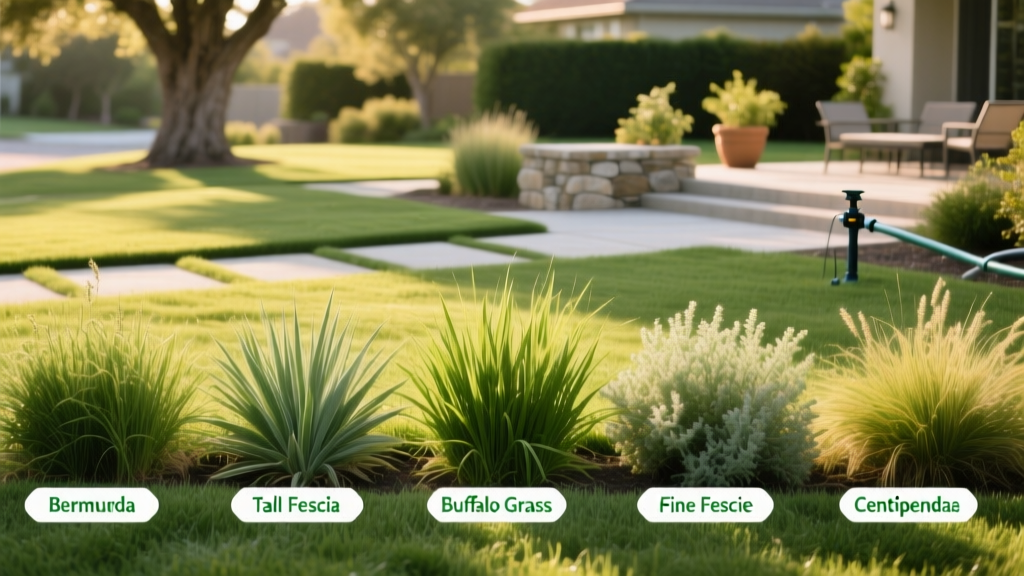
Solving Dry Yards: Best Drought Tolerant Turfgrass Picks
The Reality of Water Restrictions and Turf Failure
When municipal water restrictions tighten and summer heat bakes the topsoil, traditional turfgrasses like Kentucky Bluegrass (Poa pratensis) rapidly deteriorate. Homeowners facing chronic dry yards, sandy soils that drain too quickly, or heavy clay that repels water need site-condition problem solvers, not temporary irrigation fixes. Selecting the right drought tolerant turfgrass requires matching the species' evapotranspiration (ET) rate and root architecture to your specific soil profile and microclimate.
According to the EPA WaterSense program, outdoor water use accounts for nearly 30% of total household water consumption, with turf irrigation being the primary driver. Transitioning to verified low-water-use cultivars can reduce landscape water requirements by 30% to 50% without sacrificing aesthetic density or traffic tolerance.
The Science of Turfgrass Drought Survival
Drought tolerance in turfgrass is not a single trait but a combination of three physiological mechanisms:
- Drought Avoidance: The ability to maintain water uptake during dry periods via deep root systems. Tall fescue roots can penetrate 24 to 36 inches into the soil profile, accessing subsoil moisture unavailable to shallow-rooted species.
- Drought Tolerance (Cellular): The capacity of plant cells to maintain turgor pressure and continue metabolic functions at low leaf water potentials.
- Drought Recovery: The ability to regenerate green tissue from rhizomes or stolons after a period of complete dormancy induced by severe moisture deficit.
Pro Tip: Do not confuse drought tolerance with drought resistance. A grass that turns brown and goes dormant to survive (resistance) is different from a grass that stays green with minimal water (tolerance). For high-visibility lawns, prioritize cultivars bred for high drought tolerance to avoid the dormant, brown aesthetic during mid-summer restrictions.
Warm-Season Problem Solvers: Heat and Heavy Clay
Warm-season grasses utilize the C4 photosynthetic pathway, making them inherently more water-efficient than cool-season grasses. They thrive in USDA Zones 7-10 and are the premier choice for southern and transition-zone lawns facing severe heat stress.
Bermuda Grass (Cynodon dactylon): The Traffic Tolerator
Modern hybrid Bermudas have been specifically bred for reduced water requirements. The cultivar 'TifTuf', developed by the University of Georgia, uses approximately 38% less water than 'Tifway' while maintaining superior turf quality. It establishes a massive stolon and rhizome network that allows it to recover rapidly from mechanical damage and drought stress.
- Best Site Condition: Full sun, high-traffic areas, heavy clay soils.
- Water Requirement: 0.5 to 0.75 inches per week during peak summer.
- Establishment Cost: Sod installation ranges from $0.45 to $0.70 per square foot.
Zoysia (Zoysia japonica / matrella): The Shade and Drought Compromise
Zoysia grass features a lower ET rate than Bermuda and possesses stiff, rolled leaf blades that minimize surface area exposed to the sun, reducing moisture loss. Cultivars like 'Zeon' and 'Geo' offer exceptional drought tolerance combined with moderate shade tolerance—a rare combination in warm-season turf.
Warning: Zoysia is notoriously slow to establish and recover. If your lawn suffers from heavy dog traffic or frequent divoting, Zoysia's slow lateral growth rate will leave bare spots exposed to weed invasion for months. Reserve Zoysia for low-traffic, high-aesthetic zones.
Cool-Season Problem Solvers: Transition Zones and Sandy Soils
For homeowners in USDA Zones 3-6, or those in the transition zone who cannot utilize warm-season grasses due to winter kill risks, specific cool-season species offer viable drought solutions. The UC IPM Lawn Watering Guide emphasizes that deep, infrequent watering is mandatory to train cool-season roots downward.
Tall Fescue (Festuca arundinacea): The Deep-Rooted Workhorse
Turf-type tall fescue (TTTF) is the undisputed champion of cool-season drought avoidance. Unlike Kentucky Bluegrass, which relies on shallow rhizomes and requires constant surface moisture, TTTF develops a deep, bunch-type root system. Look for Rhizomatous Tall Fescue (RTF) or advanced blends like 'Titan Ultra', which exhibit enhanced summer survivability and brown patch resistance.
- Best Site Condition: Transition zones, sandy loams, areas with partial shade.
- Water Requirement: 1.0 to 1.25 inches per week (but applied in 1-2 deep sessions).
- Establishment Cost: Premium seed blends cost $6.00 to $9.00 per pound (seeded at 8-10 lbs per 1,000 sq ft).
Fine Fescue Blends: The Low-Input Shade Solver
Creeping red fescue, chewings fescue, and hard fescue require the lowest total water volume of any cool-season grass. They are ideal for unirrigated slopes or deeply shaded dry areas where other grasses starve for both light and water. However, they possess virtually zero traffic tolerance and will thin out if subjected to regular foot traffic.
Comparative Evapotranspiration (ET) and Performance Matrix
The following matrix compares elite drought-tolerant cultivars across critical performance metrics. Data is synthesized from Turfgrass Water Conservation Alliance (TWCA) field trials and university extension research.
| Species / Cultivar | Peak ET Rate (in/week) | Max Root Depth | Traffic Tolerance | Dormancy Color |
|---|---|---|---|---|
| Bermuda ('TifTuf') | 0.50 - 0.70 | 60+ inches | Excellent | Straw Brown |
| Zoysia ('Zeon') | 0.40 - 0.60 | 40+ inches | Good | Golden Tan |
| Tall Fescue (RTF Blend) | 1.00 - 1.25 | 36 inches | Very Good | Pale Green/Brown |
| Fine Fescue (Hard/Creeping) | 0.80 - 1.00 | 24 inches | Poor | Straw Brown |
| Kentucky Bluegrass (Baseline) | 1.50 - 2.00 | 6 - 10 inches | Excellent | Straw Brown |
Establishment Protocols for Maximum Drought Resilience
Genetics only provide the potential for drought tolerance; establishment practices dictate the reality. A drought-tolerant grass with a shallow root system caused by poor soil prep will fail just as quickly as a water-loving species.
- Subsoil Fracturing: Before grading, use a mechanical core aerator or a broadfork to fracture compacted subsoil to a depth of at least 4 inches. This allows taproots and deep fibrous roots to penetrate the hardpan.
- Organic Matter Integration: Apply 2 cubic yards of screened compost per 1,000 square feet. Rototill it into the top 4 inches of soil. This increases the soil's water-holding capacity (field capacity) by up to 20% in sandy soils and improves infiltration in heavy clays.
- Precision Seeding/Sodding: For Tall Fescue, seed at exactly 8 to 10 lbs per 1,000 sq ft. Over-seeding creates excessive competition for limited moisture during the critical establishment phase. For sod, ensure root-to-soil contact by rolling the turf with a half-filled water roller immediately after laying.
- The 14-Day Rooting Protocol: Apply 0.25 inches of water daily for the first 14 days to keep the seed/roots moist. On day 15, drop to 0.5 inches every third day. By day 30, transition to 1 inch of water applied once per week. This forces the roots to chase the receding moisture front downward.
Common Failure Modes in Drought-Tolerant Lawns
Even elite cultivars fail when managed incorrectly. Avoid these three critical errors:
1. Chronic Overwatering (The Shallow Root Trap)
Applying 0.25 inches of water every day to a mature Tall Fescue or Bermuda lawn keeps the top inch of soil moist. The roots will never grow deeper than 2 inches because they don't need to. When a summer heatwave hits and evaporation exceeds your daily irrigation, the lawn will wilt and die within 48 hours. Solution: Water deeply and infrequently.
2. Scalping the Canopy
Mowing drought-tolerant grasses too short reduces the leaf surface area available for photosynthesis and exposes the soil crown to direct solar radiation, drastically increasing soil evaporation. Keep Tall Fescue at 3.0 to 4.0 inches, and hybrid Bermuda at 1.0 to 1.5 inches. Never remove more than 1/3 of the leaf blade in a single mowing.
3. Ignoring Soil pH and Compaction
If your soil pH drops below 5.8 or rises above 7.5, essential nutrients like phosphorus and iron become chemically locked. A nutrient-starved plant cannot synthesize the cellular compounds required to maintain turgor pressure during a drought. Test your soil annually and apply pelletized lime or elemental sulfur as required to maintain a pH between 6.2 and 6.8.
Frequently Asked Questions
Can I mix drought-tolerant grass seed with my existing Kentucky Bluegrass?
Overseeding Tall Fescue into Kentucky Bluegrass is generally discouraged. The two species have vastly different growth habits, textures, and water requirements. The Tall Fescue will form distinct, coarse clumps that disrupt the uniform aesthetic, and you will be forced to water to the higher requirement of the Bluegrass to keep the entire lawn alive. Complete renovation via sod-cutting or glyphosate application is the recommended protocol.
Does drought-tolerant grass stay green all summer without any water?
No. While cultivars like 'TifTuf' Bermuda and RTF Tall Fescue can survive extended periods without irrigation, they will enter dormancy and turn brown if soil moisture drops below the permanent wilting point. To maintain a green aesthetic during severe drought, you must still apply approximately 0.5 inches of water every 14 to 21 days to keep the crown hydrated.
Are there drought-tolerant grasses that handle heavy shade?
Drought tolerance and heavy shade tolerance are often mutually exclusive because shade-tolerant grasses typically have shallower root systems to maximize surface water absorption. Fine Fescue blends offer the best compromise for dry, shaded areas, but they cannot withstand foot traffic. For heavily shaded, high-traffic dry zones, consider replacing turf with drought-tolerant groundcovers like Liriope or creeping thyme.