
Grass Types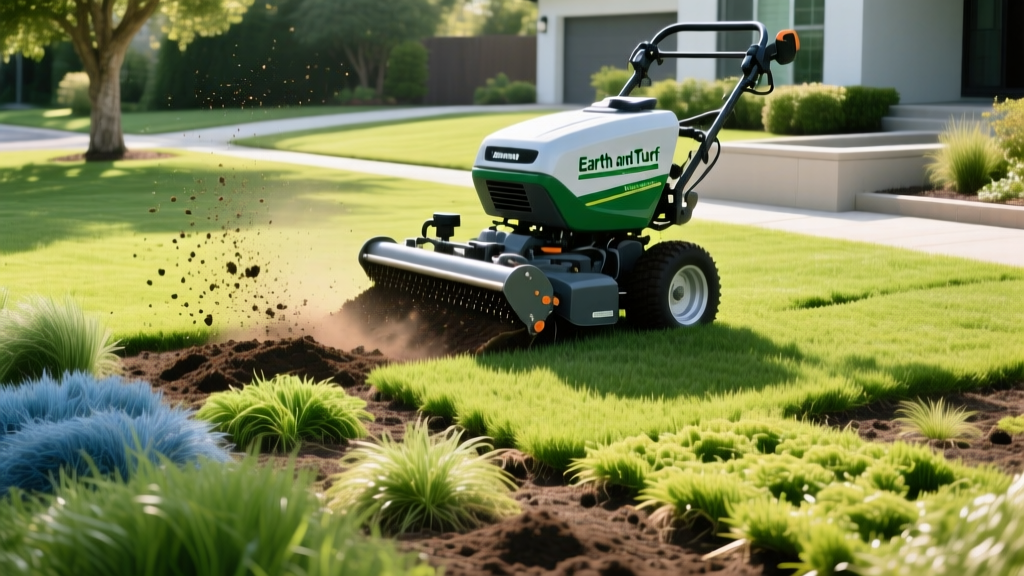
Diagnosing Uneven Lawns: How an Earth and Turf Top Dresser Solves Soil Compaction
Diagnosing Lawn Degradation: Is Your Soil the Problem?
When a lawn transitions from vibrant and dense to thin, spongy, and uneven, homeowners often misdiagnose the issue as a simple fertilizer or watering deficit. However, chronic turf decline is frequently rooted in physical soil barriers. Before deploying an earth and turf top dresser, you must accurately identify the subsurface constraints choking your grass roots.
Perform the screwdriver test: push a 6-inch flathead screwdriver into the soil. If you meet heavy resistance before the 4-inch mark, your lawn suffers from severe compaction. Next, perform the tug test: grab a handful of grass and pull. If it lifts easily with a thick, brown, spongy mat attached, you have a thatch layer exceeding the acceptable 0.5-inch threshold. Both conditions create hydrophobic zones that repel water and suffocate roots.
| Symptom | Root Cause | Topdressing Efficacy |
|---|---|---|
| Water pooling after light rain | Severe soil compaction / clay pan | High (when paired with core aeration) |
| Spongy feel underfoot | Excessive thatch buildup (>0.75") | Moderate (introduces microbes to decompose thatch) |
| Localized dry spots | Hydrophobic soil / uneven grading | High (levels grade and increases water retention) |
| Shallow root systems | Hardpan soil layer | High (amends soil structure over successive seasons) |
The Mechanical Advantage of the Earth and Turf Top Dresser
Manual topdressing with a wheelbarrow and a landscaping rake is labor-intensive and notoriously inconsistent. Uneven application leads to smothered grass in thick patches and untreated soil in thin areas. The earth and turf top dresser solves this through a mechanized apron-conveyor and spinning brush system that meters out material at a precise, adjustable depth.
Unlike drop spreaders that clog when handling moist compost or heavy masonry sand, Earth & Turf models feature a heavy-duty chain-driven apron that forces material to the rear. The variable-speed PTO or hydraulic-driven brush then throws the material evenly across the swath width, penetrating the turf canopy and reaching the soil surface without burying the grass blades.
Model Selection Matrix: Matching Machine to Property
Selecting the correct model prevents tractor strain and ensures efficient coverage. Below is a breakdown of the primary Earth & Turf models based on 2026 equipment specifications and typical residential acreage.
| Model | Hopper Capacity | Spread Width | Min. Tractor HP | Best Application | Approx. Cost (2026) |
|---|---|---|---|---|---|
| Earth & Turf 125 | 4.5 cu. ft. | 44 inches | 15-20 HP | Urban lots (<5,000 sq ft), tight gates | $1,400 - $1,600 |
| Earth & Turf 250 | 8.0 cu. ft. | 50 inches | 20-30 HP | Suburban lawns (5,000 - 15,000 sq ft) | $1,900 - $2,200 |
| Earth & Turf 360 | 12.0 cu. ft. | 60 inches | 30+ HP | Large estates, sports fields, commercial | $2,500 - $2,900 |
Formulating the Corrective Topdressing Mix
The material you load into the hopper dictates the success of the treatment. Applying pure topsoil will introduce weed seeds and create a textural layer that impedes drainage. According to Penn State Extension, the goal is to match the topdressing material to your existing soil profile while gradually improving its porosity.
The 70/30 Rule for Warm-Season Grasses
For Bermuda, Zoysia, and Centipede grasses, mix 70% washed masonry sand (particle size 0.25mm - 0.5mm) with 30% screened compost. The sand prevents compaction and improves drainage, while the compost provides the microbial activity needed to break down thatch. Never use play sand or beach sand, as the rounded particles lock together and create a concrete-like barrier.
For cool-season grasses like Tall Fescue and Kentucky Bluegrass, shift the ratio to 50% sand and 50% compost, or use a 100% high-quality screened compost if your native soil is already heavily sandy. Cool-season grasses benefit more from the moisture retention and organic matter provided by compost, as detailed in NC State TurfFiles turf management guidelines.
Execution Protocol: Step-by-Step Application
Proper execution requires precise calibration. The target application rate for corrective topdressing is 1/8 to 1/4 inch of depth. This translates to approximately 0.4 to 0.8 cubic yards of material per 1,000 square feet.
- Core Aeration (Mandatory for Compaction): Two weeks prior to topdressing, perform a double-pass core aeration. Leave the plugs on the lawn. The topdressing material will fill these holes, creating deep vertical columns of amended soil.
- Mow Low: Scalp the lawn to 1.5 inches (for warm-season) or 2 inches (for cool-season). This ensures the topdressing material reaches the soil line rather than getting trapped in the grass canopy.
- Calibrate the Conveyor: Load the Earth & Turf hopper. Set the apron conveyor to a slow, steady feed and the brush speed to high. Perform a test pass on a driveway to ensure an even, 1/4-inch swath.
- Overlap Passes: Drive in straight lines, overlapping the previous pass by 6 inches. Keep the tractor RPMs consistent (usually around 2,000 - 2,400 RPM for PTO-driven models) to maintain uniform brush speed.
- Drag and Level: Immediately after spreading, pull a weighted steel mat or a piece of chain-link fence behind the tractor to drag the material into the aeration holes and level out any windrows.
- Water Heavily: Apply 0.5 inches of water immediately to wash the compost off the grass blades and settle the material into the soil profile.
Troubleshooting Common Application Failures
- Problem: Grass blades are completely buried and turning yellow.
Diagnosis: Application depth exceeded 0.5 inches, smothering the turf.
Solution: Stop application. Use a stiff push broom to manually brush the excess material off the grass crowns. Reduce the conveyor feed rate on the next pass. - Problem: Material is clumping and throwing unevenly from the brush.
Diagnosis: The compost mix has a moisture content above 40%, causing it to stick to the brush bristles.
Solution: Allow the compost to dry in the sun for 48 hours before loading, or mix in dry masonry sand to absorb excess moisture. - Problem: Tractor PTO stalls or bogs down during operation.
Diagnosis: The brush is engaging the ground too aggressively, or the material is too dense (e.g., wet clay).
Solution: Raise the three-point hitch slightly so the brush bristles only lightly kiss the turf canopy. Ensure you are using a screened, lightweight material mix.
ROI Analysis: Buy vs. Hire
Professional topdressing services typically charge $150 to $250 per 1,000 square feet in 2026, including material and labor. For a 10,000 square foot lawn, a single professional application costs between $1,500 and $2,500. Purchasing an Earth & Turf 250 ($2,000) and sourcing bulk materials locally ($200 for sand and compost) pays for the machine on the very first application. For homeowners committed to the 3-to-5-year soil amendment timeline required to permanently fix heavy clay soils, owning the equipment yields massive long-term dividends.

