Grass Types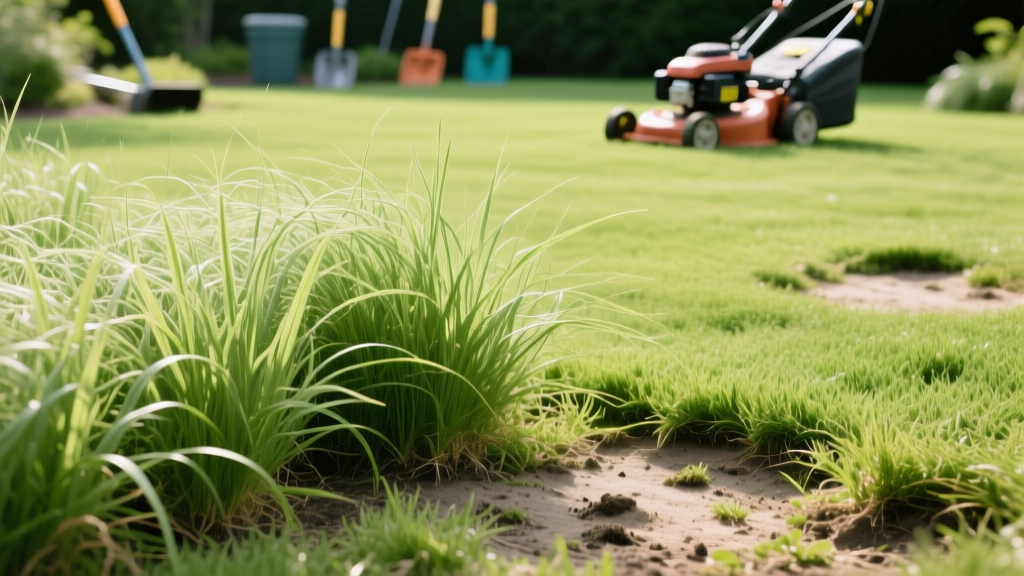
How to Eradicate Bermuda Grass: The Complete Removal Playbook
Bermuda grass (Cynodon dactylon) is a botanical paradox. While it serves as a premium, drought-tolerant turf in southern climates, it becomes a ruthless, creeping weed when it invades cool-season fescue lawns, ornamental garden beds, or hardscape cracks in the transition zone. Because it spreads aggressively via both above-ground stolons and deep below-ground rhizomes, simply pulling or tilling it is entirely ineffective. In fact, mechanical disruption often accelerates the infestation.
This playbook provides exact chemical and organic protocols to eradicate Bermuda grass, tailored to whether you are trying to save an existing cool-season lawn or clear a landscape bed for new plantings.
The Anatomy of an Invasion: Why Bermuda Resists Eradication
Critical Biology Fact: A single Bermuda grass plant can produce rhizomes (underground stems) that penetrate up to 6 inches deep in loose soil, and stolons (above-ground runners) that spread outward at a rate of 2 to 3 inches per week during peak summer growth. If even a 1-inch fragment of a rhizome with a single viable node is left in the soil, it will regenerate a new plant within 10 to 14 days.
Understanding this dual-growth mechanism is the foundation of any successful eradication strategy. Surface-level treatments will burn the foliage but leave the rhizome network intact, resulting in a rapid flush of new growth once moisture returns.
Playbook 1: Selective Eradication in Cool-Season Lawns
If Bermuda grass is invading a Tall Fescue or Fine Fescue lawn, your goal is selective eradication. You must kill the Bermuda without harming the desirable cool-season grass. The only reliably effective active ingredient for this specific scenario is Fluazifop-p-butyl.
The Fluazifop Protocol
Fluazifop is a post-emergent, systemic herbicide that targets grassy weeds while leaving most broadleaf plants and specific cool-season turfgrasses unharmed. In 2026, consumer-accessible formulations like Ortho Grass B Gon or professional-grade Fertilome Over-The-Top II remain the industry standard for this task.
- Timing is Non-Negotiable: Apply only when the Bermuda grass is actively growing and fully green. Late spring (when soil temperatures consistently exceed 65°F) through early fall is the window. Applying during winter dormancy will result in total failure.
- Calibrate the Mix: For an 8 oz bottle of concentrate, mix 0.5 to 0.75 oz of Fluazifop per gallon of water. This covers approximately 400 square feet.
- Add a Surfactant: Fluazifop requires a Non-Ionic Surfactant (NIS) to penetrate the waxy cuticle of the Bermuda leaf. Add 0.25% v/v of NIS (approximately 1/2 teaspoon per gallon of mix). Skipping this step reduces efficacy by up to 60%.
- Apply in Two Passes: Spray the infested area evenly. Wait 14 to 21 days. The Bermuda will turn yellow, then brown as the chemical translocates to the rhizomes. Apply a second treatment to any surviving green shoots.
| Active Ingredient | Common Trade Names | Safe For | Avg. Cost (2026) |
|---|---|---|---|
| Fluazifop-p-butyl | Ortho Grass B Gon, Fertilome Over-The-Top II | Tall Fescue, Fine Fescues | $45 - $65 (8 oz) |
| Sethoxydim | Vantage, Hi-Yield Grass Killer | Centipedegrass (Not Fescue) | $50 - $70 (16 oz) |
| Glyphosate | Roundup, Glyphosate 41% | NONE (Non-selective) | $20 - $30 (1 gal) |
Playbook 2: Total Clearance in Garden Beds and Hardscapes
When Bermuda invades ornamental beds, vegetable gardens, or paver patios, selective herbicides are no longer the primary tool. You must choose between non-selective chemical wicking or intensive organic smothering.
Chemical Wicking: The Paintbrush Method
Spraying Glyphosate in a garden bed risks lethal drift onto desirable ornamentals. Instead, use the wicking or 'painting' method.
- Mix a 2% to 3% Glyphosate solution (approx. 3 oz per gallon of water) with a surfactant and a blue turf-marking dye so you can see what you have treated.
- Using a 2-inch foam brush or a specialized herbicide wicking wand, physically paint the solution onto the Bermuda grass leaves.
- Do not mow or trim the Bermuda for 7 days prior to application; you need maximum leaf surface area to absorb the chemical and translocate it down to the rhizomes.
Organic Protocols: Smothering vs. Solarization
If you refuse to use synthetic herbicides in your landscape beds, you must rely on light deprivation or thermal death. Both require patience.
Cardboard Smothering
Method: Mow grass to 1 inch. Lay down overlapping layers of heavy, uncoated corrugated cardboard (remove all plastic tape and labels). Wet thoroughly. Top with 4 to 6 inches of arborist wood chips.
Timeline: 6 to 8 months. Best started in late fall for spring planting.
Plastic Solarization
Method: Till soil lightly, water deeply. Cover with clear 4-mil to 6-mil polyethylene plastic (black plastic does not trap enough heat). Bury edges in a 6-inch trench to seal. The greenhouse effect will raise soil temps to 110°F–130°F at a 2-inch depth.
Timeline: 6 to 8 weeks during peak summer (requires consistent 90°F+ ambient air temps).
The 90-Day Eradication Timeline
Eradicating Bermuda is not a weekend project; it is a seasonal campaign. Follow this strict timeline to ensure rhizome exhaustion.
- Day 1 (Preparation): Stop mowing the infested area. Allow the Bermuda grass to grow to 3–4 inches to maximize chemical uptake. Water the area deeply 24 hours before treatment to ensure the plant is not drought-stressed (stressed plants shut down their vascular systems and won't pull herbicide into the roots).
- Day 7 (First Application): Apply Fluazifop (for lawns) or paint Glyphosate (for beds) during a calm morning when temperatures are between 70°F and 85°F.
- Day 21 (Assessment & Second Application): Inspect the area. The grass should be yellowing or browning. Spot-treat any remaining green patches with a second application.
- Day 45 (The Scratch Test): Dig up a small section of the dead turf. Scratch the rhizomes with a thumbnail. If they are white and firm, the plant is still alive and requires a third chemical application. If they are brown, mushy, or brittle, the rhizome network is dead.
- Day 60 to 90 (Rehabilitation): Once rhizomes are confirmed dead, remove the dead thatch. For lawns, core aerate and overseed with Tall Fescue at a rate of 8 to 10 lbs per 1,000 sq ft. For beds, amend the soil and plant your desired ornamentals.
Critical Failure Points to Avoid
WARNING: Never Till or Rototill Bermuda Grass
Tilling is the single fastest way to multiply a Bermuda infestation. A rototiller chops the deep rhizomes into hundreds of 2-inch fragments, each containing a node. You will effectively plant hundreds of new Bermuda clones across your yard. Always kill the grass chemically or smother it before any soil disruption.
Tilling is the single fastest way to multiply a Bermuda infestation. A rototiller chops the deep rhizomes into hundreds of 2-inch fragments, each containing a node. You will effectively plant hundreds of new Bermuda clones across your yard. Always kill the grass chemically or smother it before any soil disruption.
WARNING: Kentucky Bluegrass Sensitivity
While Fluazifop is generally safe for Tall Fescue and Fine Fescues at standard eradication rates, it can cause severe stunting and chlorosis in Kentucky Bluegrass. If your lawn is a Bluegrass mix, you must use a half-rate application (0.25 oz per gallon) applied more frequently, or consider spot-treating with Glyphosate and reseeding the dead patches.
While Fluazifop is generally safe for Tall Fescue and Fine Fescues at standard eradication rates, it can cause severe stunting and chlorosis in Kentucky Bluegrass. If your lawn is a Bluegrass mix, you must use a half-rate application (0.25 oz per gallon) applied more frequently, or consider spot-treating with Glyphosate and reseeding the dead patches.
Successfully removing Cynodon dactylon requires patience and precise execution. By respecting the plant's biology and adhering to strict application timings, you can reclaim your fescue lawn or garden beds without resorting to total soil replacement. For more detailed regional advice on turfgrass management, consult resources from the Clemson University Home & Garden Information Center or the University of Georgia Extension Turfgrass program.