
Grass Types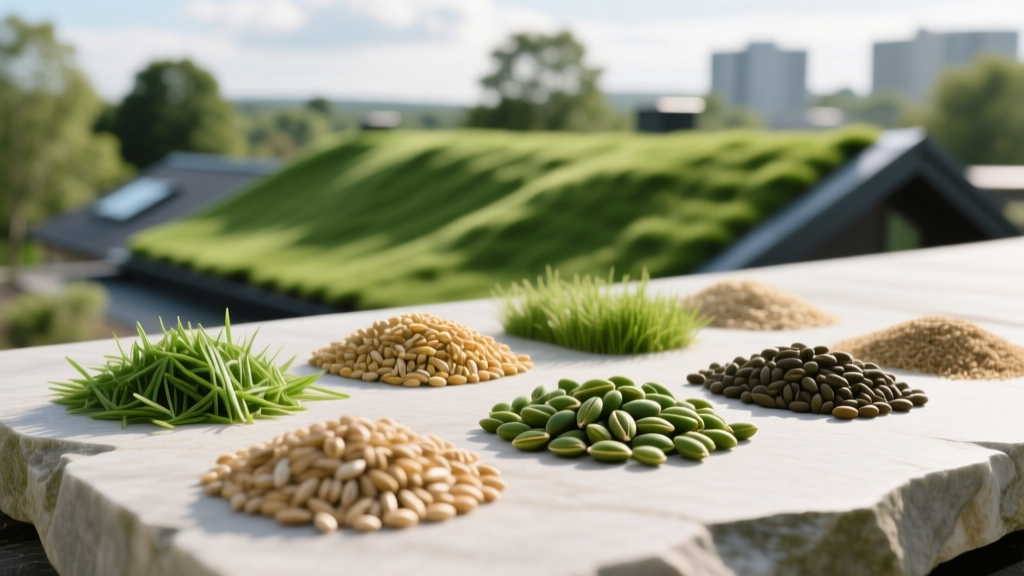
Best Grass Seed Mixes for an Extensive Sod Roof Establishment
Understanding the Sod Roof Environment
A sod roof—technically classified as an extensive green roof when utilizing shallow growing media—presents one of the most hostile environments for turfgrass establishment. Unlike ground-level lawns, a rooftop ecosystem is characterized by high wind desiccation, extreme thermal fluctuations, and severe weight restrictions. Establishing a living turf mat from seed on a roof requires abandoning traditional topsoil and Kentucky Bluegrass in favor of engineered lightweight substrates and deep-rooted, drought-resistant species.
According to the U.S. Environmental Protection Agency, extensive green roofs typically feature a growing medium depth of 2 to 6 inches and weigh between 12 and 35 pounds per square foot when fully saturated. Because of these strict weight limits, the seed-to-soil contact, moisture retention, and erosion control strategies used in ground-level seeding are entirely insufficient for a sloped or flat roof deck.
⚠️ Structural Load Warning: Before purchasing seed or substrate, a licensed structural engineer must verify your roof's dead and live load capacity. A 6-inch layer of saturated engineered green roof media weighs approximately 18-22 lbs/sq ft. Never use standard topsoil, which can exceed 100 lbs/sq ft when wet and cause catastrophic structural failure.
Engineered Substrate: The Foundation of Roof Turf
You cannot seed a sod roof into standard potting soil or topsoil. The global standard for green roof media, established by the German FLL (Landscape Research, Development, and Construction Society), dictates that extensive roof substrates must consist of 70% to 80% inorganic porous aggregates and 20% to 30% organic matter.
- Inorganic Aggregates (70-80%): Expanded shale, expanded clay (LECA), or pumice (3/8-inch to 1/2-inch particle size). These provide permanent porosity, prevent compaction, and anchor grass roots without retaining excessive water weight.
- Organic Matter (20-30%): High-quality, screened compost or coconut coir. Avoid peat moss, which becomes hydrophobic when dry and is difficult to re-wet on a windy roof.
As of 2026, commercial engineered green roof media costs between $45 and $65 per cubic foot. For a 1,000 square foot roof requiring a 4-inch depth, you will need approximately 133 cubic feet of media, costing roughly $6,000 to $8,600 delivered.
Grass Species Selection Matrix for Sod Roofs
The Green Roofs for Healthy Cities organization emphasizes that extensive roofs require plants with high drought tolerance, shallow root adaptability, and low nutrient requirements. Fine fescues dominate this space due to their low water requirements and ability to thrive in shallow, low-organic media.
| Species / Cultivar | Scientific Name | Seeding Rate (per 1k sq ft) | Roof Suitability | 2026 Seed Cost (approx.) |
|---|---|---|---|---|
| Hard Fescue | Festuca trachyphylla | 5 - 7 lbs | Excellent (Highly drought tolerant, low fertility needs) | $8 - $11 / lb |
| Sheep Fescue | Festuca ovina | 5 - 7 lbs | Excellent (Forms dense bunches, highly wind resistant) | $9 - $12 / lb |
| Creeping Red Fescue | Festuca rubra | 4 - 6 lbs | Good (Spreads via rhizomes, helps bind shallow media) | $7 - $10 / lb |
| Buffalograss | Bouteloua dactyloides | 2 - 3 lbs (burs) | Moderate (Requires full sun, goes dormant in winter) | $15 - $20 / lb |
Pro Tip: Avoid Kentucky Bluegrass and Perennial Ryegrass for extensive sod roofs. Both require high nitrogen inputs and frequent irrigation, which adds unacceptable weight and maintenance to a shallow roof system. A blend of 40% Hard Fescue, 40% Sheep Fescue, and 20% Creeping Red Fescue provides the optimal balance of bunching and rhizomatous spread for wind and erosion resistance.
Seeding Protocols: Overcoming Wind and Slope
Broadcasting seed by hand on a roof is a guaranteed path to failure. Wind will strip the lightweight fescue seeds off the roof before they ever reach the substrate. You must utilize mechanical or chemical binding agents during the seeding process.
Method 1: Hydroseeding with Tackifiers (Best for Slopes > 10%)
Hydroseeding is the industry standard for sloped sod roofs. The seed is suspended in a water-based slurry containing a tackifier—a natural, biodegradable glue that binds the seed to the porous aggregate.
- Slurry Mix: Combine 50 gallons of water, 6 lbs of fine fescue seed, 4 lbs of guar-gum or psyllium-based tackifier, and 15 lbs of cellulose mulch per 1,000 square feet.
- Application: Spray evenly to achieve a light, mottled green coating. Do not apply so thickly that you smother the porous substrate; the goal is seed adherence, not a thick mulch blanket.
- Cost: Professional hydroseeding for roofs typically runs $0.35 to $0.55 per square foot due to the equipment hoisting requirements.
Method 2: Broadcast Seeding with Erosion Netting (Best for Flat or Low-Slope Roofs)
For roofs with a pitch of less than 10% (a 1.2-inch drop per foot), you can use dry broadcast seeding secured by biodegradable erosion control blankets.
- Spread the fine fescue seed blend at 6 lbs per 1,000 sq ft using a drop spreader equipped with a wind guard.
- Lightly drag a piece of chain-link fence or a specialized seed roller across the aggregate to push the seed into the pore spaces of the expanded shale.
- Unroll 100% biodegradable jute or coir netting (e.g., RoLanka Coir Netting) over the seeded area.
- Staple the netting directly into the roof's drainage mat or underlying rigid insulation using 6-inch landscape staples, placed every 2 feet in a grid pattern.
First-Year Irrigation and Establishment Timeline
Even drought-tolerant fine fescues require consistent moisture to germinate and establish a root system capable of surviving rooftop heat. Because you cannot rely on deep soil moisture, temporary irrigation is mandatory.
💧 The 60-Day Establishment Rule: For the first 60 days post-seeding, the top 1 inch of the green roof media must never dry out completely. Utilize a temporary above-ground drip irrigation grid (1/4-inch tubing with 6-inch emitter spacing) connected to a smart controller with a rooftop rain sensor. Remove the drip system once the turf has undergone its first mowing or reached a 3-inch height.
Fertilization Restrictions
Do not apply high-nitrogen starter fertilizers to a newly seeded sod roof. Excessive nitrogen promotes rapid, weak top-growth that outpaces root development and increases the roof's water demand. Instead, apply a slow-release, low-nitrogen organic fertilizer (such as a 4-2-2 NPK feather meal blend) at half the standard lawn rate (approx. 0.5 lbs of actual Nitrogen per 1,000 sq ft) at the time of seeding.
Frequently Asked Questions
Can I mix Sedum with grass seed on a sod roof?
Yes, and it is highly recommended. Mixing fine fescue seed with Sedum cuttings (such as Sedum acre or Sedum sexangulare) creates a diverse, resilient matrix. The Sedum acts as a living mulch, shading the substrate to reduce evaporation and protecting the delicate fescue seedlings from extreme UV radiation during the first summer.
How deep do fine fescue roots grow in a 4-inch roof substrate?
In ground soil, fine fescue roots can reach 12 inches. In a 4-inch extensive green roof media, the roots will densely colonize the entire 4-inch profile, wrapping around the expanded shale particles. The physical restriction forces the plant to allocate energy to lateral rhizome spread rather than deep taproots, which actually improves the turf's wind-shear resistance.
When is the best time of year to seed a sod roof?
Early autumn (late August to mid-September in the Northern Hemisphere) is the optimal window. The media retains summer warmth, promoting rapid germination, while the cooler autumn air reduces evapotranspiration rates. Spring seeding is risky on roofs, as young seedlings are often scorched by sudden early-summer heatwaves before their root systems can anchor into the shallow aggregate.

