Grass Types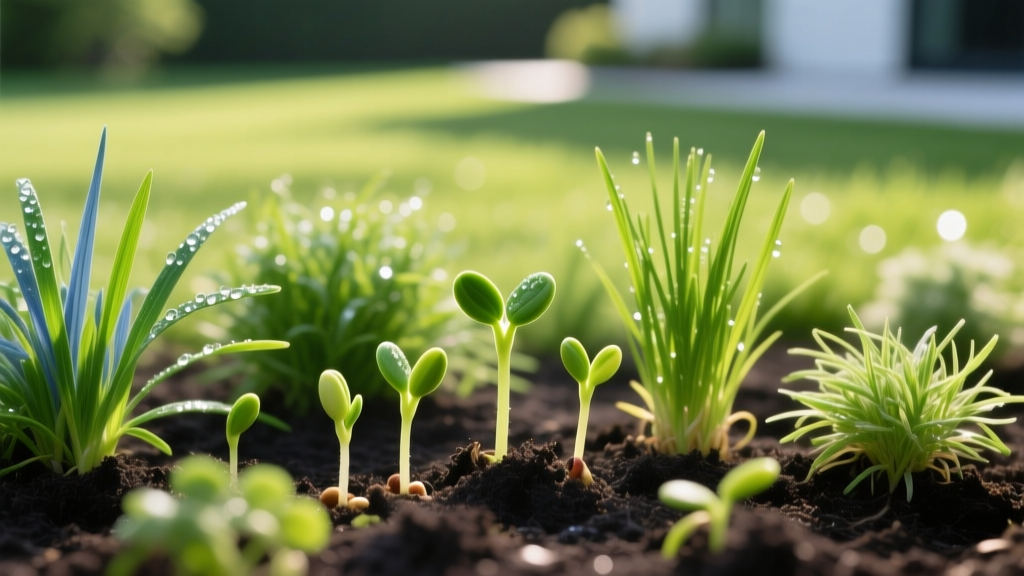
The Grass Seed That Grows the Fastest: Rapid Lawn Establishment
When repairing bare patches, preventing erosion, or establishing a new lawn before a deadline, homeowners universally search for the grass seed that grows the fastest. However, speed in turfgrass establishment is a two-part equation: germination (the initial sprout) and establishment (a mature, mowable root system). Selecting the right species requires matching your climate zone to the biological limits of the seed, while optimizing soil conditions to accelerate cellular imbibition.
Germination vs. Establishment: The Speed Trap
Marketing labels often conflate germination with full lawn establishment. Germination is the biological process where the seed absorbs water, swells, and pushes a radicle (primary root) through the seed coat. Establishment is the point at which the turf has developed a secondary root system, tillered (produced lateral shoots), and can withstand a standard mowing cycle.
According to turfgrass research from NC State TurfFiles, a grass might germinate in five days but require 45 to 60 days to establish a root network deep enough to survive summer drought stress. If you plant a fast-germinating seed in poorly prepared soil, the initial sprout will emerge quickly but stall during the establishment phase, leaving you with thin, weak turf that dies at the first sign of heat stress.
The 5-to-7 Day Germinators (Cool-Season Champions)
For cool-season lawns (USDA Zones 3-8), Perennial Ryegrass (Lolium perenne) is the undisputed king of rapid germination. Under optimal soil temperatures of 50°F to 65°F, perennial ryegrass seeds break dormancy and sprout in just 5 to 7 days. It establishes a functional, albeit shallow, root system within 21 days, making it the go-to choice for emergency erosion control and rapid bare-spot repair.
Tall Fescue (Festuca arundinacea) is the runner-up, typically germinating in 7 to 12 days. While slightly slower than ryegrass, modern turf-type tall fescues develop much deeper root systems (up to 3 feet), offering superior long-term drought tolerance once established.
The 10-to-14 Day Germinators (Warm-Season Options)
Warm-season grasses are biologically slower to germinate due to their requirement for higher thermal thresholds. Hulled Bermudagrass (Cynodon dactylon) is the fastest warm-season option from seed. When soil temperatures consistently hold above 70°F at a 2-inch depth, hulled bermudagrass will germinate in 10 to 14 days. Unhulled varieties take 14 to 21 days because the seed must first break down its outer hull in the soil.
Germination & Establishment Timelines
| Grass Species | Germination (Days) | First Mow (Days) | Optimal Soil Temp | Avg. Seed Cost (per lb) |
|---|---|---|---|---|
| Perennial Ryegrass | 5 - 7 | 14 - 21 | 50°F - 65°F | $6.00 - $9.00 |
| Tall Fescue | 7 - 12 | 21 - 28 | 50°F - 65°F | $4.00 - $7.00 |
| Kentucky Bluegrass | 14 - 30 | 30 - 45 | 50°F - 65°F | $8.00 - $12.00 |
| Hulled Bermudagrass | 10 - 14 | 21 - 30 | 70°F - 85°F | $12.00 - $18.00 |
| Centipedegrass | 14 - 21 | 30 - 45 | 70°F - 80°F | $25.00 - $40.00 |
Top Cultivar Picks for Rapid Growth
Not all seed within a species performs equally. Plant breeders have developed specific cultivars optimized for aggressive seedling vigor. When sourcing seed, look for these specific varieties on the seed tag:
- Cool-Season: 'Manhattan 4' and 'Pinnacle II' Perennial Ryegrass. These cultivars exhibit exceptional seedling vigor and high resistance to gray leaf spot, a fungus that frequently attacks fast-growing, lush ryegrass seedlings in humid conditions.
- Warm-Season: 'Yukon' and 'Arden 15' Bermudagrass. These seeded varieties offer rapid lateral spread via stolons once germinated, closing canopy gaps 20% faster than common bermudagrass varieties.
⚠️ The Annual Ryegrass Trap
Many cheap "contractor blends" at big-box stores use Annual Ryegrass (Lolium multiflorum) to boast 5-day germination times on the bag. While it sprouts incredibly fast, it is a cool-season annual that will die completely when summer heat arrives, leaving your lawn bare again. Always read the seed tag and ensure the label specifies Perennial Ryegrass.
Soil Prep Tactics to Accelerate Seed Sprouting
Even the grass seed that grows the fastest will stall if environmental triggers are mismanaged. Seed germination relies on imbibition—the rapid uptake of water that activates enzymes like amylase to convert stored starches into energy. To maximize this biological process, implement the following protocols:
1. The 5-Minute Watering Rule
The most common failure mode in rapid establishment is improper hydration. Seeds require constant surface moisture to imbibe water, but they will rot if submerged. Instead of watering once a day for 20 minutes, set your irrigation to run 3 to 4 times a day for 5 minutes each. This keeps the top 1/2 inch of soil consistently moist without creating anaerobic, waterlogged conditions that invite Pythium blight.
2. Phosphorus-Driven Root Acceleration
Nitrogen pushes leaf growth, but Phosphorus drives the ATP (cellular energy) production required for rapid root establishment. According to guidelines from the University of Minnesota Extension, applying a starter fertilizer with a high middle number (such as a 10-18-10 NPK ratio) at the time of seeding can reduce establishment time by up to 14 days. Apply at a rate of 1.0 lb of actual P2O5 per 1,000 square feet. Note: Check local municipal ordinances, as some regions restrict phosphorus use unless a soil test proves a deficiency.
3. Precise Seeding Depth
Small seeds lack the energy reserves to push through deep soil. Perennial ryegrass and bermudagrass must be seeded at a depth of 1/8 to 1/4 inch. If broadcast by hand, lightly drag a leaf rake or a piece of chain-link fence over the area to ensure seed-to-soil contact without burying the seed. Seeds buried deeper than 1/2 inch will exhaust their energy reserves before reaching the surface, resulting in zero germination regardless of the species' natural speed.
Troubleshooting: Why Your Fast Seed is Stalling
If you have planted a 5-day germinating ryegrass and see no sprouts by day 8, diagnose the issue using this framework:
- Check Soil Temperature, Not Air Temperature: Air temps of 70°F do not guarantee soil temps of 50°F. Use a probe soil thermometer. If the soil is below 45°F, ryegrass will remain dormant. Use a clear polyethylene sheet to create a temporary greenhouse effect and raise soil temps.
- Inspect for Soil Crusting: Heavy clay soils can form a hard crust after watering, physically blocking the delicate radicle from penetrating the surface. If crusting is present, lightly mist the area with water and use a push broom to gently fracture the top millimeter of soil.
- Verify Seed Viability: Check the "Test Date" on the seed tag. If the seed was tested more than 12 months ago and stored in a hot garage, the germination rate drops exponentially. Always buy seed with a test date within the current calendar year.
Frequently Asked Questions
Can I mix Kentucky Bluegrass with Perennial Ryegrass for speed?
Yes, this is a standard industry practice known as a "nurse crop" strategy. The ryegrass germinates in 5 days, stabilizing the soil and providing shade, while the Kentucky Bluegrass slowly germinates over 14 to 21 days and eventually takes over via rhizome spread. Keep the ryegrass percentage below 20% by weight, or it will outcompete the bluegrass for nutrients.
Does hydroseeding make grass grow faster than dry seed?
Hydroseeding does not change the biological germination timeline of the seed species, but the cellulose mulch and tackifiers in the slurry retain moisture 40% longer than bare soil. This prevents the micro-drying cycles that stall germination, effectively allowing the seed to reach its maximum genetic speed without interruption.