
Grass Types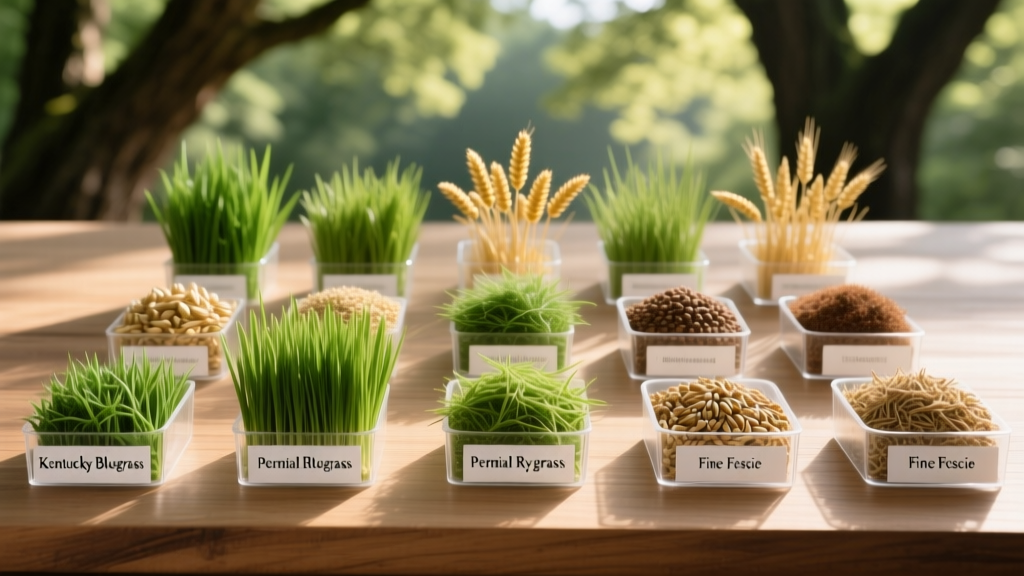
Best Grass Seed That Grows Quickly for Fast Lawn Establishment
When repairing bare patches, establishing a new lawn before the next rainstorm, or outcompeting early-season weeds, homeowners need a turfgrass solution that delivers immediate results. Finding the right grass seed that grows quickly requires looking beyond generic hardware store blends and understanding the biological germination windows of specific turfgrass species. While Kentucky Bluegrass (KBG) can take up to 30 days to sprout, select cool-season and warm-season cultivars can break through the soil in as little as five days under optimal conditions.
This guide breaks down the fastest-germinating grass species, the hidden trade-offs of moisture-retaining seed coatings, and the exact soil preparation protocols required to accelerate establishment.
The Science of Rapid Germination: Soil Temperature vs. Air Temperature
Expert Insight: The 2-Inch Rule
Grass seed does not germinate based on the air temperature outside; it germinates based on the soil temperature at a 2-inch depth. Cool-season grasses require a consistent soil temperature between 50°F and 65°F to trigger enzymatic activity. If you seed when the air is 70°F but the soil is still 45°F from a late winter freeze, even the fastest grass seed that grows quickly will remain dormant. Always use a soil probe thermometer before seeding.
Top Cool-Season Grass Seeds That Grow Quickly
For northern and transition-zone lawns, cool-season grasses dominate the rapid-establishment category. According to turfgrass research from NC State TurfFiles, specific cultivars have been bred not just for disease resistance, but for aggressive seedling vigor.
| Grass Species | Top Fast-Germinating Cultivars | Days to Germinate | Seeding Rate (lbs/1,000 sq ft) |
|---|---|---|---|
| Perennial Ryegrass | Palmer IV, Caddieshack, Barry | 5 – 7 Days | 6 – 8 lbs |
| Annual Ryegrass | Gulf, Marshall | 5 – 7 Days | 8 – 10 lbs |
| Tall Fescue | Titan Ultra, RTF (Rhizomatous) | 7 – 12 Days | 8 – 10 lbs |
| Fine Fescue | Shoreline Creeping Red, Compass II | 7 – 14 Days | 5 – 6 lbs |
Perennial Ryegrass: The Speed King
Perennial ryegrass (Lolium perenne) is the undisputed champion of rapid establishment. It germinates in 5 to 7 days and establishes a playable, traffic-tolerant turf in about 21 days. It is highly recommended for overseeding thin lawns or repairing high-wear areas like sports fields and pathways. However, it lacks the deep drought tolerance of tall fescue and requires frequent irrigation during peak summer heat.
Tall Fescue: The Durable Sprinter
While slightly slower than ryegrass, modern turf-type tall fescue (TTTF) varieties germinate in 7 to 12 days. Cultivars labeled as RTF (Rhizomatous Tall Fescue) spread via underground rhizomes, allowing them to fill in bare spots laterally after the initial seed germination. Tall fescue is the superior choice for a permanent, quick-establishing lawn in the transition zone due to its deep root system, which can reach up to 3 feet in well-aerated soils.
Warm-Season Contenders for Fast Establishment
For southern climates, warm-season grasses require soil temperatures between 65°F and 75°F to germinate. While most warm-season grasses (like Zoysia or Centipede) are notoriously slow from seed, seeded Bermudagrass is the exception.
- Yukon Bermudagrass: Germinates in 10 to 14 days. Offers excellent cold tolerance for a warm-season grass, making it viable in the upper transition zone.
- Sahara II Bermudagrass: Germinates in 10 to 14 days. Highly drought-tolerant once established, requiring significantly less water than ryegrass or fescue.
Warning: The 'Nurse Grass' Trap
Many cheap 'contractor grade' seed blends use Annual Ryegrass as a 'nurse grass' because it sprouts in 5 days, providing a quick green cover that protects slower-germinating Kentucky Bluegrass (KBG) seeds. The problem? Annual ryegrass dies in the summer heat, leaving your lawn patchy. Furthermore, its aggressive early growth can outcompete the KBG for water and nutrients, stunting the permanent grass. Always check the seed tag and avoid blends containing more than 10% annual ryegrass.
Seed Coatings and 'Quick Fix' Mixes: The Hidden Trade-offs
Products marketed as rapid-establishment solutions, such as Scotts EZ Seed or Pennington Smart Seed, utilize clay, polymer, or mulch coatings. These coatings act as a moisture reservoir, holding up to 40% of their weight in water, which keeps the seed hydrated and can accelerate germination by 1 to 2 days compared to raw seed.
The E-E-A-T Reality Check: When you buy a 20 lb bag of coated seed, you are often only getting 8 to 10 lbs of actual grass seed; the rest is coating weight. To achieve the proper seeding density (e.g., 8 lbs of actual perennial ryegrass per 1,000 sq ft), you must physically apply double the weight of coated seed. If you follow the raw-seed application rates on the bag with heavily coated products, you will under-seed your lawn by 50%, resulting in a thin, weed-prone turf.
Step-by-Step Protocol for Maximum Germination Speed
To push your grass seed that grows quickly to its absolute biological limit, follow this precise establishment protocol endorsed by turf management professionals and detailed in University of Minnesota Extension guidelines.
- Soil Scarification (Day 1): Do not just throw seed on hard dirt. Use a dethatching rake or a core aerator to break the top 0.5 inches of soil. Seed-to-soil contact is the primary catalyst for moisture absorption.
- Starter Fertilizer Application (Day 1): Apply a high-phosphorus starter fertilizer (e.g., an 18-24-12 N-P-K ratio). Phosphorus is critical for early root (radicle) development. Pro Tip: Use a starter fertilizer containing mesotrione (like Scotts Starter Fertilizer with Weed Preventer). It prevents weed seeds from germinating without harming your new grass seed.
- Grid Seeding (Day 1): Set your rotary spreader to the recommended rate. Apply half the seed walking North-South, and the other half walking East-West. This eliminates striping and ensures uniform density.
- The 'Syringing' Watering Method (Days 1-10): Do not deep-water. Deep watering washes seeds away and deprives the surface of oxygen. Instead, 'syringe' the lawn: water for 5 minutes, 3 to 4 times a day. The goal is to keep the top 1 inch of soil constantly damp, not muddy.
- First Mow (Day 18-25): Wait until the grass reaches 3.5 inches tall. Mow it down to exactly 2.5 inches using a sharp mower blade. A dull blade will rip the shallow-rooted seedlings out of the ground.
Frequently Asked Questions
Can I use grass seed that grows quickly in the middle of summer?
It is highly discouraged. Even fast-germinating cool-season seeds like perennial ryegrass will suffer from severe heat stress and fungal diseases (like Pythium blight) if planted when daytime air temperatures consistently exceed 85°F. The rapid evaporation rates in summer make it nearly impossible to keep the seedbed moist enough for the 5-to-7-day germination window without overwatering and rotting the seed.
Does hydroseeding make grass grow faster than broadcast seeding?
Hydroseeding does not change the biological germination time of the seed itself, but it creates a superior microclimate. The cellulose mulch in the hydroseed slurry retains moisture far better than broadcast seeding, preventing the seed from drying out during the critical first 48 hours. This consistency often results in a more uniform and visually 'faster' establishment because fewer seeds fail due to desiccation.
What is the fastest way to establish a warm-season lawn?
If you need a warm-season lawn established in weeks rather than months, skip seed entirely and use sod or plugs. Bermudagrass and Zoysia plugs planted on 12-inch centers and fertilized with a high-nitrogen fertilizer (like 30-0-0) will spread and knit together in 6 to 8 weeks during the peak heat of July and August, vastly outperforming seeded warm-season varieties.

