
Grass Types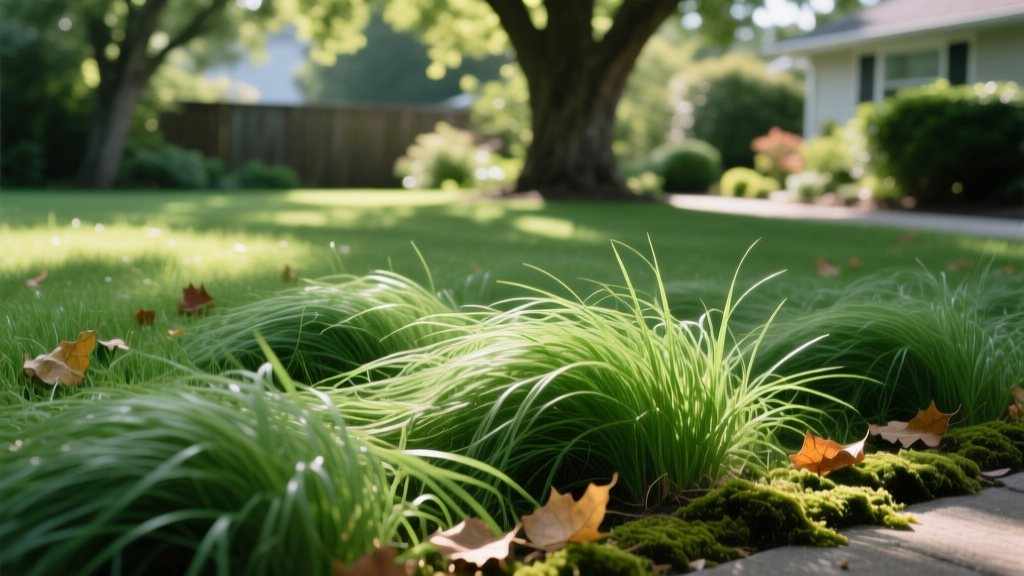
Fine Fescues for Beginners: Growing Shade-Tolerant Lawns
The Unsung Heroes of Cool-Season Shaded Lawns
When homeowners struggle to grow grass beneath mature oak trees or along the shaded north side of their houses, they often blame themselves for poor gardening skills. In reality, the failure usually stems from planting the wrong species. Kentucky bluegrass and perennial ryegrass demand full sun and high inputs to survive. For heavily shaded or low-maintenance landscapes, fine fescues are the definitive solution.
Fine fescue is not a single grass species, but rather a collective term for several cool-season grasses characterized by their narrow, needle-like leaf blades. They require significantly less water, fertilizer, and mowing than traditional turfgrasses. However, they also possess unique vulnerabilities—particularly regarding foot traffic and summer heat stress—that beginners must understand before purchasing seed.
The Four Subspecies: A Comparison Matrix
To select the right seed blend, you must understand the botanical differences between the four primary fine fescue types. According to Penn State Extension, mixing these subspecies provides a resilient lawn that can adapt to microclimates within your yard.
| Subspecies | Growth Habit | Shade Tolerance | Drought Tolerance | Top 2026 Cultivars |
|---|---|---|---|---|
| Creeping Red Fescue | Rhizomatous (spreads) | Excellent | Moderate | Navigator II, Shoreline |
| Chewings Fescue | Bunch-type | Excellent | Moderate | Independence, Salem |
| Hard Fescue | Bunch-type | Good | Excellent | Aurora Gold, Spartan II |
| Sheep Fescue | Bunch-type | Good | Excellent | Quatro, Dakota |
Pro Tip: For a standard residential lawn, purchase a blend containing at least 40% creeping red fescue for its spreading rhizomes, which help fill in bare spots that the bunch-type fescues (Chewings, Hard, Sheep) cannot naturally repair.
Real-World Trade-Offs: What Beginners Must Know
Fine fescues are often marketed as 'miracle' low-maintenance grasses, but they have strict limitations. Understanding these trade-offs prevents costly renovation projects down the line.
The Advantages
- Unmatched Shade Tolerance: They can survive and thrive in areas receiving only 3 to 4 hours of dappled sunlight daily.
- Low Fertility Requirements: They require only 1 to 2 lbs of nitrogen per 1,000 square feet annually. Over-fertilizing actually harms them.
- Drought Resilience: Hard and Sheep fescues possess deep root systems that allow them to go dormant during summer droughts and recover in autumn without supplemental irrigation.
The Limitations
- Poor Traffic Tolerance: Fine fescues do not recover well from compaction or heavy foot traffic. They are unsuitable for active play areas or sports fields.
- Slow Establishment: Germination takes 7 to 14 days, and full establishment can take an entire growing season. Weeds can easily outcompete seedlings during this window.
- Summer Heat Vulnerability: When daytime temperatures consistently exceed 85°F, fine fescues experience severe physiological stress and are highly susceptible to fungal pathogens.
Step-by-Step Seeding and Establishment Protocol
As of 2026, premium fine fescue seed blends cost between $10 and $14 per pound. Because the recommended seeding rate is 5 to 6 lbs per 1,000 square feet, expect to invest $50 to $84 per 1,000 square feet in seed alone. Follow this protocol to protect your investment.
- Time the Seeding Perfectly: The only acceptable window for planting fine fescues is late summer to early fall (mid-August to late September in most northern zones). Spring seeding almost always fails because the young root systems cannot survive the ensuing summer heat.
- Prepare the Seedbed: Fine fescue seeds are incredibly small. They require a firm, smooth seedbed. Rake the soil to a fine tilth and roll it with a lightweight lawn roller before seeding. If the soil is too loose, the seeds will sink too deep and fail to germinate.
- Calibrate Your Spreader: Set your broadcast spreader to a low setting. Apply half the seed walking in a north-south direction, and the other half walking east-west. This cross-hatching prevents visible striping and ensures even coverage.
- Apply the Correct Mulch: Cover the seed with a 1/8-inch layer of peat moss or compost. Do not use straw. Straw often contains agricultural weed seeds that will choke out your slow-growing fescue seedlings. Peat moss retains moisture and blocks weeds without introducing contaminants.
- Manage Moisture: Water lightly 2 to 3 times a day for the first 14 days. The goal is to keep the top half-inch of soil consistently moist, not soggy. Once seedlings reach 2 inches tall, transition to deep, infrequent watering (1 inch per week).
The 'Less is More' Maintenance Framework
The most common mistake beginners make with fine fescues is treating them like Kentucky bluegrass. According to UMass Extension Turf Program, aggressive maintenance routines will actively degrade a fine fescue lawn.
Mowing Parameters
Set your mower deck to 2.5 to 3.5 inches. Fine fescues have a vertical growth habit; cutting them shorter than 2.5 inches removes too much photosynthetic tissue and invites weed invasion. Never remove more than one-third of the blade height in a single mowing. During the peak heat of July and August, raise the deck to 3.5 or 4 inches to shade the soil and protect the shallow root zone.
Fertilization Strategy
Fine fescues require minimal nitrogen. Apply a maximum of 1.5 to 2.0 lbs of nitrogen per 1,000 square feet per year. Split this into two applications: one in late spring (May) and one in early fall (September). Use a slow-release, polymer-coated urea or organic fertilizer (like milorganite) to prevent rapid, weak flushes of growth that attract fungal diseases.
Troubleshooting Common Failure Modes
Even with proper care, fine fescues can encounter specific pathological and environmental issues. Here is how to diagnose and resolve them.
- Red Thread Disease: Appears as pinkish-red, thread-like fungal structures binding the grass blades together, usually in cool, wet spring weather. Fix: Red thread is an indicator of nitrogen deficiency. Apply a quick-release nitrogen fertilizer at 0.5 lbs per 1,000 sq ft to stimulate growth and outpace the fungus.
- Summer Patch: Manifests as crescent-shaped or circular brown patches during high heat, often killing the roots entirely. Fix: This is exacerbated by soil compaction and high pH. Core aerate the lawn in the fall and apply elemental sulfur to lower the soil pH to the optimal 5.5–6.0 range.
- Thatch Accumulation: While bunch-type fescues produce little thatch, creeping red fescue can develop a dense thatch layer if over-fertilized. If the thatch layer exceeds 0.5 inches, perform core aeration in early fall. Avoid using dethatching machines (power rakes), as their aggressive tines will tear out the shallow fine fescue root systems.
Frequently Asked Questions
Can I mix fine fescue with Kentucky bluegrass?
Yes, but only in transition zones where the lawn receives mixed sun and shade. Keep the fine fescue percentage below 20% of the total seed mix by weight. If the fine fescue percentage is too high, its bunch-type growth habit will create a clumpy, uneven texture amidst the spreading bluegrass.
Are fine fescues deer resistant?
While no grass is entirely deer-proof, fine fescues are highly unpalatable to deer and rabbits compared to tender perennial ryegrass or newly sprouted Kentucky bluegrass. They are an excellent choice for properties bordering wooded areas with high wildlife pressure.
Why is my fine fescue turning brown in July?
Fine fescues naturally enter summer dormancy when soil temperatures exceed 75°F and moisture is scarce. This browning is a survival mechanism, not necessarily a sign of death. Avoid the urge to overwater dormant fescue, as wet, hot soil will trigger fatal Pythium blight. Allow it to sleep, and it will green up when autumn rains return.

