
Grass Types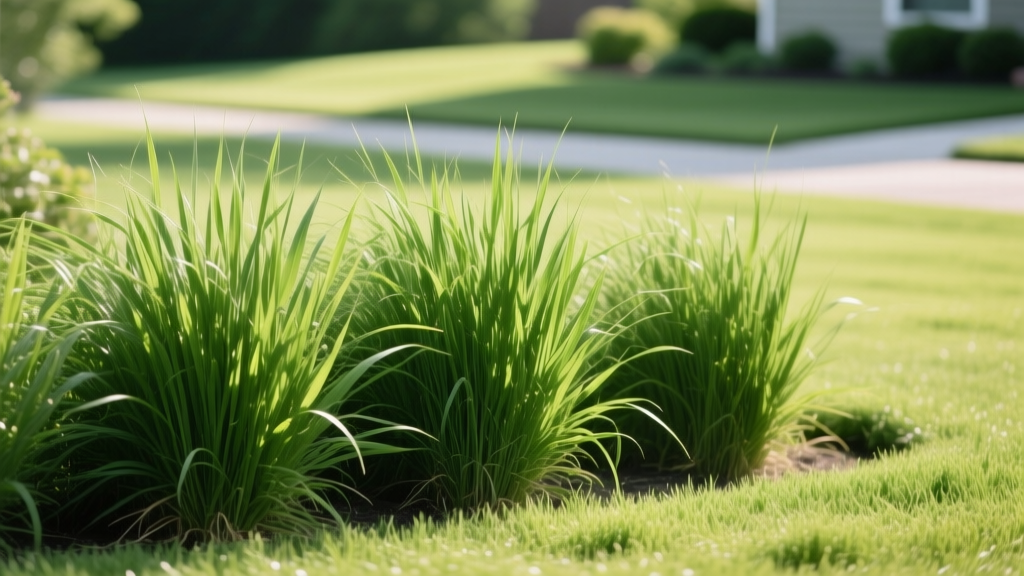
Clumping Tall Fescue: Why Lawns Bunch Up and How to Fix Them
Tall fescue is celebrated for its deep root system, drought tolerance, and ability to thrive in the transition zone. However, many homeowners are frustrated to find their lawn growing in distinct, isolated tufts rather than a uniform carpet. This phenomenon, known as clumping tall fescue or bunchgrass, occurs when the grass fails to spread laterally, leaving bare soil visible between the green crowns.
While tall fescue is inherently a bunch-type grass, modern breeding has vastly improved its lateral density. If your lawn resembles a collection of isolated green mounds, it is likely suffering from genetic limitations, severe environmental stress, or improper establishment. This guide breaks down the exact botanical reasons for clumping and provides a step-by-step framework to transition your lawn into a dense, uniform turf.
The Botany of Bunchgrass: Why Tall Fescue Clumps
To understand how to fix a clumpy lawn, you must understand how tall fescue (Festuca arundinacea) grows. Unlike Kentucky bluegrass, which spreads aggressively via underground stems called rhizomes, traditional tall fescue grows primarily through vertical shoots called tillers emerging from a central crown.
According to turfgrass researchers at North Carolina State University Extension, this bunch-type growth habit means the grass does not naturally 'creep' into bare spots. If a mature clump dies off due to disease, drought, or foot traffic, the surrounding grass cannot stretch to fill the void. The result is a lawn that looks like a polka-dot pattern of green clumps separated by dirt.
The K-31 Legacy Problem: Many older homes were seeded with Kentucky 31 (K-31), an early forage variety of tall fescue. K-31 has exceptionally wide leaf blades, a light green color, and an aggressive clumping habit. If your home was built before 2005 and the lawn has never been fully renovated, you are likely managing K-31 bunchgrass, which will never form a dense, carpet-like lawn regardless of your maintenance routine.
Modern Genetics: Comparing Tall Fescue Varieties
Not all tall fescue is created equal. When planning your lawn renovation, it is critical to select the correct seed variety to prevent future clumping. Below is a comparison of the three primary tall fescue categories available on the market today.
| Variety Type | Growth Habit | Blade Width | Best Use Case |
|---|---|---|---|
| Kentucky 31 (K-31) | Aggressive Bunchgrass | Very Wide (Coarse) | Pastures, erosion control, low-budget utility areas |
| Turf-Type Tall Fescue (TTTF) | Dense Bunchgrass (High Tiller Density) | Narrow to Medium | Standard residential lawns, high-traffic zones |
| Rhizomatous Tall Fescue (RTF) | Spreading via True Rhizomes | Narrow | Lawns requiring self-repair and lateral fill-in |
For homeowners dealing with severe clumping, overseeding with a blend of Turf-Type Tall Fescue (TTTF) and Rhizomatous Tall Fescue (RTF) is the most effective long-term solution. RTF varieties produce true rhizomes, allowing the grass to creep laterally and repair bare spots between the clumps, mimicking the behavior of Kentucky bluegrass while retaining fescue's heat and drought tolerance.
4 Environmental Triggers That Exacerbate Clumping
Even if you planted a modern TTTF blend, environmental stressors can force the grass to revert to a thin, clumpy appearance. Identifying these triggers is essential before you spend money on seed and fertilizer.
1. Severe Soil Compaction
Tall fescue roots require oxygen to generate new tillers. When heavy clay soils become compacted, the central crown of the plant survives by sending roots deep into the soil profile, but lateral tiller production halts. The grass focuses purely on vertical survival, resulting in isolated, thinning clumps.
2. Chronic Scalping
Mowing tall fescue below 2.5 inches removes the majority of its photosynthetic leaf area. According to data from the University of Minnesota Extension, scalping forces the plant to draw on stored root carbohydrates to push new growth. Over time, the crown becomes exhausted, lateral tillers die off, and the plant reduces to a single, struggling vertical shoot.
3. Summer Drought Stress
While tall fescue is drought-tolerant, prolonged periods without water cause the outer, younger tillers of a clump to desiccate and die. Only the oldest, most established shoots in the exact center of the crown survive. When the rain returns, only the center of the clump greens up, leaving a visible ring of bare soil around it.
4. Fungal Pathogens (Brown Patch)
Rhizoctonia solani, the fungus responsible for Brown Patch, thrives in hot, humid nights. It attacks the leaf blades and crowns of tall fescue, often killing off entire sections of a clump. Because the grass lacks aggressive rhizomes, the dead circular patches remain bare until the next fall overseeding season.
Step-by-Step Fix: Transitioning to a Uniform Lawn
Fixing a clumping tall fescue lawn requires a combination of mechanical disruption and genetic upgrading. Follow this protocol during the early fall (late August to mid-October), which is the optimal germination window for cool-season grasses.
- Scalp and Dethatch: Lower your mower deck to 1.5 inches and mow the entire lawn. Bag the clippings to remove excess thatch and expose the soil surface. This ensures new seed will make direct contact with the dirt, rather than getting trapped in dead organic matter.
- Core Aeration: Rent a walk-behind core aerator. Make two passes over the lawn in perpendicular directions. Your goal is to pull 3-inch deep soil plugs with a spacing of no more than 2 to 3 inches apart. This relieves compaction and creates micro-havens for new seed.
- Slit-Seed or Overseed: For heavily clumped lawns, renting a slit-seeder is highly recommended. A slit-seeder cuts shallow grooves into the soil and drops seed directly into the trench, guaranteeing seed-to-soil contact. Apply a high-quality TTTF/RTF blend at a rate of 6 to 8 pounds per 1,000 square feet. If broadcasting seed by hand or with a spreader, increase the rate to 8 to 10 pounds per 1,000 square feet.
- Topdress and Roll: Apply a thin layer (1/4 inch) of screened compost over the seeded area. This retains moisture and protects the seed from birds. Use a lightweight lawn roller to press the seed and compost firmly into the aeration holes.
- Strategic Watering: Water the lawn lightly 2 to 3 times a day for the first 14 days to keep the top inch of soil constantly moist. Once the seedlings reach 1 inch tall, transition to deep, infrequent watering (1 inch per week) to encourage deep root establishment.
Ongoing Maintenance to Prevent Future Bunching
Once your newly overseeded lawn has established, strict adherence to tall fescue maintenance parameters will prevent the grass from reverting to a clumpy state.
- Mowing Height: Maintain a mowing height between 3.0 and 4.0 inches. Taller grass shades the soil, reducing water evaporation and suppressing weed seeds that exploit bare spots between clumps.
- Fertilization: Apply 2.5 to 3.5 pounds of Nitrogen per 1,000 square feet annually, split across three applications (early fall, late fall, and early spring). Avoid heavy spring nitrogen, which promotes weak, fast growth susceptible to summer fungal diseases.
- Irrigation: Water deeply and infrequently. Apply 1 to 1.5 inches of water per week in a single or double session. Shallow, daily watering encourages shallow roots that die off quickly during summer heat, leading to clump dieback.
Frequently Asked Questions
Can I just dig up the clumps and lay sod?
While you can cut out individual clumps and lay tall fescue sod, it is rarely cost-effective for an entire lawn. Sod installation costs between $0.40 and $0.80 per square foot, meaning a 5,000 sq ft lawn could cost over $2,000 just in materials. Overseeding and slit-seeding cost roughly $150 to $300 for the same area and yield excellent results when done in the fall.
Will RTF (Rhizomatous Tall Fescue) spread as fast as Kentucky Bluegrass?
No. While RTF produces true rhizomes, its lateral spread rate is significantly slower than Kentucky bluegrass. RTF will fill in small bare spots (2 to 4 inches wide) over a single growing season, but it will not rapidly engulf large, damaged areas. It is best used to maintain density and prevent future clumping rather than as a rapid repair mechanism.
Is it too late to fix my clumpy lawn in the spring?
Spring is a secondary window for overseeding tall fescue, but it comes with high risks. Spring-germinated fescue has a very shallow root system when the intense heat of July arrives. If you must overseed in spring (mid-March to early April), be prepared to water heavily throughout the summer to prevent the young, shallow-rooted seedlings from dying off and reverting your lawn back to clumps.

