
Grass Types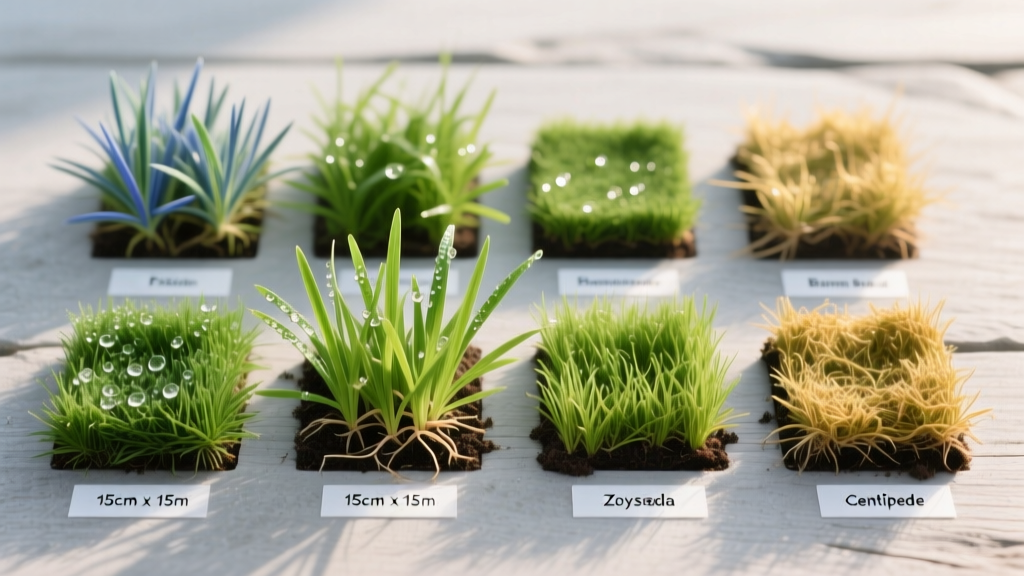
Exact Grass Germination Temperatures for Cool and Warm-Season Lawns
Successful lawn establishment relies on a single, often misunderstood biological trigger: soil temperature. While homeowners frequently base their seeding schedules on ambient air temperatures or calendar dates, turfgrass agronomy dictates that grass germination temperatures are strictly governed by the thermal profile of the top two inches of soil. Seeding outside the optimal thermal window for your specific grass species results in seed dormancy, pathogenic fungal outbreaks, or complete desiccation.
This guide provides the exact soil temperature thresholds, optimal ranges, and advanced establishment protocols required for both cool-season and warm-season turfgrasses. By aligning your seeding schedule with precise soil thermal data, you eliminate the guesswork and drastically reduce seed mortality rates.
The Agronomy of Seed: Why Soil Temperature Dictates Success
Grass seed germination is an enzymatic process. Water imbibition swells the seed coat, but the activation of enzymes like amylase—which converts stored starches into sugars for the developing embryo—requires a specific thermal baseline. If the soil is too cold, enzymatic activity stalls, leaving the seed vulnerable to soil-borne pathogens like Pythium and Rhizoctonia. If the soil is too hot, the seed's moisture reserves evaporate before the radicle (first root) can establish contact with the soil profile.
Professional turf managers use Growing Degree Days (GDD) to predict germination windows. GDD calculates the accumulation of heat over time using the formula: ((Daily Max Air Temp + Daily Min Air Temp) / 2) - Base Temperature. For cool-season grasses, the base temperature is typically 40°F (4°C), while warm-season grasses use a base of 50°F (10°C). Tracking GDD ensures you are seeding when the soil has accumulated enough thermal energy to support continuous cellular division.
Cool-Season Grass Germination Temperatures: The Fall & Spring Windows
Cool-season grasses thrive in the northern two-thirds of the United States and transition zones. Their metabolic peak occurs when soil temperatures range between 50°F and 65°F (10°C to 18°C). According to Penn State Extension, late summer to early fall is the agronomic ideal for seeding these species, as soil temperatures are naturally cooling through the optimal germination zone while weed competition (like crabgrass) is declining.
Critical Alert: The 75°F Pathogen Threshold
Never seed cool-season grasses when soil temperatures consistently exceed 75°F (24°C). At these elevated temperatures, cool-season seeds suffer from heat stress, and the soil environment becomes highly conducive to Pythium damping-off—a water mold that will rot your seedlings at the soil line within 48 hours of emergence.
Species-Specific Cool-Season Thresholds
- Kentucky Bluegrass (KBG): Optimal soil temp is 59°F to 68°F. KBG is notoriously slow to germinate (14 to 30 days). Cultivars like 'Midnight II' require consistent moisture and strict adherence to the lower end of the thermal spectrum to prevent seed desiccation during the extended germination window.
- Perennial Ryegrass (PRG): Optimal soil temp is 50°F to 65°F. The fastest germinating cool-season grass (5 to 10 days). It can tolerate slightly cooler soils (down to 45°F) better than KBG, making it an excellent choice for late fall dormant seeding or early spring repairs.
- Turf-Type Tall Fescue (TTTF): Optimal soil temp is 60°F to 70°F. Modern TTTF cultivars (e.g., 'Titan Ultra' or 'Rhone') germinate in 7 to 14 days. They require slightly warmer soil than KBG to initiate rapid radicle penetration, which is critical for establishing deep root systems before summer drought.
- Fine Fescues (Creeping Red, Chewings, Hard): Optimal soil temp is 50°F to 60°F. These shade-tolerant grasses are highly sensitive to heat. Germination fails rapidly if soil temperatures push past 70°F.
Warm-Season Grass Germination Temperatures: Chasing the Summer Heat
Warm-season grasses dominate the southern United States and require significant thermal energy to break dormancy. Unlike cool-season grasses, which are seeded in the fall, warm-season grasses must be seeded in late spring or early summer. The Texas A&M AgriLife Extension emphasizes that seeding warm-season species too early in the spring, when soil temperatures are still fluctuating below 65°F, results in prolonged dormancy and massive seed loss to foraging birds and rot.
Warm-Season Germination Matrix
| Grass Species | Minimum Soil Temp | Optimal Soil Temp | Days to Germinate |
|---|---|---|---|
| Bermudagrass (Common) | 65°F (18°C) | 75°F - 85°F | 10 - 21 days |
| Zoysiagrass | 65°F (18°C) | 70°F - 80°F | 14 - 28 days |
| Centipedegrass | 70°F (21°C) | 75°F - 85°F | 14 - 21 days |
| Bahiagrass | 65°F (18°C) | 75°F - 90°F | 10 - 20 days |
| Carpetgrass | 65°F (18°C) | 70°F - 80°F | 14 - 21 days |
Note: Zoysiagrass seed has a notoriously hard seed coat. For optimal germination at the lower end of the thermal spectrum, purchase pelleted or primed Zoysia seed, which has been mechanically scarified and treated with osmotic priming agents to accelerate water uptake.
How to Accurately Measure Soil Temperature (Stop Guessing)
Relying on local weather apps for soil temperature data is a critical error. Air temperature fluctuates hourly, while soil temperature is a lagging indicator that retains heat and cold based on soil composition, moisture content, and canopy cover. Clay soils hold thermal energy longer than sandy loams, meaning a clay-heavy lawn might remain too warm for cool-season seeding weeks after the air temperature drops.
Follow this strict protocol to measure your site's specific grass germination temperatures:
- Acquire a Dedicated Soil Thermometer: Use a heavy-duty dial probe thermometer (such as the REOTEMP Garden Soil Thermometer) with a minimum 6-inch stainless steel stem. Digital instant-read meat thermometers are insufficient as they lack the durability and calibration for dense soil profiles.
- Target the Germination Zone: Insert the probe exactly 2 inches into the soil. This is the precise depth where grass seed is sown and where the initial radicle emerges.
- Standardize Testing Times: Take readings at 9:00 AM and 4:00 PM for three consecutive days. Soil temperatures peak in the late afternoon and bottom out in the early morning.
- Calculate the Mean: Average the six readings. If the 3-day rolling average falls within the optimal range for your chosen species, the thermal window is open.
- Account for Microclimates: Test south-facing slopes, heavily shaded areas under tree canopies, and low-lying drainage zones separately. South-facing slopes can register soil temperatures 5°F to 8°F warmer than shaded northern exposures on the same property.
The Danger of Seeding Outside the Optimal Thermal Window
Ignoring exact grass germination temperatures leads to specific, predictable failure modes. Understanding these risks highlights why patience and precise timing are non-negotiable.
- Seed Desiccation (Too Hot): When soil temperatures exceed 85°F, the evaporation rate outpaces the seed's ability to imbibe water. The seed swells partially, the embryo begins to activate, but the moisture is flash-evaporated by the heat, killing the embryo before the root can anchor.
- Damping-Off Disease (Too Wet & Cold/Warm): Seeding cool-season grass in summer, or warm-season grass in early spring, leaves the seed sitting in the soil for weeks without germinating. This prolonged imbibition without emergence invites Pythium and Fusarium fungi, which dissolve the seed tissue.
- Frost Heave and Seedling Kill (Too Early Spring): If warm-season seed germinates during a false spring and is subsequently hit by a late frost, the young, water-filled cotyledons will freeze and rupture, resulting in 100% seedling mortality.
Advanced Establishment Tactics for Marginal Temperature Zones
When you are forced to seed during sub-optimal thermal conditions—such as repairing a sports field mid-summer or establishing a construction site in late fall—professional turf managers deploy specific mitigation strategies to manipulate the microclimate.
Osmotic Seed Priming
For high-value establishments, utilize osmotically primed seed. This laboratory process hydrates the seed to the brink of germination using polyethylene glycol (PEG) solutions, then dries it back down. When planted, primed seed bypasses the initial imbibition phase, reducing the time required in the soil by 30% to 50%. This is critical when seeding Tall Fescue in early fall when soil temperatures are rapidly dropping toward the 50°F minimum threshold.
Hydromulch Thermal Buffering
Applying a layer of hydromulch (a slurry of wood/paper fibers, water, and tackifier) at a rate of 1,500 to 2,000 lbs per acre creates a physical barrier over the seed. According to research cited by NC State TurfFiles, this matrix buffers the soil against extreme temperature fluctuations, keeping the germination zone up to 5°F cooler during peak summer heat and retaining critical moisture that prevents thermal desiccation. Expect to pay between $0.15 and $0.25 per square foot for professional hydromulch application.
Frost Seeding (Dormant Planting)
In northern climates, Kentucky Bluegrass and Perennial Ryegrass can be "frost seeded" in late winter (February to early March). The seed is broadcast over frozen ground. The natural freeze-thaw cycles of the late winter soil mechanically work the seed into the top 1/8 inch of soil. As soil temperatures naturally cross the 45°F threshold in early spring, the seed germinates immediately, giving the grass a 6-week head start before broadleaf weeds emerge.
Pro-Tip: Seed Coating Weight Adjustments
When purchasing coated grass seed (which includes fungicides and moisture-retaining polymers), remember that the coating adds 15% to 30% inert weight to the bag. If your spreader calibration and seeding rate calculations are based on raw seed weight, you must increase your application rate by the exact percentage of the coating weight to ensure you are putting down the correct number of live seeds per square foot.
Quick-Reference FAQ: Grass Germination Temperatures
Can I water my lawn to cool down the soil temperature before seeding?
Yes, but the effect is temporary. Deep irrigation (applying 0.5 inches of water) can drop the top two inches of soil temperature by 3°F to 5°F for roughly 24 hours due to evaporative cooling. However, this does not change the underlying thermal mass of the soil. If ambient air temperatures remain above 90°F, the soil will rapidly reheat. Watering is a short-term buffer, not a substitute for waiting for the correct seasonal thermal window.
Why did my Bermuda grass seed fail even though the air temperature was 90°F?
Air temperature is irrelevant if the soil lacks moisture. Dry soil heats up much faster than moist soil, but without water, the Bermuda seed cannot initiate imbibition. Furthermore, if you seeded on heavily compacted clay without topdressing, the surface temperature of the bare clay likely exceeded 110°F in direct sunlight, literally baking the seed. Always apply a 1/4 inch layer of topsoil or compost over warm-season seed to insulate it from direct solar radiation.
Is there a grass seed that germinates in cold soil below 45°F?
No turfgrass species will actively germinate in soil below 40°F. However, Annual Ryegrass and certain Perennial Ryegrass cultivars can initiate the imbibition process at soil temperatures as low as 41°F to 43°F, making them the absolute best choices for late-season emergency erosion control or dormant winter overseeding in transition zones.

