
Grass Types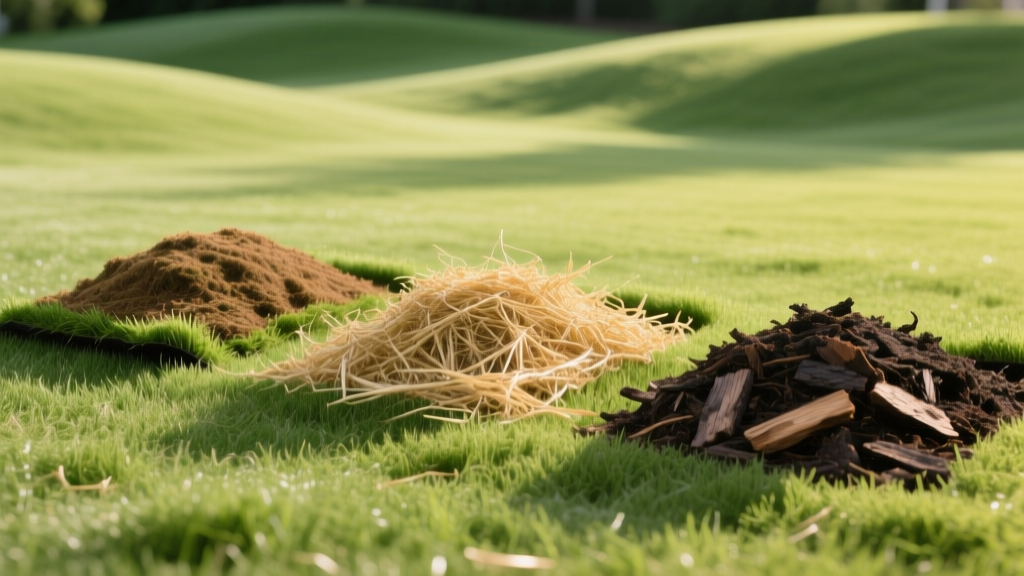
Best Grass Seed Covering Options: Peat Moss, Straw, and Mulch
The Science of Seed-to-Soil Contact and Moisture Retention
Leaving grass seed exposed to the elements is the primary cause of establishment failure. A proper grass seed covering creates a localized microclimate that regulates soil temperature, prevents seed displacement from wind and rain, and most importantly, traps moisture. Grass seeds require continuous hydration to trigger enzymatic activity for germination. If a seed imbibes water, swells, and then dries out before the radicle (first root) penetrates the soil, the embryo dies. According to turfgrass research from Penn State Extension, an uncovered seedbed can lose critical surface moisture in as little as three to four hours under direct 80°F sunlight, whereas a properly applied covering extends moisture retention to 12-18 hours.
The necessity of a covering scales directly with your chosen grass species germination timeline. Fast-germinating Perennial Ryegrass (5-10 days) can sometimes establish with just frequent irrigation, but slow-germinating Kentucky Bluegrass (14-28 days) or Bermudagrass (10-30 days) absolutely require a protective barrier to survive the multi-week hydration mandate.
Top Grass Seed Covering Materials Compared
Selecting the right material depends on your budget, soil condition, and topography. Below is a direct comparison of the three most effective coverings used by professional turf managers.
| Material | Coverage Rate | Est. Cost (per 1,000 sq ft) | Best Use Case | Primary Drawback |
|---|---|---|---|---|
| Sphagnum Peat Moss | 1/8 to 1/4 inch depth | $18 - $25 | Flat lawns, cool-season grasses, clay soils | Becomes hydrophobic if allowed to dry completely |
| Certified Weed-Free Straw | 1 bale per 1,000 sq ft | $12 - $18 | Large areas, budget-conscious projects | Can blow away in high winds; shades soil |
| Screened Compost | 1/4 inch depth | $25 - $40 (bulk delivery) | Nutrient-poor sandy soils, overseeding | Risk of weed seeds if not hot-composted; high salts |
| Hydromulch with Tackifier | 1,500 - 2,000 lbs/acre | $45 - $70 (contractor) | Steep slopes, erosion-prone areas | Requires specialized spraying equipment |
Deep Dive: Sphagnum Peat Moss
Sphagnum peat moss is the gold standard for residential lawn establishment. Its fibrous structure holds up to 20 times its dry weight in water, providing a massive moisture buffer for germinating seeds. When sourcing peat, you must specifically look for Canadian Sphagnum Peat Moss, not 'peat humus' or 'reed sedge peat', which are heavily decomposed and lack the necessary water-holding porosity.
Pro Tip: Peat moss is naturally acidic (pH 3.5 - 4.5). While a thin 1/8-inch layer will not drastically alter your overall soil pH, it is best practice to apply a fast-acting granular lime (calcium carbonate) to the seedbed before laying down the seed and peat to buffer the immediate micro-environment.
The most common failure mode with peat moss is the 'hydrophobic crust'. If you miss a watering cycle on day 12 and the peat dries out completely, the organic fibers will repel water. Subsequent irrigation will run off the surface rather than penetrating to the seed. To prevent this, mix your peat moss with a 20% ratio of coarse vermiculite, which maintains capillary action even when dry, or apply a liquid soil surfactant (wetting agent) like Aquatrols Revolution immediately after spreading.
Deep Dive: Straw vs. Hay (The Critical Distinction)
Homeowners frequently confuse straw and hay, a mistake that can ruin a new lawn. Hay is cut green, cured, and used for livestock feed; it contains thousands of viable weed and grass seeds per square foot. Spreading hay over your new lawn guarantees a massive weed infestation. Straw, conversely, is the dried, hollow stalk left over after a grain crop (wheat, barley, or oats) has been harvested. The grain heads have already been removed.
Even with straw, you must demand Certified Weed-Free Straw from your landscape supplier. This certification guarantees the straw was grown in fields inspected by the state department of agriculture and is free of noxious weed seeds like Palmer amaranth or bindweed. When applying, aim for roughly 50% soil visibility through the straw matrix. If you pile it too thick, the shade will drop soil temperatures by 5°F to 10°F, which can delay warm-season grass germination by up to two weeks.
Managing Slopes and Erosion-Prone Areas
Standard grass seed coverings fail on slopes greater than 15% (a 3:1 grade). Rainfall will wash peat moss, compost, and loose straw into a pile at the bottom of the hill, taking your expensive seed with it. For these scenarios, you must upgrade your covering strategy.
- Curlex Blankets (Excelsior): Wood fiber blankets that interlock with the soil. Pin these down with 6-inch landscape staples every 3 feet.
- Jute Netting: A biodegradable woven mesh laid over a light layer of straw. The jute holds the straw and seed in place while allowing seedlings to push through the gaps.
- Bonded Fiber Matrix (BFM): A professional-grade hydromulch that chemically bonds wood fibers together upon drying, creating a flexible, porous crust that resists washouts from heavy rain.
Step-by-Step Application Framework
Follow this exact sequence to maximize seed-to-soil contact and covering efficacy:
- Grade and Rake: Level the soil and create a fine, crumbly tilth in the top 1/2 inch. Remove all debris larger than a pebble.
- Starter Fertilizer: Apply a high-phosphorus starter fertilizer (e.g., 10-18-10) at the rate specified on the bag to fuel early root development.
- Seed Distribution: Use a rotary spreader, splitting your seed rate in half and applying in a crisscross pattern (North-South, then East-West) to prevent striping.
- Seed Incorporation: Lightly drag a leaf rake (tines facing up) or a piece of chain-link fence over the soil to push 10% to 20% of the seed just beneath the surface.
- Apply the Covering: Spread your chosen grass seed covering evenly. If using peat moss, break it apart thoroughly in a wheelbarrow to eliminate clumps before broadcasting by hand or with a drop spreader.
- Roll the Seedbed: Pass over the entire area with an empty or half-filled lawn roller. This presses the covering and seed firmly into the soil capillaries, which is non-negotiable for moisture transfer.
Critical Warning: Never use plastic sheeting or dark tarps as a grass seed covering to trap moisture. Solar radiation will superheat the trapped air, cooking the germinating embryos and fostering Pythium blight, a devastating water mold that will melt your new seedlings in 24 hours.
Overseeding Existing Lawns: Adjusting Your Covering Strategy
When overseeding an existing thin lawn rather than starting from bare dirt, your covering strategy must change. Applying a thick layer of peat moss or compost over existing turf will smother the mature grass, blocking sunlight and causing the established lawn to thin out further. According to guidelines from the University of Minnesota Extension, the best approach for overseeding is to rely on the existing grass canopy to provide partial shade and moisture retention.
If your soil is heavily compacted and you have core-aerated prior to seeding, you can drag the extracted soil plugs back into the turf. This breaks them apart, creating a thin, natural topdressing of soil that covers the seed dropped into the aeration holes. For heavily damaged areas requiring patch repair, use a specialized lawn patch mix containing seed, mulch, and a moisture-retaining polymer (like cross-linked polyacrylamide), which expands upon watering to cradle the seed without requiring a separate covering layer.
Troubleshooting Germination Failures Under Coverings
If your seed has failed to emerge after the maximum germination window, diagnose the issue using these specific failure modes:
- Seed is present but dry: Your covering is too thick (over 1/2 inch of compost or matted straw), preventing irrigation water from reaching the soil interface. Reduce covering depth on future attempts.
- Seed is present, swollen, but rotting: You are overwatering, and the covering is holding too much moisture without adequate air exchange. Switch to a coarser covering like straw and reduce irrigation frequency while increasing duration.
- Crusty, hard surface: You used heavy clay soil topped with fine compost, and the impact of sprinkler droplets has created a sealed surface crust. The seedlings cannot physically push through. Next time, incorporate gypsum into the clay topsoil before seeding to prevent surface crusting.
Mastering the application of a grass seed covering bridges the gap between amateur lawn care and professional turf management. By matching the specific physical properties of peat, straw, or hydromulch to your soil type, topography, and chosen grass cultivar, you eliminate the environmental variables that cause establishment failure.

