Grass Types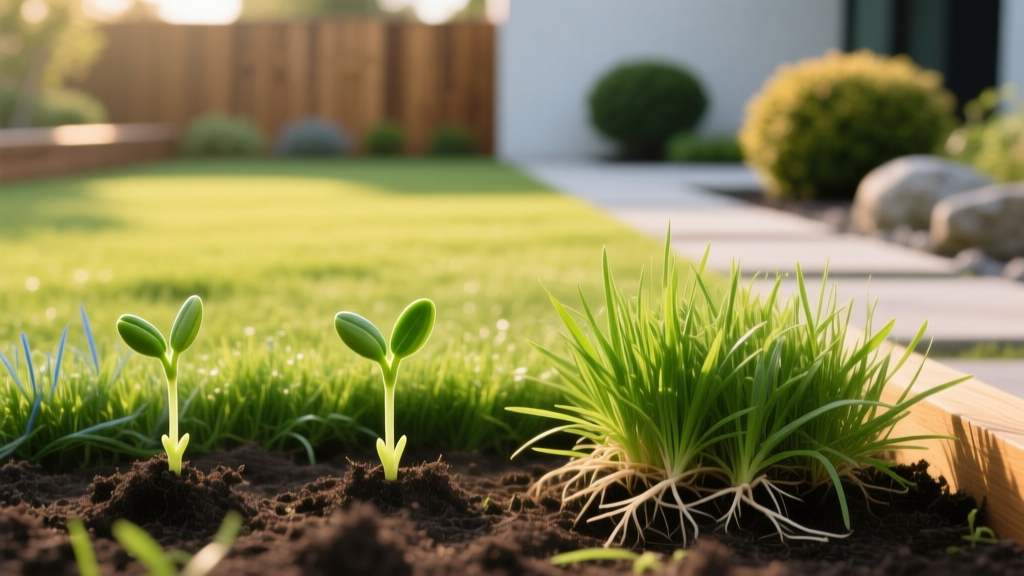
Grass Seed Germination Period: Timelines for Cool & Warm Species
The Science of the Grass Seed Germination Period
The grass seed germination period is the exact timeframe between a seed absorbing its first moisture and the visible emergence of the radicle (first root) and coleoptile (first shoot) above the soil surface. Homeowners often track air temperature, but turfgrass agronomists measure soil temperature at a 2-inch depth to predict emergence. Germination is a three-phase biological process: imbibition (water uptake), activation (enzyme release and stored food conversion), and radicle emergence.
If soil temperatures fall outside the optimal biological window for a specific species, the activation phase stalls. The seed remains dormant, vulnerable to soil-borne pathogens like Pythium and Rhizoctonia, which cause pre-emergence damping-off. Understanding the precise grass seed germination period for your chosen species prevents premature overseeding, unnecessary watering, and the mistaken assumption that a seed lot is non-viable.
Agronomist Tip: Never rely on ambient weather apps for seeding decisions. Purchase a probe-style digital soil thermometer (such as the ThermoPro TP19 or similar instant-read models costing $15-$25) and measure the soil at 8:00 AM daily to get an accurate baseline of your seedbed's thermal mass.
Cool-Season Grass Germination Timelines
Cool-season grasses thrive in the transitional and northern zones, establishing best when late summer heat breaks and autumn soil temperatures hover between 55°F and 75°F. According to data from University of Minnesota Extension, cool-season species exhibit vastly different emergence speeds due to seed coat thickness and genetic dormancy factors.
| Species | Germination Period | Optimal Soil Temp | Seed Size & Depth Notes |
|---|---|---|---|
| Perennial Ryegrass | 5 - 10 Days | 68°F - 86°F | Large seed; plant 1/4 to 1/2 inch deep. |
| Tall Fescue | 7 - 12 Days | 68°F - 86°F | Large seed (~225k/lb); plant 1/4 to 1/2 inch deep. |
| Fine Fescue | 7 - 14 Days | 60°F - 75°F | Small seed; plant no deeper than 1/4 inch. |
| Kentucky Bluegrass | 14 - 30 Days | 59°F - 86°F | Very small (~1.3M/lb); surface sow and roll. |
Kentucky Bluegrass (Poa pratensis) is notorious for testing homeowner patience. Its 21-to-30-day grass seed germination period is dictated by a thick, waxy seed coat that slows initial imbibition. If you are seeding a pure KBG lawn, you must maintain continuous surface moisture for up to four weeks without drowning the seedbed, making it highly susceptible to washouts during heavy autumn rains.
Warm-Season Grass Germination Timelines
Warm-season grasses require significant thermal energy to break dormancy. Seeding these species too early in spring, when soil temperatures are still in the 60s, will result in seed rot before the grass seed germination period can even begin. Purdue Turfgrass Science emphasizes that warm-season establishment relies heavily on the rapid accumulation of growing degree days (GDD) in late spring and early summer.
| Species | Germination Period | Optimal Soil Temp | Critical Establishment Notes |
|---|---|---|---|
| Bermudagrass | 10 - 21 Days | 75°F - 95°F | Hulled seed germinates faster than unhulled; requires full sun. |
| Zoysiagrass | 14 - 28 Days | 70°F - 90°F | Extremely slow initial growth; use straw mulch to prevent erosion. |
| Centipedegrass | 14 - 21 Days | 70°F - 85°F | Requires acidic soil (pH 5.5-6.0); sensitive to high phosphorus. |
| Bahiagrass | 21 - 30+ Days | 75°F - 90°F | Hard seed coat requires scarification; highly drought tolerant. |
Bahiagrass presents a unique challenge due to its hard, waxy outer hull. In commercial agriculture, Bahiagrass seed is often mechanically scarified or chemically treated to breach this hull. If you purchase untreated, raw Bahiagrass seed, expect the grass seed germination period to stretch well past 30 days, with erratic emergence patterns.
Why Your Grass Seed Germination Period is Delayed (Troubleshooting)
If your seed has surpassed the maximum expected emergence window, do not immediately assume the seed is dead. Run through this diagnostic decision tree to identify the environmental bottleneck:
- Symptom: Seed is visible on the surface but not sprouting.
Cause: Desiccation or UV damage. Grass seed requires constant seed-to-soil contact to draw capillary moisture. Surface-sown seed on compacted clay will bake in the sun.
Fix: Top-dress with 1/4 inch of screened compost or peat moss, and roll the seedbed with a water-filled lawn roller to ensure intimate soil contact. - Symptom: Seed sprouted, turned yellow, and collapsed.
Cause: Pre-emergence damping-off fungus (Pythium), usually triggered by overwatering and poor drainage in heavy soils.
Fix: Reduce irrigation frequency. If reseeding is necessary, use seed treated with a metalaxyl or mefenoxam fungicide coating (often branded as Apron Maxx) to protect the radicle during the vulnerable imbibition phase. - Symptom: Perfect weather, moist soil, but zero emergence after 30 days.
Cause: Pre-emergent herbicide residue. Products containing prodiamine (Barricade) or dithiopyr (Dimension) inhibit root cell division (mitosis).
Fix: You cannot reverse chemical inhibition. You must wait out the herbicide's half-life (often 3-4 months) or use activated charcoal to attempt soil neutralization before reseeding. For future seeding, use mesotrione (Tenacity), which is safe for most cool-season grasses at the time of seeding.
Pro Techniques to Accelerate Germination
Turf managers use specific agronomic interventions to compress the grass seed germination period and ensure uniform emergence, which is critical for outcompeting broadleaf weeds and crabgrass.
1. Utilizing Film-Coated vs. Pelleted Seed
Modern seed coatings alter both the biology and physics of planting. Film coatings apply a micro-thin layer of fungicide and humectant (moisture-retaining polymer) to the seed, adding less than 5% to the seed's weight. This allows you to use standard spreader calibrations while accelerating imbibition by 12 to 24 hours. Pelleted or lime-coated seeds, conversely, can increase seed weight by up to 300%. While pellets make tiny seeds like KBG easier to spread evenly, you must adjust your broadcast spreader settings to the highest flow rate to compensate for the added mass.
2. Hydromulch and Tackifiers
On sloped terrain, maintaining the moisture required for the grass seed germination period is nearly impossible with standard straw, which often blows away or harbors weed seeds. Professional hydroseeding applies a slurry of wood-fiber mulch, a polyacrylamide tackifier (glue), and seed. The tackifier binds the mulch to the soil, creating a micro-greenhouse effect that holds 10 times its weight in water, effectively reducing the germination window by 20% compared to dry seeding.
3. Starter Fertilizer Chemistry
Applying a starter fertilizer high in phosphorus (e.g., a 10-18-10 NPK ratio) directly at seeding fuels rapid root development once the radicle emerges. However, the National Turfgrass Evaluation Program (NTEP) notes that phosphorus must be incorporated into the top 2 inches of soil prior to seeding; broadcasting it over the top of the seed benefits germinating weeds more than the turfgrass itself, as phosphorus is highly immobile in soil profiles.
"The most common failure in lawn establishment isn't buying cheap seed; it's a failure to manage the microclimate of the top half-inch of soil during the first 14 days of imbibition." — Turfgrass Establishment Protocols
Frequently Asked Questions
Can I speed up the grass seed germination period by soaking seeds in water before planting?
No. While soaking (priming) is used in commercial agriculture for vegetables, it is disastrous for turfgrass. Grass seeds are incredibly small; soaking them causes them to clump together, making even broadcasting impossible. Furthermore, once a turf seed imbibes water, its biological clock starts. If it dries out even slightly after priming, the embryo will die before it ever touches the soil.
Does the age of the seed affect how long it takes to germinate?
Yes. Seed viability and vigor decline over time, especially if stored in high-heat environments like a garden shed. Seed that is 2 to 3 years old may still germinate, but the grass seed germination period will be extended by several days, and the overall germination rate (the percentage of seeds that actually sprout) will drop significantly. Always check the "Test Date" on the seed tag and refuse seed tested more than 12 months prior to purchase.