
Grass Types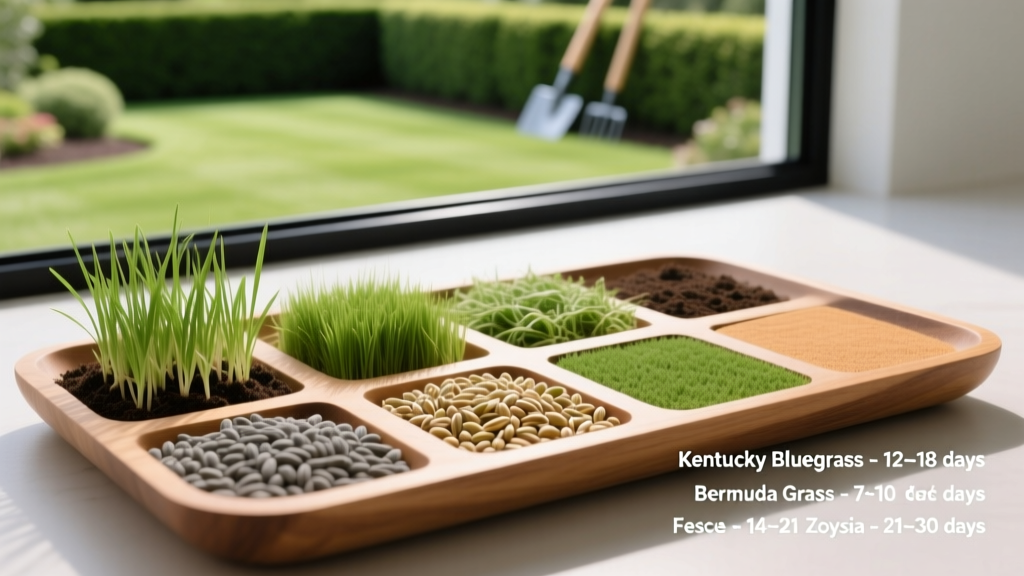
Grass Seed Germination Timelines: Soil Temps, Days to Sprout, and Care
The Biology of Grass Seed Germination: Beyond Just Adding Water
Successful turf establishment requires understanding the physiological triggers inside the seed. Grass seed germination is not a single event but a three-phase biological process. According to Penn State Extension, managing the microclimate of the top 1/4 inch of soil is the single most critical factor in determining whether a seed becomes a thriving turfgrass plant or decays into organic matter.
Phase 1: Imbibition
The seed absorbs water, swelling up to 60% of its dry weight. This physical expansion softens the seed coat (testa) and rehydrates the dormant embryo. If the seed dries out after imbibition has begun but before the radicle (first root) emerges, the embryo will die. This is the most common cause of early germination failure.
Phase 2: Enzyme Activation
Once hydrated, specific soil temperatures trigger the release of gibberellic acid within the seed. This hormone activates enzymes like amylase, which break down the starchy endosperm into usable sugars. Without adequate soil warmth, this metabolic engine stalls, leaving the seed vulnerable to soil-borne pathogens.
Phase 3: Radicle Emergence
The first visible sign of germination is the radicle breaking through the seed coat to anchor the plant and absorb water. Shortly after, the coleoptile (shoot) pushes upward toward the light. At this stage, the seedling transitions from relying on stored energy to photosynthesis.
Germination Timelines and Soil Temperature Matrix
Air temperature is a poor indicator of germination readiness; soil temperature at a 2-inch depth dictates the metabolic speed of the seed. Below is the precise data matrix for common turfgrass species, detailing the days to initial radicle emergence under optimal conditions.
| Turfgrass Species | Season Type | Optimal Soil Temp (°F) | Days to Germinate |
|---|---|---|---|
| Perennial Ryegrass | Cool-Season | 68 - 86°F | 5 - 10 days |
| Tall Fescue | Cool-Season | 60 - 75°F | 7 - 12 days |
| Kentucky Bluegrass | Cool-Season | 59 - 77°F | 14 - 28 days |
| Bermudagrass | Warm-Season | 75 - 95°F | 10 - 21 days |
| Zoysiagrass | Warm-Season | 80 - 95°F | 14 - 28 days |
| Centipedegrass | Warm-Season | 70 - 85°F | 14 - 21 days |
As noted by the NC State Turfgrass Program, planting Kentucky Bluegrass in soil temperatures below 50°F will not kill the seed, but it will delay germination by up to 45 days, drastically increasing the window for seed predation and fungal rot.
The Seed Coating and Depth Trap
Modern commercial grass seeds are rarely sold raw. Brands utilize proprietary coatings—such as Scotts WaterSmart Plus or Jonathan Green Black Beauty MYCO+—which include fungicides, hydrogels, and mycorrhizal fungi. While beneficial, these coatings introduce a major calibration error for homeowners.
Calibration Warning: A 20-pound bag of heavily coated seed may only contain 10 to 12 pounds of actual grass seed. If you set your broadcast spreader to the 'raw seed' setting on the bag, you will effectively under-seed your lawn by 40%. Always adjust your spreader rate to account for the total weight of the coated product, not just the seed content.
Furthermore, planting depth dictates survival. Turfgrass seeds possess a finite amount of endosperm energy. If planted deeper than 1/4 inch, the seedling will exhaust its energy reserves before the coleoptile reaches the sunlight, resulting in subterranean death. Use a slit-seeder or lightly rake the seed so it is barely covered by soil, ensuring direct seed-to-soil contact without burial.
Precision Watering: Avoiding Desiccation and Damping Off
Watering newly seeded lawns requires a shift from deep, infrequent soaking to shallow, frequent misting. The goal is to keep the top 1/2 inch of soil consistently moist without creating saturation.
- Weeks 1-2 (Pre-Emergence): Water 3 to 4 times daily for 5-10 minutes per zone. The soil should look dark and damp, but never have standing puddles. Use a fine mist nozzle to prevent washing away the lightweight seeds.
- Weeks 3-4 (Early Seedling Stage): Reduce frequency to 1-2 times daily, but increase the duration to 15 minutes. This encourages the newly formed radicles to stretch deeper into the soil profile to chase the moisture.
- Week 5+ (Establishment): Transition to standard deep watering (1 inch per week, split into two sessions) to promote deep root architecture and drought tolerance.
Overwatering is just as lethal as underwatering. Saturated soils deplete oxygen and invite Pythium blight, commonly known as 'damping off.' This soil-borne fungus attacks the tender radicle, causing the seedling to pinch at the soil line, topple over, and die within 24 hours. If you notice a greasy, darkened lesion at the base of sprouting seedlings, halt watering immediately and apply a preventative fungicide containing Azoxystrobin.
Pre-Emergent Herbicide Interference
A frequent and costly mistake is applying a pre-emergent herbicide in the spring and attempting to seed bare patches shortly after. Standard pre-emergents like Prodiamine (Barricade) and Dithiopyr (Dimension) work by inhibiting cell division (mitosis) in the root tip. They do not distinguish between a crabgrass seed and your expensive Tall Fescue seed; they will kill both.
The Siduron Exception: If you must seed cool-season grasses while preventing crabgrass, you must use a pre-emergent with the active ingredient Siduron (commonly sold as Tupersan). Siduron selectively inhibits the root development of annual grassy weeds but does not affect the radicle emergence of cool-season turfgrasses like Kentucky Bluegrass and Perennial Ryegrass. Note that Siduron has a shorter residual lifespan (4-6 weeks) compared to Prodiamine (4-6 months), requiring careful follow-up applications.
Troubleshooting Germination Failures
If your expected timeline has passed and the soil remains bare, diagnose the issue using this framework:
- Seed is visible but not sprouting: Check soil temperature. The seed is likely dormant due to cold soil. Wait for a warm front or use a dark tarp to artificially raise the soil temperature by 5-10°F.
- Seed sprouted but died within 48 hours: Inspect for damping-off fungus (caused by overwatering) or desiccation (caused by a single day of high wind/sun drying out the imbibed seed).
- Patchy, uneven germination: This indicates poor seed-to-soil contact. Seeds left sitting on top of thatch or hard clay will absorb morning dew but dry out by noon. Always core aerate or dethatch before seeding.
- Seeds are missing entirely: Bird predation or washout from heavy rain. Use a biodegradable seed blanket or a light layer of peat moss (no more than 1/8 inch) to hide the seed and retain moisture.
Frequently Asked Questions
Why is my Kentucky Bluegrass taking a month to sprout when my Ryegrass sprouted in a week?
This is entirely normal and dictated by genetics. Perennial Ryegrass has a highly permeable seed coat and aggressive early metabolism, allowing it to germinate in 5 to 7 days. Kentucky Bluegrass possesses a thicker testa and a complex internal dormancy mechanism that requires prolonged, consistent moisture and specific temperature thresholds to break, routinely taking 21 to 28 days. When planting a mix, the Ryegrass acts as a 'nurse crop,' sprouting quickly to shade the soil and protect the slower-germinating Bluegrass.
Can I speed up germination by soaking the seeds in water before planting?
While soaking seeds (priming) is used in commercial agriculture, it is highly discouraged for homeowners. Once a turfgrass seed is soaked, it enters Phase 1 (Imbibition). If you cannot plant it immediately and keep it continuously moist, the embryo will die. Furthermore, wet seeds clump together, making it impossible to achieve an even distribution through a broadcast spreader. Rely on consistent post-planting irrigation instead.
Does grass seed expire?
Yes. Grass seed loses viability over time, typically dropping by 10% to 20% each year after the 'test date' printed on the tag. If stored in a hot, humid garage, the endosperm degrades rapidly. For best results, only purchase seed with a test date from the current calendar year, and store leftover seed in a sealed, airtight container in a cool, dry basement.

