
Grass Types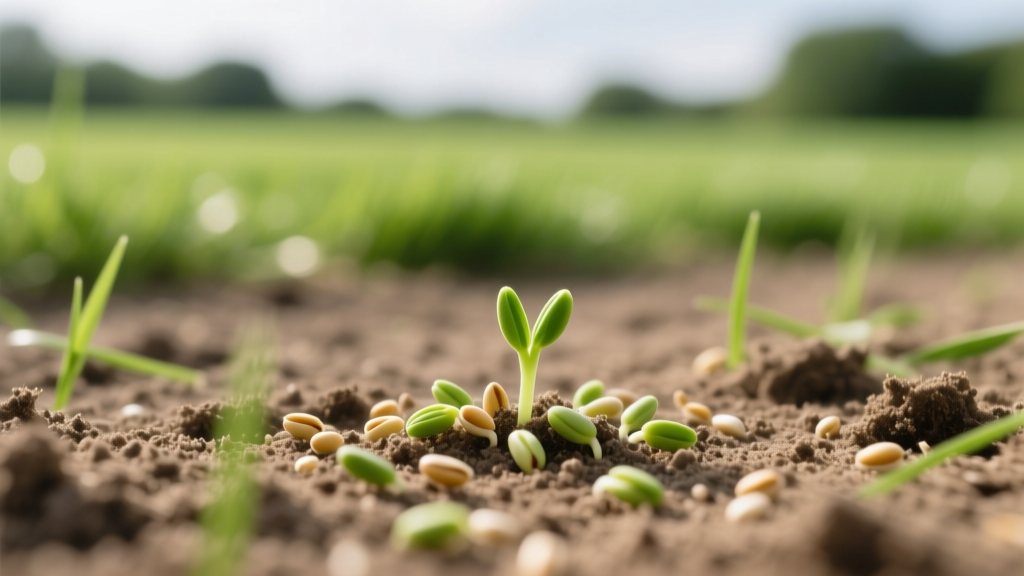
Will Grass Seed on Top of Dirt Grow? Bare Soil Seeding Guide
The Germination Reality: Will Grass Seed on Top of Dirt Survive?
The short answer is yes, grass seed on top of dirt can germinate, but the long-term establishment rate is abysmal. When broadcast directly onto unprepared, compacted soil, you can expect a mere 10% to 15% germination rate. Compare this to the 75% to 85% success rate achieved with proper soil preparation, and the financial inefficiency of the 'throw and mow' method becomes obvious. Seeds resting on the surface are highly vulnerable to desiccation, avian predation, and wind displacement.
According to turfgrass establishment guidelines from University of Minnesota Extension, seed-to-soil contact is the single most critical variable in lawn establishment. Without it, the seed cannot draw the necessary capillary moisture from the soil profile to initiate imbibition—the first stage of germination where the seed absorbs water to activate enzymes.
Expert Insight: A standard 50 lb bag of uncoated Tall Fescue contains roughly 11 million seeds. If you throw it on bare dirt and achieve a 12% germination rate, you are effectively wasting $75 to $90 of seed per 1,000 square feet to environmental exposure.
The Physics of Failure: Why Bare Dirt Sabotages Seed
To understand why broadcasting seed onto hard dirt fails, you must understand the anatomy of grass germination and soil hydrology.
Soil Crusting and the Coleoptile Barrier
When bare dirt—especially clay-heavy soil—is watered, the surface aggregates break down and settle into a dense layer. As the sun bakes this layer, it forms a hard physical crust. When a grass seed germinates, it pushes a protective sheath called a coleoptile upward. If the soil crust is too dense, the delicate coleoptile bends horizontally beneath the surface, exhausting its endosperm energy reserves before it ever reaches sunlight. This phenomenon, known as 'crusting out,' is the primary cause of invisible germination failure on bare dirt.
Moisture Volatility and Imbibition
Seeds require consistent moisture levels of roughly 20% to 30% internal water content to trigger germination. Uncoated seed sitting on top of exposed dirt dries out within 45 to 60 minutes of direct midday sun. Once a seed begins imbibition and then dries out, the embryo dies. There is no pausing the germination clock.
The 'No-Till' Protocol: How to Seed on Bare Dirt Successfully
If you lack the equipment for mechanical tilling or core aeration, you can still achieve a 60%+ establishment rate on bare dirt by manipulating the surface chemistry and using specialized seed technologies. Follow this exact sequence:
Step 1: Chemical and Liquid Aeration
Instead of renting a $80 mechanical aerator, apply a liquid soil aerator containing humic acid and saponins. Products like N-EXT AirR8 or Simple Lawn Solutions Liquid Aerating Soil Loosener ($40 to $60 per 32oz bottle, treating up to 32,000 sq ft) reduce soil surface tension. This allows water to penetrate the hard dirt crust, creating microscopic channels for roots and moisture.
Step 2: The Compost Micro-Topdressing
Do not put seed directly on the dirt. Apply a 1/8-inch to 1/4-inch layer of screened, aged compost over the bare soil. This costs roughly $30 to $45 per cubic yard (covering about 300 sq ft at 1/4 inch depth). The compost acts as a moisture-retaining sponge and provides the biological inoculants necessary for root development.
Step 3: Deploy Coated Seed Technology
When seeding on top of dirt, never buy raw, uncoated seed. Invest in polymer-coated or pelletized seed. Coatings like Pennington Smart Seed or Scotts WaterSmart PLUS contain superabsorbent polymers that hold up to 40% more water around the seed coat. This creates a localized micro-climate of moisture, buying the seed an extra 2 to 3 hours of hydration before the surface dirt dries out.
Step 4: The Straw Mulch Cap
After broadcasting the seed at a rate of 6 to 8 lbs per 1,000 sq ft (for Tall Fescue), apply a thin layer of weed-free straw or a hydraulic mulch like Pennington Seed Starter Mat. The mulch should be thin enough that you can still see 20% of the soil through it. This reduces surface evaporation by up to 65%.
Species Selection Matrix for Unprepared Soil
Not all grass species tolerate the harsh conditions of bare dirt. Use this matrix to select the right cultivar for your shortcut method.
| Grass Species | Bare Dirt Viability | Germination Timeframe | Recommended Cultivar for Surface Seeding |
|---|---|---|---|
| Tall Fescue (Cool-Season) | High | 7 - 12 Days | Jonathan Green Black Beauty Ultra (Deep rooting, aggressive vigor) |
| Perennial Ryegrass (Cool-Season) | Medium-High | 5 - 7 Days | Pennington Smart Seed Perennial Ryegrass (Fast canopy closure) |
| Kentucky Bluegrass (Cool-Season) | Very Low | 21 - 30 Days | Avoid for bare dirt; requires strict 1/4 inch burial and constant moisture. |
| Bermudagrass (Warm-Season) | Medium | 14 - 21 Days | Rio Bermuda (Hulled seed; unhulled seed struggles to penetrate dirt crusts) |
Cost Breakdown: 'Throw and Mow' vs. Proper Preparation
Homeowners often throw grass seed on top of dirt to save money. However, the secondary costs of reseeding and water waste usually negate the initial savings. Here is a realistic financial breakdown for a 2,000 square foot bare patch.
| Method | Materials & Labor Cost | Water Usage (First 30 Days) | Expected Canopy Coverage at Day 45 |
|---|---|---|---|
| Raw Seed on Bare Dirt | $120 (Seed + Water) | High (Requires 3x daily watering) | 15% - 25% (Patchy, high weed intrusion) |
| No-Till Compost Protocol | $310 (Seed, Compost, Liquid Aerator) | Medium (Requires 2x daily watering) | 75% - 85% (Dense, weed-resistant) |
| Full Mechanical Prep (Till & Grade) | $450+ (Equipment rental, topsoil, seed) | Low-Medium (Requires 1-2x daily watering) | 90%+ (Professional grade establishment) |
Data from NC State University Turffiles indicates that proper seedbed preparation reduces total irrigation requirements by up to 40% during the critical 30-day establishment window, offsetting the upfront cost of compost and aeration.
Troubleshooting: What to Do at Day 14
If you threw seed on bare dirt and see zero emergence by day 14 (for fescue or ryegrass), the seeds have likely desiccated or crusted over. Do not wait for them to magically appear.
- Perform the 'Scratch Test': Take a flathead screwdriver and gently scratch the top 1/4 inch of the dirt. If you find swollen, mushy seeds, they have rotted due to poor drainage. If you find dry, brittle seeds, they never achieved imbibition.
- The Rescue Protocol: Rent a slit-seeder (approx. $60 for 4 hours). A slit-seeder cuts a 2-inch trench into the hard dirt and drops the seed directly into the fissure, bypassing the surface crust entirely. Run the slit-seeder over the bare patch in two perpendicular directions.
- Adjust Irrigation: Switch from deep, infrequent watering to a 'pulse' schedule. Run your sprinklers for 4 minutes, four times a day (e.g., 8 AM, 11 AM, 2 PM, 5 PM) to keep the surface dirt constantly damp without causing runoff.
Frequently Asked Questions
Can I just rake the grass seed into the bare dirt?
Raking hard, compacted dirt with a standard leaf or garden rake will not create adequate seed furrows. You will merely scratch the surface, leaving the seed exposed to wind and birds. You need a heavy-duty landscaping rake or a mechanical dethatcher/power rake to actually fracture the soil surface.
Will rain wash my grass seed away if it is just sitting on top of dirt?
Yes. Bare dirt lacks the organic matter and root structure required to absorb heavy rainfall. When rain hits bare soil, it creates surface runoff. Unanchored grass seed will float and accumulate in low spots or wash into storm drains. Applying a tackifier or a seed mat is mandatory if heavy rain is in the forecast.
Is hydroseeding a good alternative for bare dirt?
Hydroseeding is the ultimate solution for bare dirt. The slurry contains mulch, tackifiers (glues), fertilizer, and seed. The tackifier binds the seed directly to the hard dirt surface, preventing washout and retaining moisture, effectively simulating a prepared seedbed without the need for tilling. Expect to pay $0.10 to $0.15 per square foot for professional hydroseeding.

