Grass Types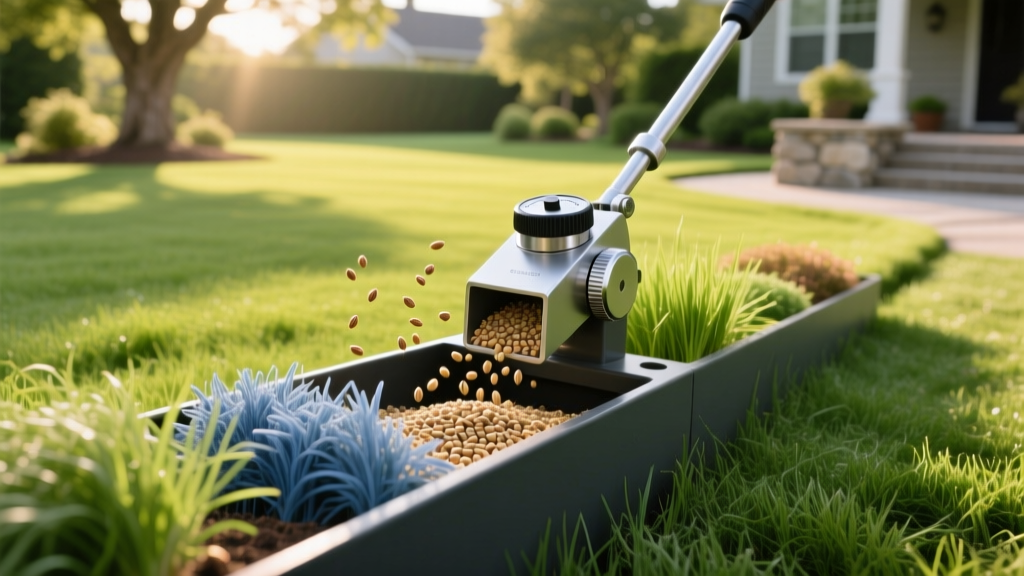
How to Calibrate and Use a Grass Seed Planter for Perfect Turf
Defining the Grass Seed Planter: Beyond the Broadcast Spreader
When turf professionals and dedicated homeowners refer to a grass seed planter, they are not talking about standard rotary broadcast spreaders that scatter seed blindly into the wind. In precision turf establishment, a planter refers to equipment designed to place seed at exact depths, intervals, and densities. This category primarily encompasses precision drop spreaders and walk-behind slit seeders. Using the correct planter and calibrating it accurately is the difference between a patchy, weed-prone lawn and a dense, disease-resistant turf canopy.
Broadcast spreaders suffer from wind drift, uneven overlap, and seed lodging on top of thatch. A dedicated grass seed planter eliminates these variables. According to University of Minnesota Extension, precise seed-to-soil contact and uniform distribution are the two most critical factors in successful lawn establishment, both of which require specialized planting equipment.
Drop Spreaders vs. Slit Seeders: Choosing Your Planter
Selecting the right tool depends on your soil condition, existing thatch levels, and the specific grass species you are establishing. Here is how the two primary types of grass seed planters compare in real-world scenarios.
| Feature | Precision Drop Spreader (e.g., Lesco 18-lb) | Walk-Behind Slit Seeder (e.g., Classen RS-18H) |
|---|---|---|
| Mechanism | Drops seed straight down through a calibrated hopper gate. | Steel tines slice 1/4-inch furrows, dropping seed directly into the soil. |
| Best Use Case | Bare soil, heavily aerated lawns, and small-to-medium residential yards. | Overseeding existing turf, breaking up light thatch, large commercial properties. |
| Seed-to-Soil Contact | Moderate (requires raking or dragging afterward). | Excellent (seed is buried in the furrow automatically). |
| 2026 Average Cost | $130 - $160 (Purchase) | $85 - $120 / day (Rental) or $2,500+ (Purchase) |
| Overlap Tolerance | Zero (must perfectly align wheel tracks to avoid striping). | High (slits can overlap slightly without causing seed clumping). |
The 100-Square-Foot Catch Test: Calibrating Your Planter
Never trust the factory settings printed on the side of a seed bag. Hopper gate tolerances, seed coating weight, and ambient humidity alter flow rates drastically. Penn State Extension recommends physical calibration before every seeding project. Follow this exact protocol to calibrate your drop spreader or slit seeder.
Step-by-Step Calibration Protocol
- Measure the Test Zone: Mark off a 10-foot by 10-foot area (100 square feet) on your driveway or a tarp.
- Weigh the Test Seed: Weigh out exactly 8 ounces of your chosen grass seed. Pour it into the planter hopper.
- Catch the Output: Tape a shallow plastic catch pan or heavy-duty cardboard to the bottom of the drop spreader, or place a tarp under the slit seeder discharge chute. Push the planter over the 100 sq ft area at your normal walking pace (roughly 3 mph).
- Weigh the Catch: Weigh the seed captured in the pan using a digital kitchen scale.
- Calculate the Rate: Use the following formula to determine your application rate per 1,000 square feet:
(Ounces caught × 10) ÷ 16 = Pounds per 1,000 sq ft.
Pro Tip: The Coating Weight Factor
Many modern seeds feature fungicidal or hydroscopic coatings that add 20% to 30% extra weight. If your target rate is 5 lbs of pure live seed per 1,000 sq ft, but the bag is 30% coating by weight, you must calibrate your grass seed planter to drop 6.5 lbs of coated product to achieve the correct biological seeding rate.
Many modern seeds feature fungicidal or hydroscopic coatings that add 20% to 30% extra weight. If your target rate is 5 lbs of pure live seed per 1,000 sq ft, but the bag is 30% coating by weight, you must calibrate your grass seed planter to drop 6.5 lbs of coated product to achieve the correct biological seeding rate.
Species-Specific Seeding Rates and Seed Counts
Understanding seed count per pound explains why precision planting is non-negotiable for certain species. Kentucky Bluegrass (KBG) contains roughly 2.2 million seeds per pound, whereas Tall Fescue contains only about 227,000. Over-seeding KBG with a poorly calibrated planter leads to massive seedling competition, lodging, and damp-off disease.
| Grass Species | Target Rate (lbs / 1,000 sq ft) | Approx. Seeds per Pound | Planter Recommendation |
|---|---|---|---|
| Kentucky Bluegrass | 2.0 - 3.0 | 2,200,000 | Drop Spreader (Precision required) |
| Tall Fescue | 6.0 - 8.0 | 227,000 | Slit Seeder (Depth placement critical) |
| Perennial Ryegrass | 5.0 - 7.0 | 227,000 | Drop Spreader or Slit Seeder |
| Fine Fescue | 4.0 - 5.0 | 400,000 | Drop Spreader |
| Bermudagrass (Seeded) | 1.0 - 2.0 | 4,500,000 | Drop Spreader (Requires drag mat) |
Real-World Troubleshooting: Edge Cases and Failure Modes
Even with perfect calibration, environmental variables can cause your grass seed planter to fail. Here are the most common mechanical and environmental failure modes and how to fix them on the job site.
1. Static Electricity Clumping in Plastic Hoppers
Modern drop spreaders feature high-density polyethylene (HDPE) hoppers. In low-humidity conditions, fine seeds like KBG or bentgrass build up a static charge, clinging to the hopper walls and bridging over the agitator bar. This causes sudden drop-offs in seeding rates mid-lawn.
The Fix: Wipe the interior of the hopper with an anti-static laundry sheet before loading seed. For severe cases, dust the inside of the hopper and the seed itself with a light coating of food-grade diatomaceous earth or graphite powder to break the surface tension.
2. Wheel Slip on Slopes and Incline
Drop spreaders rely on a ground-driven gear tied to the front wheels. When pushing the planter up a slope greater than 15%, or on loose topsoil, the wheels slip. The planter thinks it is moving slower than it actually is, resulting in severe under-seeding on inclines and over-seeding on declines.
The Fix: When seeding slopes, walk horizontally across the grade (contour seeding) rather than up and down. If your planter allows, add 5-pound wheel weights to the drive wheels to increase traction.
3. Thatch Interference with Slit Seeders
Slit seeders are designed to cut through soil, not sponge. If your lawn has a thatch layer exceeding 0.5 inches, the seeder tines will bounce off the thatch mat, depositing seed on top of the dead organic matter rather than in the soil. Seeds suspended in thatch will germinate but die during the first dry spell because their roots cannot penetrate the soil crust.
The Fix: Run a mechanical dethatcher or core aerator over the lawn 48 hours before using the slit seeder. Set the slit seeder tines to a maximum depth of 1/4 inch; deeper cuts cause unnecessary soil disruption and bring dormant weed seeds (like crabgrass) to the surface.
Frequently Asked Questions
Can I use a garden row planter for grass seed?
No. Agricultural push planters (like the EarthWay garden seeder) are designed for large, pelleted vegetable seeds spaced inches apart. Grass seed is too fine and requires dense, continuous coverage. Using a row planter will result in distinct, widely spaced rows of grass that will never form a cohesive turf canopy.
How do I clean my grass seed planter after use?
Never leave coated seed in the hopper. The hydroscopic coatings absorb ambient moisture overnight, turning into a concrete-like paste that will seize the agitator bar and rust the metal gate. Vacuum the hopper completely and run a dry cloth through the discharge chute immediately after finishing the job.