Grass Types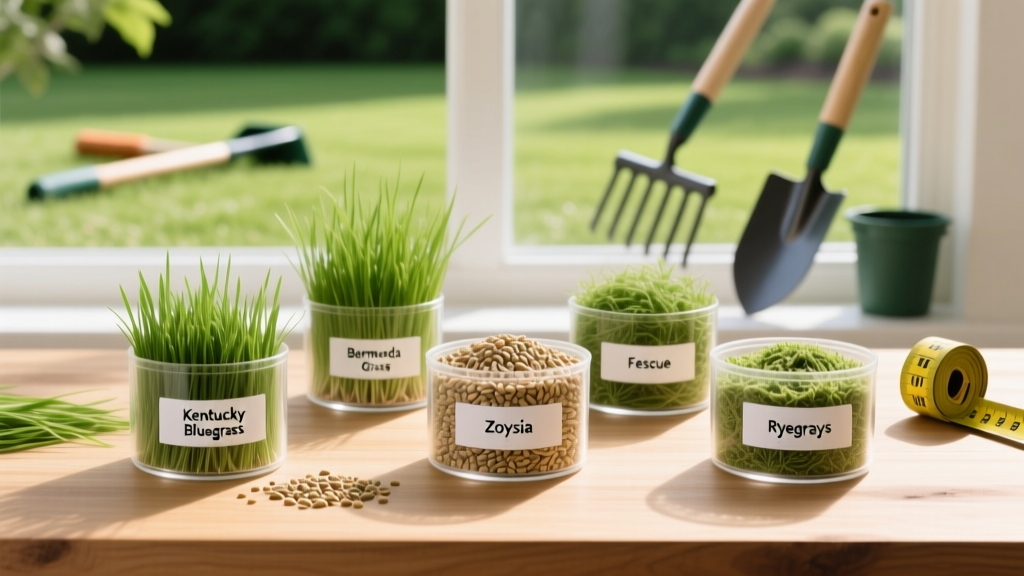
How Long Does Grass Seed Keep? Viability, Coverage & Cost Guide
The True Shelf Life of Grass Seed: What the Data Says
Under optimal climate-controlled conditions, uncoated grass seed keeps for 2 to 3 years while maintaining a commercially viable germination rate of 80% or higher. However, viability is not a binary switch; it is a steady degradation curve. For every 12 months past the harvest date, you can expect a 10% to 20% drop in germination rates, depending heavily on the species and storage environment.
The 'Rule of 100' for Seed Storage:
Seed longevity is dictated by the combined total of temperature (Fahrenheit) and relative humidity (percentage). To maximize shelf life, the sum of these two numbers must remain below 100. For example, storing seed at 60°F and 30% humidity (Total = 90) will preserve viability far longer than storing it at 75°F and 50% humidity (Total = 125).
Seed longevity is dictated by the combined total of temperature (Fahrenheit) and relative humidity (percentage). To maximize shelf life, the sum of these two numbers must remain below 100. For example, storing seed at 60°F and 30% humidity (Total = 90) will preserve viability far longer than storing it at 75°F and 50% humidity (Total = 125).
According to turfgrass researchers at the University of Minnesota Extension, seed stored in unheated, dry environments can remain viable for up to five years, but the economic reality of planting aged seed requires strict dosage adjustments to ensure adequate turf density.
How Seed Age Impacts Your Coverage and Dosage Rates
The most critical mistake homeowners make with older seed is applying it at the standard new-seed dosage. If your seed's germination rate has dropped from 90% to 65%, applying the standard 8 lbs per 1,000 square feet will result in a sparse, weed-prone lawn. You must scale your dosage inversely to the germination drop.
| Seed Age (Post-Harvest) | Estimated Germination Rate | Required Dosage Adjustment | Actionable Recommendation |
|---|---|---|---|
| Year 1 (Fresh) | 85% - 95% | 0% (Base Rate) | Apply at bag instructions |
| Year 2 | 75% - 85% | +12% to +15% | Increase spreader setting slightly |
| Year 3 | 60% - 75% | +25% to +38% | Heavy overseeding required |
| Year 4+ | < 50% | +100% or more | Discard or use as nurse crop |
Calculating the Real Cost of 'Cheap' Old Seed
Let us look at the 2026 pricing for a premium 50 lb bag of Turf-Type Tall Fescue (TTTF), which retails for approximately $150. The standard application rate for new seed is 8 lbs per 1,000 sq ft.
- New Seed (90% Germination): A 50 lb bag covers 6,250 sq ft. Your cost is $24.00 per 1,000 sq ft.
- 3-Year-Old Seed (65% Germination): To achieve the same live-seed density, you must apply 11.5 lbs per 1,000 sq ft. That same 50 lb bag now only covers 4,347 sq ft. Your effective cost jumps to $34.50 per 1,000 sq ft.
Using old seed does not save money; it inflates your cost per square foot by over 40% while increasing the risk of erosion and weed infiltration due to delayed canopy closure.
The Fatal Storage Mistakes That Kill Seed Viability
Even seed that is only one year old can be rendered completely sterile if subjected to environmental stress. Avoid these common storage failures:
Warning: The Concrete Floor Trap
Never store paper bags of grass seed directly on a concrete garage or basement floor. Concrete is porous and wicks ground moisture upward. This localized humidity spike will trigger premature fungal growth and rot the embryo inside the seed within weeks.
Never store paper bags of grass seed directly on a concrete garage or basement floor. Concrete is porous and wicks ground moisture upward. This localized humidity spike will trigger premature fungal growth and rot the embryo inside the seed within weeks.
- Temperature Swings: Storing seed in an uninsulated shed exposes it to freeze-thaw cycles. The expansion and contraction of moisture inside the seed coat physically ruptures the embryo.
- Original Paper Packaging: Once opened, paper bags offer zero moisture barrier. Transfer leftover seed to airtight, food-grade plastic buckets with gamma-seal lids.
- Rodent Exposure: Mice and rats will target the high-protein endosperm of grass seed. A single mouse can destroy 10 lbs of seed in a winter season.
Step-by-Step: The Wet Paper Towel Germination Test
Before adjusting your dosage or spending money on fertilizer, test your leftover seed. The Clemson University Home & Garden Information Center recommends this simple viability test:
- Sample Selection: Randomly count out exactly 100 seeds from the center of the bag (avoid the top/bottom where moisture exposure varies).
- Preparation: Fold a heavy-duty paper towel in half, dampen it with distilled water (tap water chlorine can inhibit germination), and squeeze out excess moisture.
- Placement: Space the 100 seeds evenly across one half of the towel, fold the other half over them, and place the towel inside a clear Ziploc bag. Leave the bag slightly unzipped for gas exchange.
- Incubation: Place the bag in a warm area (70°F - 75°F) out of direct sunlight. Cool-season grasses (Fescue, Bluegrass) take 7 to 14 days. Warm-season grasses (Bermuda, Zoysia) take 14 to 21 days.
- Calculation: Count the number of seeds that produced both a root (radicle) and a shoot. If 72 seeds sprouted, your germination rate is 72%. Adjust your spreader dosage accordingly.
Species Longevity Matrix: Cool-Season vs. Warm-Season
Not all grass species age at the same rate. Seed size, oil content, and coat thickness dictate natural shelf life. Use this matrix to evaluate your specific cultivar:
| Grass Species | Seed Count per lb | Max Optimal Shelf Life | Degradation Vulnerability |
|---|---|---|---|
| Kentucky Bluegrass | 1,000,000+ | 3 - 5 Years | Low (Hard seed coat) |
| Tall Fescue (TTTF) | 225,000 | 2 - 3 Years | Moderate |
| Perennial Ryegrass | 250,000 | 1 - 2 Years | High (Rapid viability loss) |
| Bermudagrass | 2,000,000+ | 2 - 3 Years | Moderate (Dormancy issues) |
| Zoysiagrass | 1,000,000+ | 1 - 2 Years | High (Extremely slow germ) |
The Hidden Shelf-Life Killer: Seed Coatings and Enhancements
If you purchased seed with a clay coating, fungicide treatment (like Apron Maxx), or biological inoculants (mycorrhizae), the shelf life is drastically reduced. Coated seeds are highly hygroscopic—the clay and polymer layers pull ambient moisture out of the air, accelerating embryo decay. Furthermore, live biological inoculants typically die off after 12 to 18 months on the shelf. If you have leftover coated seed from two seasons ago, treat it as uncoated seed with a 50% germination penalty, or discard it entirely.
Frequently Asked Questions
Can I freeze grass seed to make it last longer?
No. While commercial seed banks freeze seed at -20°C with precisely controlled moisture content, home freezers introduce frost and humidity fluctuations. The moisture inside a standard home freezer will penetrate the bag, and the thawing process will kill the embryo. Stick to a cool, dry, climate-controlled interior room.
How do I read the seed tag to find the harvest date?
Look for the 'Test Date' or 'Lot Number' on the back of the bag. State laws generally require the test date to be within the last 6 to 12 months of sale. If the test date is more than a year old, the seed has likely been sitting in a distributor warehouse, and you should negotiate a discount or seek a fresher batch.
What happens if I plant seed that is 5 years old?
You will likely see patchy, erratic germination. The seeds that do sprout will often lack the vigor to push through soil crusting or compete with early spring weeds like crabgrass. The energy reserves in the endosperm degrade over time, resulting in weak seedlings that die off during the first summer heat stress.