Grass Types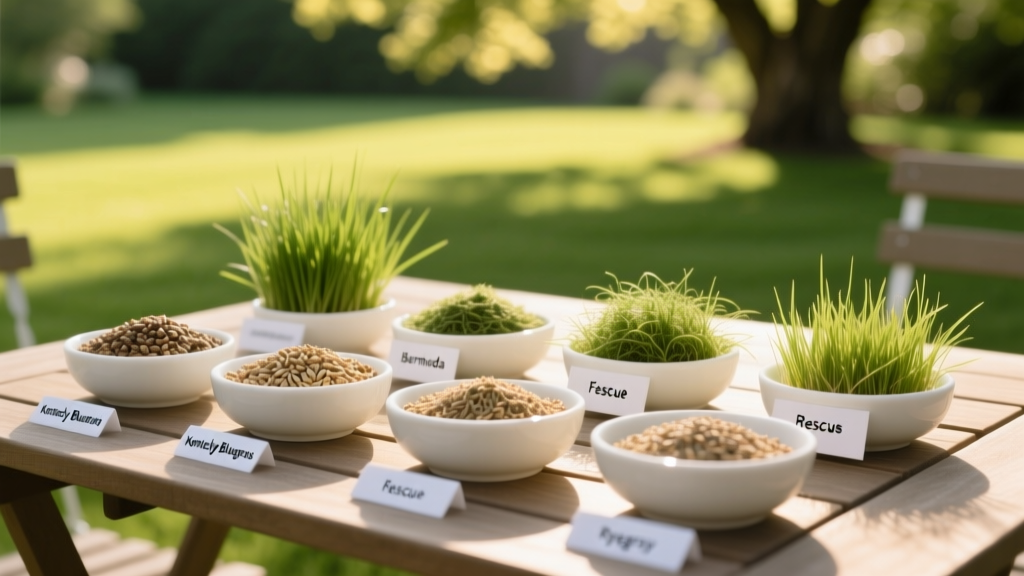
Mastering Grass Seed Sowing: Exact Rates, Timing, and Soil Prep
Most lawn establishment failures trace back to three variables: incorrect seeding density, ignoring soil thermodynamics, and poor seed-to-soil contact. Scattering seed by hand and relying on rainfall is a recipe for patchy germination and aggressive weed invasion. Professional turf managers approach grass seed sowing as a precise mathematical and biological process. By calculating Pure Live Seed (PLS), targeting exact soil temperature windows, and utilizing mechanical contact methods, you can achieve a 90%+ germination rate and establish a dense, drought-resistant turf canopy in under 30 days.
Decoding the Seed Tag: Pure Live Seed (PLS) Math
Before calculating how many bags to buy, you must read the seed tag's PLS (Pure Live Seed) percentage. Commercial seed bags contain inert matter, weed seeds, and non-viable seeds. The PLS tells you the actual percentage of seed capable of germination.
The PLS Formula: (Purity % × Germination %) ÷ 100 = PLS %
If a bag of Kentucky Bluegrass lists 98% purity and 85% germination, the PLS is 83.3%. If your target sowing rate is 2 lbs per 1,000 square feet, you must divide 2 by 0.833, meaning you actually need to apply 2.4 lbs of physical product per 1,000 square feet to hit your biological target. Ignoring this math is the primary reason DIY lawns emerge thin and sparse.
The Mathematics of Grass Seed Sowing Rates
Over-sowing does not yield a thicker lawn; it triggers "damping off," a fungal disease where overcrowded seedlings compete for limited soil moisture and suffocate each other. Under-sowing leaves bare soil exposed to crabgrass and spurge. According to University of Minnesota Extension, adhering to species-specific weight ratios is non-negotiable.
| Grass Species | Approx. Seeds per lb | New Lawn Rate (lbs/1,000 sq ft) | Overseeding Rate (lbs/1,000 sq ft) |
|---|---|---|---|
| Tall Fescue (Turf-type) | 225,000 | 6.0 - 8.0 | 3.0 - 5.0 |
| Kentucky Bluegrass | 2,200,000 | 1.5 - 2.0 | 0.75 - 1.0 |
| Perennial Ryegrass | 230,000 | 5.0 - 7.0 | 3.0 - 4.0 |
| Bermudagrass (Hulled) | 2,000,000 | 1.0 - 2.0 | 0.5 - 1.0 |
| Zoysiagrass | 1,100,000 | 1.0 - 2.0 | N/A (Rarely seeded) |
Soil Temperature Triggers: Beyond the Calendar
Amateur gardeners sow based on the calendar month; turf agronomists sow based on soil thermodynamics. Air temperature is irrelevant to the germination trigger—the seed only reads the temperature of the soil profile surrounding it.
The 50/65 Rule for Cool-Season Grasses: Tall fescue, KBG, and ryegrass require a consistent soil temperature (measured at a 2-inch depth) between 50°F and 65°F. This typically correlates with daytime air temperatures of 60°F to 75°F. Sowing when soil exceeds 70°F drastically increases the risk of Pythium blight destroying young seedlings.
The 65/75 Rule for Warm-Season Grasses: Bermudagrass and centipedegrass demand soil temperatures between 65°F and 75°F for optimal enzymatic activation. Sowing warm-season seed in 55°F soil will result in seed rot before germination occurs.
The 65/75 Rule for Warm-Season Grasses: Bermudagrass and centipedegrass demand soil temperatures between 65°F and 75°F for optimal enzymatic activation. Sowing warm-season seed in 55°F soil will result in seed rot before germination occurs.
Invest in a dedicated soil probe thermometer, such as the ThermoPro TP49 or a commercial Reotemp model. Insert the probe 2 inches into the soil at 8:00 AM for three consecutive days to establish a baseline before initiating grass seed sowing. NC State University TurfFiles emphasizes that soil temperature tracking is the single highest predictor of establishment success.
Seed-to-Soil Contact: Method Comparison Matrix
Grass seed left resting on top of thatch or dry soil will desiccate within hours of germination. The seed must be covered by 1/8 to 1/4 inch of soil to maintain the capillary moisture required for the radicle (first root) to anchor. Below is a comparison of professional establishment methods.
| Method | Equipment / Cost | Seed-to-Soil Contact | Best Application Scenario |
|---|---|---|---|
| Slice Seeding | Rental: $65-$90/day (e.g., Ryan Ren-O-Thin) | Excellent (Seed dropped directly into 1/4" furrows) | Total lawn renovations and heavy bare-spot repairs. |
| Core Aeration + Broadcast | Rental: $40-$60/day + $30 spreader | Good (Seed falls into aeration cores) | Annual overseeding of existing, relatively healthy turf. |
| Hydroseeding | Pro Service: $0.85-$1.50/sq ft | Superior (Tackifier binds seed, mulch, and soil) | Steep slopes, large new construction lots (5,000+ sq ft). |
| Broadcast + Topdressing | Manual labor + $45/yard compost | Variable (Depends on raking depth) | Small patch repairs where machinery cannot fit. |
Chemical Synergy: Starter Fertilizers and Mesotrione
New seedlings lack the root mass to scavenge phosphorus from the soil matrix. A starter fertilizer with a high phosphorus ratio (e.g., 10-18-10 or 24-25-4) is critical for rapid root development. Apply at a rate of 1.0 lb of actual nitrogen per 1,000 square feet on the exact day of sowing.
Simultaneously, weed competition is the primary killer of young grass. Standard pre-emergent herbicides (like prodiamine) will stop your grass seed from germinating. The professional solution is Mesotrione (sold under the brand name Tenacity). Mesotrione inhibits photosynthesis in broadleaf weeds and crabgrass but is entirely safe for germinating Kentucky Bluegrass, Tall Fescue, and Perennial Ryegrass. Apply at a rate of 1 teaspoon per gallon of water per 1,000 square feet immediately after sowing. Note: Do not use Mesotrione when sowing Fine Fescues or Bermudagrass, as it will cause severe phytotoxicity to these specific species.
The 21-Day Hydration Protocol
Once the seed imbibes water, the germination clock starts. If the seed dries out even once during the first 14 days, the embryo dies. You are not watering the soil; you are watering the seed. Follow this strict hydration matrix:
- Days 1–7 (Germination Phase): Water 3 to 4 times daily for 5 minutes per zone. The goal is to keep the top 1/2 inch of soil consistently damp but not saturated. Avoid puddling, which will float the seed into low-lying areas and create uneven distribution.
- Days 8–14 (Radicle Anchoring): Reduce frequency to 2 times daily, but increase duration to 10 minutes. This encourages the emerging roots to stretch slightly deeper into the soil profile to chase the receding moisture line.
- Days 15–21 (Tiller Development): Transition to 1 watering session per day for 20 to 30 minutes. By day 21, the grass should be 1.5 to 2 inches tall and ready for its first mowing. Never remove more than 1/3 of the blade height during this first cut, and ensure your mower blades are freshly sharpened to prevent tearing the fragile young tissue.
Precision in grass seed sowing separates a temporary green flush from a permanent, resilient turf ecosystem. By respecting the PLS mathematics, monitoring soil thermodynamics, and enforcing strict moisture protocols, your lawn will establish with the density and vigor of a professionally managed athletic field.