Grass Types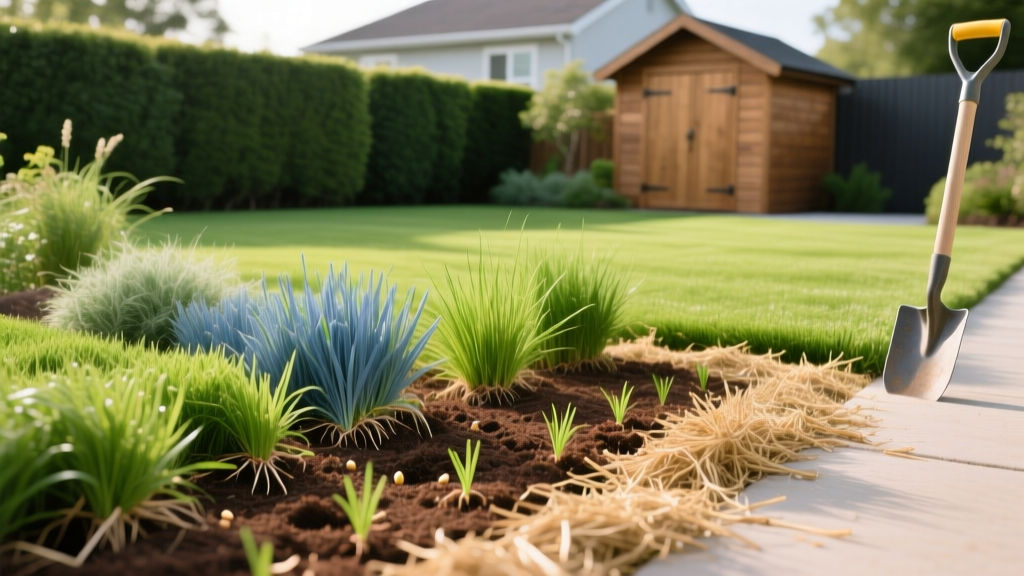
Choosing the Right Grass Seed Starting Mulch for New Lawns
The Agronomic Role of Mulch in Seed Germination
Grass seed germination is a highly vulnerable physiological process. For a seed to transition from dormancy to active growth, the top 0.25 inches of soil must maintain consistent moisture and a soil temperature between 55°F and 65°F for cool-season grasses, or 65°F to 75°F for warm-season varieties. Exposed soil fluctuates wildly in temperature and loses moisture to evaporation within hours. Applying a dedicated grass seed starting mulch engineers a stable microclimate, reducing surface evaporation by up to 70% while shielding delicate radicles (embryonic roots) from UV scorch and foraging birds.
However, selecting the wrong material—or applying the correct material at the wrong density—can suffocate seedlings, introduce aggressive weeds, or cause hydrophobic runoff. According to turfgrass establishment protocols from Penn State Extension, the primary goal of mulching seed is to retain moisture without blocking the sunlight required for photosynthesis once the cotyledon emerges.
Data Highlight: The Germination Multiplier
Field trials consistently show that properly mulched turfgrass seed yields a 40% to 60% higher germination rate compared to bare-soil broadcasting. Furthermore, mulched lawns require 50% less irrigation volume during the critical 14-to-21-day establishment window, directly offsetting the initial material cost.
Comparison Matrix: Top 5 Grass Seed Starting Mulch Materials
Not all mulches are created equal. Landscape bark or wood chips, for instance, are entirely unsuitable for seed starting due to their heavy shading and nitrogen-robbing decomposition processes. Below is a technical breakdown of the five industry-standard materials used specifically for turfgrass seed germination in 2026.
| Material | Application Rate | Est. Cost (per 1,000 sq ft) | Pros & Cons | Best Use Case |
|---|---|---|---|---|
| Wheat Straw | 1 bale (approx. 60 lbs) | $6.00 - $10.00 | Pros: Cheap, breathable. Cons: Can harbor weed seeds, blows away in high wind. | Flat, residential lawns on a budget. |
| Screened Compost | 1/4 inch topdressing layer | $15.00 - $25.00 | Pros: Adds organic matter/nutrients. Cons: Heavy, can smother seed if applied too thick. | Overseeding existing thin lawns. |
| Peat Moss | 1 bale (3 cu ft) | $12.00 - $18.00 | Pros: Sterile, excellent water retention. Cons: Becomes hydrophobic if allowed to dry out. | Small repair patches and shaded areas. |
| Recycled Paper Pellets (e.g., Penn Mulch) | 40 - 50 lbs | $25.00 - $35.00 | Pros: Weed-free, expands when wet, biodegrades into soil. Cons: Higher upfront cost. | High-end residential builds, HOA requirements. |
| Hydromulch (Tackified Cellulose) | 1,500 - 2,000 lbs/acre | $150 - $300 (Professional app.) | Pros: Superior erosion control, locks seed in place. Cons: Requires specialized pumping equipment. | Steep slopes, commercial properties, new construction. |
The 75% Visibility Rule: Mastering Application Density
The most frequent cause of germination failure in DIY lawn installations is mulch smothering. Grass seedlings require immediate access to sunlight once they break the seed coat. If the mulch layer is too dense, the seedlings will exhaust their endosperm energy reserves pushing through the material, resulting in yellow, spindly growth that rapidly dies off.
Turfgrass agronomists universally recommend the 75% Visibility Rule. After broadcasting your seed and applying your chosen grass seed starting mulch, you should still be able to see 25% to 50% of the soil and seed through the mulch layer. This translates to a physical depth of no more than 1/8 to 1/4 inch of loose material.
Terrain-Specific Application Frameworks
The topography of your lawn dictates not just the type of mulch, but the mechanical method of application. Water tension and gravity behave differently on a 2% grade versus a 15% slope.
Scenario A: Flat to Gentle Slopes (0% - 5% Grade)
- Soil Preparation: Rake the top 2 inches of soil to create a fine, crumbly seedbed. Remove all debris larger than a pea.
- Seeding: Broadcast seed using a rotary spreader at the manufacturer's recommended rate (e.g., 6-8 lbs per 1,000 sq ft for Tall Fescue).
- Seed-to-Soil Contact: Drag a piece of chain-link fence or a lawn roller (filled only 1/4 with water) over the area to press the seed into the soil crevices.
- Mulching: Hand-scatter wheat straw or paper pellets evenly. Shake the bale or bag apart loosely to avoid dropping heavy clumps that will block sunlight.
Scenario B: Steep Slopes and Drainage Swales (5%+ Grade)
On sloped terrain, loose straw and dry compost will wash away during the first heavy irrigation cycle, taking the seed with it. For these areas, you must utilize binding agents.
- Tackified Hydromulch: The gold standard for slopes. The cellulose fibers are mixed with a natural guar gum or plant-based tackifier that glues the mulch and seed to the soil matrix upon drying. According to University of Minnesota Extension, hydromulching reduces soil erosion on slopes by up to 95% compared to bare soil.
- Rolled Erosion Control Blankets (RECBs): If hydromulch equipment is unavailable, use biodegradable straw or coconut coir blankets (such as those manufactured by Profile Products or East Coast Erosion). These are unrolled over the seeded slope and pinned every 3 feet with 6-inch biodegradable sod staples.
Warning: The Hay vs. Straw Trap
Never use 'hay' as a grass seed starting mulch. Hay is harvested as livestock feed and contains thousands of viable agricultural weed seeds (like ryegrass, clover, and thistle) per bale. 'Straw' is the hollow stalk left over after grain harvest and is largely seed-free. Always verify you are purchasing certified weed-free wheat or oat straw.
Scenario C: Overseeding Existing Turf
When introducing new seed into an established, thinning lawn, traditional straw mulch is impractical and aesthetically displeasing. Instead, use screened compost topdressing. After core aerating and broadcasting seed, drag a drag-mat or the back of a landscaping rake to work a 1/4 inch layer of fine compost into the aeration holes and existing turf canopy. The compost holds moisture against the seed while simultaneously feeding the existing grass roots. Research from Purdue University Turfgrass Science highlights that compost topdressing significantly improves soil microbial activity, which accelerates the breakdown of thatch and improves long-term seedling vigor.
Hydration Protocols for Mulched Seedbeds
Mulch alters the evaporation rate, which means your irrigation schedule must adapt. A mulched seedbed requires less frequent, but highly targeted, watering.
- Days 1-10 (Pre-Germination): Water 3 to 4 times daily for 5-10 minutes per zone. The goal is to keep the mulch and top 1/4 inch of soil consistently damp, not saturated. If using peat moss, ensure it never turns light brown; once peat dries out, it becomes hydrophobic and will repel water away from the seed.
- Days 11-21 (Emergence): As seedlings push through the mulch, reduce frequency to twice daily but increase the duration to 10-15 minutes to encourage deeper root knitting.
- Days 22+ (Establishment): Transition to standard deep-and-infrequent watering (1 inch per week) to force roots below the mulch layer into the native soil profile.
Troubleshooting Common Mulch Failures
Even with the right materials, environmental variables can disrupt germination. Use this diagnostic framework to correct issues mid-cycle:
- Symptom: Seed is sprouting, but turning yellow and dying at the soil line.
Diagnosis: Damping-off disease, exacerbated by mulch that is too thick and trapping excessive humidity.
Fix: Gently rake away excess mulch to increase airflow and reduce watering duration. - Symptom: Mulch is blowing into neighboring flowerbeds or pooling in low spots.
Diagnosis: Wind shear on loose straw.
Fix: Lightly mist the straw with a hose immediately after application to help it settle and interlock, or switch to expanded paper pellets which are heavier and interlock when wet. - Symptom: Patchy germination directly under mulch clumps.
Diagnosis: Smothering due to uneven distribution.
Fix: Use a leaf blower on a low setting to gently redistribute heavy clumps of straw or compost across bare areas.
Selecting the correct grass seed starting mulch is a calculated investment in your lawn's foundational root structure. By matching the material to your specific terrain, adhering to the 75% visibility rule, and adjusting your irrigation to the mulch's moisture-retention properties, you transition the seed from a vulnerable embryo to a resilient, drought-tolerant turfgrass system.