Grass Types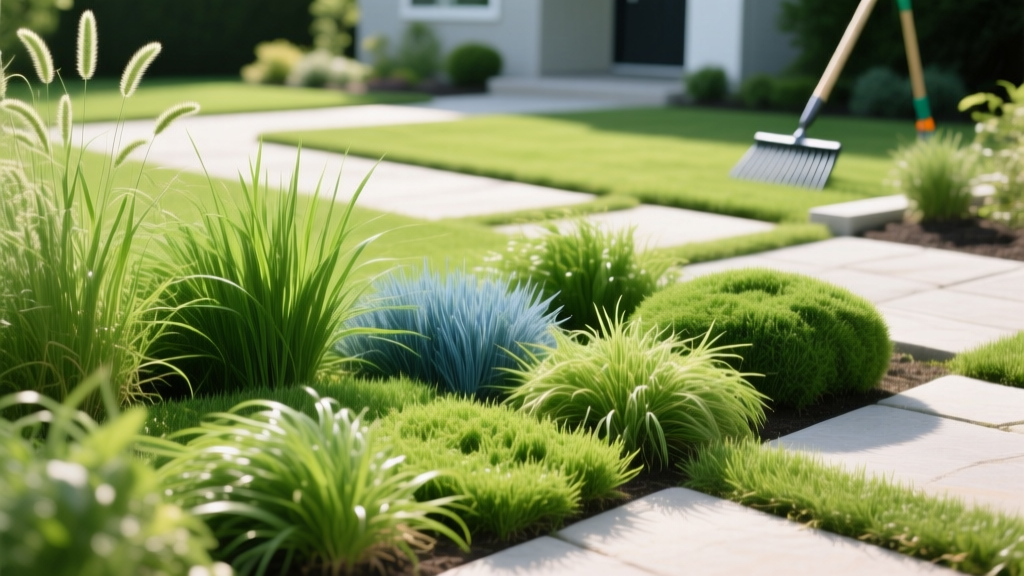
Truth About Grass Seed That Grows Anywhere: Best Adaptable Blends
The Botanical Reality: Debunking the "Miracle Seed" Myth
Every spring, homeowners search for a holy grail: grass seed that grows anywhere. Marketing campaigns often promote "miracle" blends claiming to thrive in deep shade, scorching sun, poor soil, and heavy foot traffic simultaneously. As turfgrass scientists will tell you, this biological omnipotence does not exist. Grass species are bound by their photosynthetic pathways (C3 cool-season vs. C4 warm-season) and genetic shade/drought thresholds.
However, while no single seed grows literally anywhere, modern turfgrass breeding has produced highly adaptable, multi-species blends engineered to survive extreme microclimate variations within a single yard. By combining deep-rooting tall fescues, creeping shade-tolerant bluegrasses, and fast-germinating ryegrasses, these blends offer the closest reality to a universal lawn solution.
Expert Warning: If a seed bag claims to grow in "zero sunlight" or "solid clay without prep," it is likely a low-grade contractor mix heavy on annual ryegrass. Annual ryegrass germinates in 5 days, giving the illusion of success, but it will die off within one year, leaving you with bare dirt again.
Top 3 Highly Adaptable Seed Blends for Variable Yards
For yards with complex topography—where one corner bakes in the sun while the other sits in deep oak shade—you need a multi-cultivar blend. Here are the three most scientifically robust, adaptable blends on the market for 2026.
1. Jonathan Green Black Beauty Ultra
This blend is the gold standard for drought-prone, variable-soil lawns. The secret weapon is the inclusion of Poa arachnifera (Texas Bluegrass) genetics crossed with deep-rooting tall fescues. While standard Kentucky Bluegrass roots max out at 6 inches, Black Beauty Ultra roots can penetrate 2 to 4 feet deep, accessing subsoil moisture that keeps the grass green during 90°F+ heatwaves. It also contains endophyte-enhanced fescues that naturally repel surface-feeding insects like chinch bugs.
- Best For: Transition zones, clay soils, and yards with erratic irrigation.
- Seeding Rate: 8 lbs per 1,000 sq. ft. (new lawn); 4 lbs (overseeding).
- Estimated Cost: $45 - $55 per 3 lb bag.
2. Scotts Turf Builder Sun & Shade Mix
Scotts utilizes a proprietary WaterSmart PLUS coating that absorbs twice as much water as uncoated seed, which is critical for germination in sandy, fast-draining soils or hot spots. The blend relies on a triad of species: Perennial Ryegrass for rapid 7-day germination and erosion control, Fine Fescue for the shaded areas under tree canopies, and Kentucky Bluegrass for the sunny expanses. It is an excellent "catch-all" for suburban yards with mature trees.
- Best For: Mixed sun/shade lawns, sandy soils, and beginner DIYers.
- Seeding Rate: 6 lbs per 1,000 sq. ft. (new lawn); 3 lbs (overseeding).
- Estimated Cost: $35 - $40 per 5 lb bag.
3. Pennington Smart Seed Dense Shade
If your definition of "anywhere" includes the notoriously difficult north side of your house or areas beneath dense maple canopies, this is the specialist blend. It features Poa supina (Supina Bluegrass), a rare cultivar that actually creeps and fills in via stolons in environments receiving only 2 to 4 hours of filtered sunlight. It also includes Pennington's MYCO Advantage mycorrhizal seed coating, which inoculates the roots with fungi to expand their nutrient-gathering surface area by up to 100x.
- Best For: Heavy shade, north-facing slopes, and tree-root competition zones.
- Seeding Rate: 5 lbs per 1,000 sq. ft.
- Estimated Cost: $30 - $35 per 3 lb bag.
Adaptability Comparison Matrix
| Brand / Blend | Primary Species | Shade Tolerance | Drought Tolerance | Traffic Wear |
|---|---|---|---|---|
| Jonathan Green Ultra | Tall Fescue, TX Bluegrass | 7/10 | 9/10 | 8/10 |
| Scotts Sun & Shade | KBG, Fine Fescue, Ryegrass | 8/10 | 6/10 | 7/10 |
| Pennington Dense Shade | Fine Fescue, Supina Bluegrass | 10/10 | 4/10 | 3/10 |
Site-Specific Cheat Sheet: Matching Seed to Your Microclimate
According to the University of Minnesota Extension, attempting to force sun-loving species into shaded environments is the number one cause of turf failure. Use this decision framework before buying seed:
- 0 - 2 Hours of Direct Sun: Stop. No grass seed grows here. The energy required for photosynthesis is absent. Switch to mulch, hostas, or shade-tolerant moss.
- 2 - 4 Hours of Dappled Sun: Use Fine Fescues (Creeping Red, Chewings) or Supina Bluegrass. Avoid Tall Fescue here, as it will thin out and invite weed invasion.
- 4 - 6 Hours of Direct Sun: This is the "transition zone." Use a blended mix like Scotts Sun & Shade. The Fine Fescues will dominate the shadier patches, while the Kentucky Bluegrass will take over the sunnier spots.
- 6+ Hours of Direct Sun: Use 100% Tall Fescue (for drought/heat) or Kentucky Bluegrass (for high traffic and self-repairing rhizomes).
Step-by-Step Establishment for "Unplantable" Tough Zones
Even the most adaptable grass seed that grows anywhere will fail if the seedbed is hydrophobic or compacted. Follow these precise establishment steps for tough areas:
- Core Aerate (If Compacted): For clay-heavy zones, run a core aerator to pull 3-inch plugs. This breaks the surface tension and allows seed-to-soil contact.
- Apply Starter Fertilizer: Use a high-phosphorus starter fertilizer (e.g., 18-24-12 NPK). Phosphorus is non-mobile in soil and is critical for the first 14 days of root development. Apply at 1.5 lbs of nitrogen per 1,000 sq. ft.
- Sow and Rake: Broadcast the seed at the recommended rate. Use a leaf rake turned upside down (tines facing up) to gently drag the seed into the top 1/8 inch of soil. Do not bury it deeper; turf seed requires light to trigger germination.
- The 14-Day Moisture Rule: Water lightly 2 to 3 times a day for 10 minutes. The top 1 inch of soil must remain constantly damp (not flooded) until the ryegrass and fescues sprout. Missing a single watering cycle on day 4 can desiccate the fragile radicle (first root) and kill the seedling.
Common Failure Modes When Planting in Variable Spots
When dealing with complex yards, watch out for these specific edge cases that ruin otherwise good seed blends:
- Tree Root Competition: The soil beneath mature maples and oaks is often hydrophobic (water-repellent) due to fungal networks and root exudates. You must physically scarify the top 1/2 inch of soil and add a 1/4 inch layer of compost before seeding, or the water will simply run off.
- Pythium Blight in Damp Shade: Shade grass stays wet longer. Overwatering shaded areas in late summer invites Pythium and Rhizoctonia fungi. Water shaded zones only in the early morning so the blades dry before nightfall.
- Scalping Shade Grass: Shade-tolerant grasses must be mowed higher to maximize their limited leaf surface area for photosynthesis. Set your mower deck to 3.5 or 4 inches for shaded zones, compared to 2.5 inches for sunny zones.
Expert Turfgrass FAQ
Can I mix warm-season and cool-season seeds to guarantee something grows?
No. Mixing Bermuda (warm-season) with Tall Fescue (cool-season) results in a chaotic, patchy lawn. In summer, the fescue browns out while the Bermuda thrives; in winter, the Bermuda goes dormant and brown while the fescue stays green. Always match the seed to your primary USDA Hardiness Zone.
How do I know if my "anywhere" seed is actually good quality?
Read the seed tag on the back of the bag. Look for the "Weed Seed" percentage (it should be 0.00% or under 0.05%) and the "Germination Rate" (should be 85% or higher). The NC State TurfFiles database is an excellent resource for verifying the specific cultivars listed on the tag to ensure they are modern, disease-resistant varieties rather than generic, uncertified forage grasses.
Does grass seed expire?
Yes. Grass seed loses viability at a rate of roughly 10% to 20% per year if stored in non-climate-controlled environments. If you are using a bag from last season, increase your application rate by 25% to compensate for the dead seeds, or purchase fresh stock for critical establishment areas.