Grass Types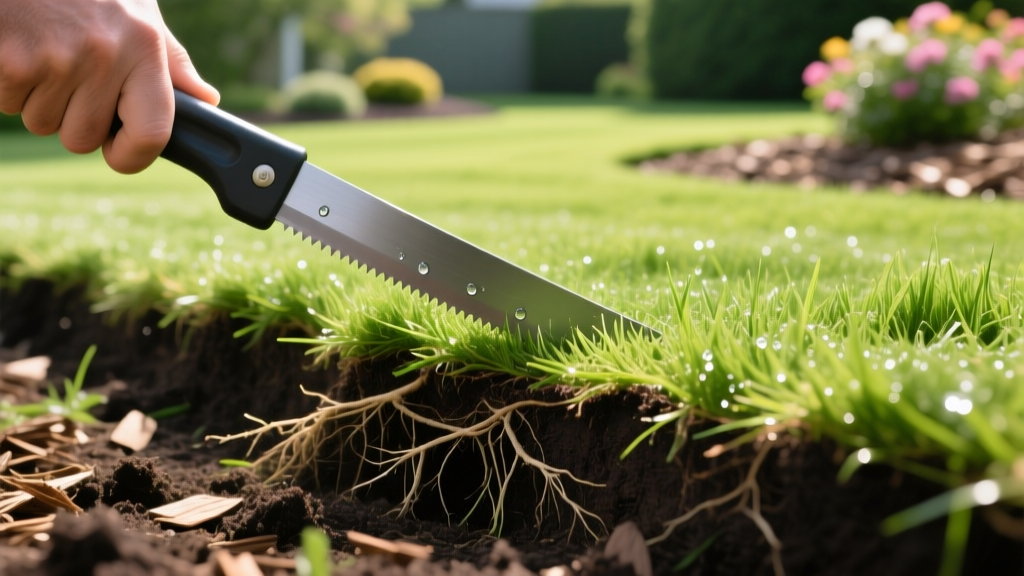
Hand Sod Cutter Guide: Prepping Soil for Grass Seed
Removing existing turf to establish a new lawn from seed requires precision. While gas-powered sod cutters are standard for large commercial jobs, they are overkill, expensive, and destructive for residential yards under 1,500 square feet. A hand sod cutter allows you to surgically remove old grass, preserve the valuable topsoil microbiome, and create an optimal, level seedbed for new grass varieties. According to University of Minnesota Extension, proper soil preparation and existing vegetation removal are the most critical factors in long-term lawn establishment success.
Choosing the Right Manual Sod Cutting Tool
Not all manual cutters serve the same purpose. Selecting the wrong blade geometry will double your labor time and leave the soil bed uneven. Here is a comparison of the three primary manual tools used for seeding prep.
| Tool Type | Best Application | Blade Geometry | Average Cost (2026) |
|---|---|---|---|
| Serrated Sod Knife (e.g., Fiskars 46") | Tight curves, flower bed edges, slicing deep taproots | Curved, serrated edge with a pointed tip | $35 - $45 |
| Half-Moon Edger (e.g., True Temper 4") | Scoring straight grid lines, initial perimeter cuts | Flat, sharpened semi-circle blade | $25 - $35 |
| Manual Kick Plow (e.g., Truper 33") | Undercutting large 12x24" sod strips in flat areas | Flat horizontal blade with a footstep lever | $50 - $70 |
Pro Tip: For a complete lawn renovation under 1,000 sq ft, buy both a half-moon edger for scoring the grid and a serrated sod knife for the actual undercutting and root severing.
The 4-Step Manual Sod Removal Process
Manual removal is about leverage and moisture, not brute force. Follow this sequence to strip the old lawn while leaving a perfectly graded seedbed behind.
Step 1: Hydration and Timing
Never attempt to cut dry sod. Dry soil shatters the root mat and leaves behind hard, compacted clods that prevent seed-to-soil contact. Apply exactly 1 inch of water to the lawn 24 hours before cutting. The ideal moisture level is achieved when you can squeeze a handful of soil into a ball that holds its shape, but crumbles easily when poked. If water drips from your fist, the soil is too saturated and will tear during removal.
Step 2: Grid Scoring
Use your half-moon edger to score the lawn into a grid. For manual removal, 12-inch by 24-inch rectangles are the optimal dimensions. This size is heavy enough to stay intact when lifted (weighing roughly 15-20 lbs per piece) but small enough to maneuver without breaking. Push the edger down to a depth of exactly 1.5 inches.
Step 3: The Undercutting Technique
Switch to your serrated sod knife or manual kick plow. Insert the blade at the short end of your 12x24" grid at a 15-degree downward angle. Slide the blade horizontally beneath the roots.
Critical Depth Warning: Do not cut deeper than 1.5 to 2 inches. Cutting deeper removes the nutrient-rich topsoil layer, leaving only sterile subsoil behind. Purdue University Turfgrass Science emphasizes that preserving the top 2 inches of topsoil is vital for providing the organic matter necessary to support new grass seed germination.
Step 4: Rolling and Soil Amendment
Roll the removed sod strips and set them aside for composting or relocation. Once the soil is exposed, do not immediately seed. Use a rigid steel landscape rake to smooth out any ridges left by the cutter blade. Apply a 1/4-inch layer of compost and rake it into the top inch of the exposed soil to create a premium seedbed.
Edge Case: Manual Slit-Seeding for Overseeding
If you are not removing the entire lawn but rather overseeding an existing thin turf, a hand sod cutter can act as a manual slit-seeder. Instead of cutting horizontal grids, use a sharpened half-moon edger to slice vertical, 1/4-inch deep slits spaced 2 inches apart across the lawn. Drop your grass seed directly into these slits. This technique bypasses the thatch layer, ensuring the seed makes direct contact with the mineral soil, drastically improving germination rates compared to broadcast seeding over existing turf.
Cost and Labor Analysis: Manual vs. Gas-Powered
Deciding between manual hand tools and renting a gas-powered sod cutter depends on your budget, physical capability, and project scale. Below is a direct comparison for a standard 500-square-foot front yard renovation.
| Factor | Hand Sod Cutter (Manual) | Gas-Powered Renter |
|---|---|---|
| Equipment Cost | $60 - $80 (One-time purchase) | $95 - $135 (Daily rental + fuel) |
| Time Required (500 sq ft) | 4 - 6 hours | 1 - 1.5 hours |
| Soil Impact | Preserves soil structure and microbiome | Heavy vibration compacts subsoil; tires tear turf |
| Physical Toll | High (Back, shoulders, and grip fatigue) | Moderate (Heavy lifting and machine maneuvering) |
| Precision | Exceptional (Can navigate tight tree roots) | Poor (Requires wide, straight turning radiuses) |
Common Mistakes That Ruin the Seedbed
Even with the right tools, improper technique can compromise your new grass seed. Avoid these frequent errors:
- Leaving Root Fragments: If you cut too shallow (under 1 inch), the old grass roots will remain in the soil. When you water the new seed, the old weed grasses will resurrect and outcompete your new seedlings. Always verify your blade is reaching the 1.5-inch mark.
- Ignoring the Grade: Manual cutting follows the existing contours of the lawn. If the old lawn had dips or poor drainage slopes, removing the sod will not fix the grading. You must use a leveling drag mat or the back of a landscaping rake to correct the slope before seeding.
- Dulling the Blade: Hitting buried rocks or concrete sprinkler heads will instantly roll the edge of a half-moon edger. Carry a flat metal file in your back pocket and touch up the blade edge every 30 minutes of active cutting. A dull blade requires 40% more downward force, leading to premature fatigue and uneven depth control.
Mastering the hand sod cutter transforms a grueling landscaping chore into a precise soil-prep operation. By controlling the exact depth of your cuts and preserving the native topsoil layer, you establish a biologically active foundation that gives your new grass seed the highest possible chance of rapid, uniform germination.