
Grass Types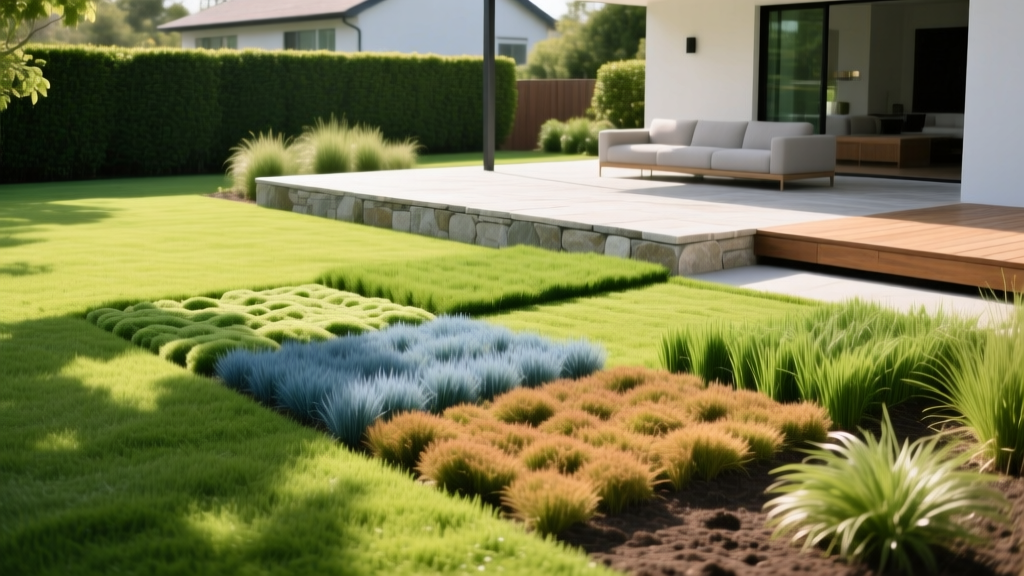
How Much Does It Cost to Lay Sod in 2026? Full Price Breakdown
The Short Answer: 2026 Sod Installation Costs
When calculating how much does it cost to lay sod, the national average for professional installation ranges from $1.20 to $2.50 per square foot in 2026. For a standard 1,000-square-foot backyard, expect to pay between $1,200 and $2,500 total. If you opt for a DIY approach, purchasing the sod yourself drops the material cost to $0.35 to $0.90 per square foot, though you must factor in equipment rentals, soil amendments, and delivery fees.
Quick 2026 Cost Summary (1,000 Sq. Ft. Lawn)
- DIY Material Only: $350 - $900
- DIY Total (with prep/rentals): $650 - $1,400
- Professional Installation: $1,200 - $2,500
- Old Lawn Removal (Add-on): $1,000 - $2,000
Price Matrix: Sod Costs by Grass Species
Not all turf is priced equally. Warm-season grasses generally carry a lower price tag per pallet than cool-season varieties or specialized drought-tolerant hybrids. According to HomeGuide's 2026 landscaping cost database, regional availability heavily dictates these baselines.
| Grass Type | Season | DIY Cost (Per Sq. Ft.) | Pro Installed (Per Sq. Ft.) | Shade/Drought Tolerance |
|---|---|---|---|---|
| Bermuda | Warm | $0.35 - $0.60 | $1.20 - $1.60 | High Drought / Low Shade |
| Zoysia | Warm | $0.50 - $0.90 | $1.50 - $2.10 | Moderate Both |
| St. Augustine | Warm | $0.60 - $1.10 | $1.60 - $2.30 | High Shade / Low Drought |
| Kentucky Bluegrass | Cool | $0.45 - $0.85 | $1.40 - $2.00 | Low Shade / Moderate Drought |
| Tall Fescue | Cool | $0.55 - $0.95 | $1.50 - $2.20 | Moderate Shade / High Drought |
The Hidden Costs of Site Preparation
The most common budgeting mistake homeowners make when asking how much does it cost to lay sod is ignoring the dirt beneath it. Sod will fail to root if laid directly over compacted clay or existing weeds. According to Angi's landscaping pricing data, site preparation can account for up to 40% of your total project cost.
⚠️ Warning: Old Lawn Removal Fees
If you are replacing an existing lawn, you must strip the old grass. Professional sod cutters and removal labor cost between $1.00 and $2.00 per square foot. For a 1,000 sq. ft. yard, this adds $1,000 to $2,000 to your bill. If you DIY this step, expect to pay $75 to rent a sod cutter for four hours, plus dump fees for the heavy organic waste.
Essential Prep Line Items
- Rototilling (6 inches deep): $0.15 - $0.25 per sq. ft. (or ~$65 for a daily rental).
- Topsoil Amendment (2-inch layer): $0.25 - $0.50 per sq. ft. Crucial for clay-heavy soils to ensure drainage.
- Starter Fertilizer (High Phosphorus): $0.05 - $0.10 per sq. ft. Phosphorus (the 'P' in N-P-K) is mandatory for rapid root development.
- Final Grading: $0.10 - $0.20 per sq. ft. to ensure a 2% slope away from your home's foundation.
Material Math: Pallets, Weight, and Delivery
Sod is sold by the pallet, not by the roll. Understanding pallet dimensions is critical for accurate ordering and avoiding massive delivery surcharges.
The Pallet Breakdown
A standard pallet of sod covers 450 to 500 square feet. However, the hidden metric is weight. A single pallet of freshly harvested sod, saturated with morning dew and soil moisture, weighs between 2,500 and 3,000 pounds.
Delivery Logistics: You cannot transport a pallet in a pickup truck. You must arrange freight delivery. Most local turf farms charge a flat delivery fee of $75 to $150 per pallet if you are within a 20-mile radius. If you order 3 pallets (1,500 sq. ft.), expect to pay $225 to $450 just to get the grass to your driveway. Furthermore, the delivery truck will require a flat, paved surface to drop the pallet; they will not drive onto soft lawns or steep inclines.
DIY vs. Professional Installation: A Financial Comparison
Should you sweat it out or write the check? Here is the exact financial trade-off for a 1,000-square-foot lawn.
The DIY Route: $850 Average
Pros: Saves roughly $1,000+ in labor. You control the quality of the soil prep.
Cons: Sod must be laid within 24 hours of harvest. If it sits on the pallet in 85°F heat for two days, the center rolls will compost and die (a phenomenon known as 'pallet burn'). You will need 3-4 able-bodied helpers to move 3,000 lbs of turf and lay it before it dries out.
Cost Breakdown: Sod ($450) + Delivery ($100) + Topsoil/Fertilizer ($200) + Equipment Rental ($100).
The Professional Route: $1,800 Average
Pros: Landscapers bring skid steers for grading, commercial sod cutters for removal, and a 5-person crew that can lay 1,000 sq. ft. in under two hours. Most offer a 30-day rooting warranty.
Cons: High upfront cost. You must vet contractors to ensure they aren't skipping the vital rototilling step to save time.
Cost Breakdown: Materials ($550) + Labor/Prep ($1,050) + Overhead/Profit ($200).
The Hidden Water Bill: 14-Day Establishment Costs
According to the EPA's WaterSense guidelines, new sod requires massive amounts of water to knit roots into the soil. Most cost guides ignore the spike in your municipal water bill.
For the first 14 days, new sod requires roughly 1 inch of water per day. Mathematically, 1 inch of water over 1,000 square feet equals 623 gallons. Over a two-week establishment period, you will use approximately 8,700 gallons of water. Depending on your local municipal water and sewer rates (which average $10 to $15 per 1,000 gallons in 2026), expect your water bill to increase by $85 to $130 during the month you lay the sod. Factor this into your total budget.
Frequently Asked Questions
How much does a pallet of sod cover?
A standard pallet covers 450 to 500 square feet. It typically contains 60 to 70 individual rolls, each measuring roughly 2 feet wide by 4.5 feet long. Always order 10% extra to account for curve cuts and edge waste.
Is it cheaper to seed or lay sod?
Seeding is vastly cheaper upfront. Grass seed costs between $0.05 and $0.15 per square foot, compared to $0.35 to $0.90 for sod. However, seeding requires 6 to 12 months to establish a usable lawn, demands constant weed management, and is highly vulnerable to rain washout and bird predation. Sod provides an instant, weed-free lawn in 14 days.
What time of year is cheapest to lay sod?
Early autumn (for cool-season grasses like Fescue) and late spring (for warm-season grasses like Bermuda) are optimal for root growth. However, if you want the lowest material prices, book your sod delivery in the shoulder seasons—late February or late November—when turf farms have excess inventory and lower demand, often resulting in 10% to 15% discounts on pallet prices.

