Grass Types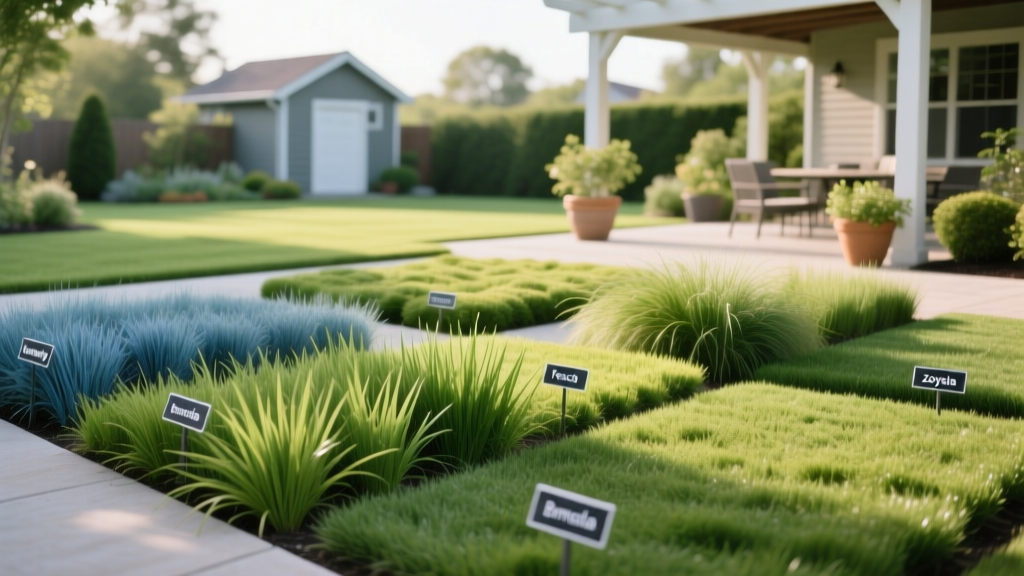
How Much Is Sod Per Sq Ft? 2026 Cost & Coverage Guide
The True Cost of Sod: Material vs. Installed Pricing
When homeowners ask, "how much is sod per sq ft?", the answer depends entirely on whether you are buying the turf materials alone or paying for a turnkey professional installation. In 2026, the national average for sod materials alone ranges from $0.35 to $0.85 per square foot. However, once you factor in professional labor, soil preparation, and equipment, the fully installed cost jumps to $1.20 to $2.50 per square foot.
Understanding this gap is critical for budgeting. A 5,000-square-foot lawn will cost between $1,750 and $4,250 for materials, but a professional crew will charge between $6,000 and $12,500 to deliver, prep the soil, and lay the turf. According to HomeGuide's landscaping cost data, regional labor rates and the accessibility of your yard heavily dictate the final installed price.
Grass Type Pricing Matrix: Warm-Season vs. Cool-Season
Not all turfgrass is priced equally. Premium cultivars with high drought tolerance or superior shade resistance command a higher price per square foot at the sod farm. Below is the 2026 pricing breakdown for the most common residential turfgrasses.
| Grass Species | Climate Zone | Material Cost (Per Sq Ft) | Installed Cost (Per Sq Ft) | Shade Tolerance |
|---|---|---|---|---|
| Kentucky Bluegrass | Cool-Season | $0.35 - $0.55 | $1.20 - $1.80 | Moderate |
| Tall Fescue | Transition / Cool | $0.40 - $0.65 | $1.30 - $1.90 | High |
| Bermuda (Common) | Warm-Season | $0.40 - $0.60 | $1.25 - $1.85 | Low |
| St. Augustine | Warm-Season | $0.50 - $0.80 | $1.50 - $2.20 | High |
| Zoysia (Zeon/Geo) | Warm / Transition | $0.60 - $0.95 | $1.80 - $2.50 | Moderate-High |
| Centipedegrass | Warm-Season | $0.45 - $0.70 | $1.40 - $2.00 | Moderate |
Expert Insight: Zoysia cultivars like Zeon or Geo are grown on specialized farms and take longer to establish, making them the most expensive warm-season option. Conversely, Tall Fescue remains the most cost-effective choice for transition zones due to its rapid growth cycle and high seed yield for sod farms.
Decoding Pallet Coverage and the 10% Waste Rule
Sod farms do not sell by the exact square foot; they sell by the pallet or by the piece. Miscalculating your coverage is the fastest way to blow your budget on emergency secondary deliveries.
Standard Pallet Dimensions
- Standard Pallet: Covers 400 to 500 square feet. Weighs between 2,500 and 3,000 pounds.
- Individual Pieces (Slabs): Typically cut to 16 x 24 inches (2.66 square feet per piece). A 400 sq ft pallet contains exactly 150 pieces.
- Mini-Pallets: Some suppliers offer 150 sq ft bundles for small patch jobs, but the cost per square foot is usually 20% to 30% higher.
Calculating Your Exact Needs
Never order the exact square footage of your lawn. You must account for cuts around landscaping beds, trees, and curved borders.
⚠️ The Waste Factor Rule:
For standard rectangular lawns, add 5% to your total square footage. For lawns with complex curves, multiple garden beds, or narrow strips, add 10%. If your yard measures 4,200 sq ft with curved beds, order 4,620 sq ft (roughly 12 standard pallets). Sod farms generally do not accept returns on cut or dried-out pallets.
For standard rectangular lawns, add 5% to your total square footage. For lawns with complex curves, multiple garden beds, or narrow strips, add 10%. If your yard measures 4,200 sq ft with curved beds, order 4,620 sq ft (roughly 12 standard pallets). Sod farms generally do not accept returns on cut or dried-out pallets.
The Hidden Budget Killers: Soil Prep and Delivery
The price quoted by a sod farm is only the beginning. The lawn care experts at LawnStarter note that site preparation often accounts for 40% of a professional sod installation quote. If you are DIY-ing, you must budget for these hidden costs:
- Old Turf Removal: Renting a gas-powered sod cutter costs $100 to $150 per day. You will also need to pay for dump truck disposal, which averages $200 to $400 per load depending on local landfill tipping fees.
- Soil Tilling and Grading: Rototilling 4 to 6 inches deep is non-negotiable for root penetration. A heavy-duty rear-tine tiller rental runs $85 to $120 per day.
- Topsoil and Compost Amendments: Most suburban soil is compacted clay. You need 2 to 3 cubic yards of screened compost per 1,000 square feet to improve drainage. At $40 to $60 per cubic yard (delivered), a 5,000 sq ft lawn requires $400 to $900 in compost alone.
- Delivery Fees: Sod is incredibly heavy. A single 500 sq ft pallet weighs nearly 3,000 lbs. Delivery requires a semi-truck with a forklift or liftgate. Expect delivery fees of $150 to $350 per truckload, which usually maxes out at 12 to 14 pallets.
- Starter Fertilizer: New sod requires a high-phosphorus starter fertilizer (e.g., a 10-18-10 N-P-K ratio) to stimulate root growth. A 50lb bag covering 5,000 sq ft costs roughly $65.
Watering Schedules and Municipal Utility Costs
A frequently overlooked expense in the "how much is sod per sq ft" calculation is the water bill. New sod requires massive amounts of water to prevent the shallow roots from desiccating before they anchor into the subsoil.
"For the first 14 days, new sod requires roughly 1 inch of water per day. That equates to 623 gallons of water per 1,000 square feet. Homeowners are often shocked when their first post-installation water bill arrives."
If your municipal water rate is $4.00 per 1,000 gallons, watering a 5,000-square-foot lawn properly for the first two weeks will consume over 31,000 gallons, adding approximately $125 to $150 to your monthly utility bill. Factor this into your total establishment budget. If you are on a well system, ensure your pump and irrigation zones can handle the sustained GPM (gallons per minute) output required to water the entire lawn daily without burning out the pump.
DIY vs. Professional Installation: A Financial Decision Tree
Should you lay the sod yourself or hire a crew? Use this framework to decide.
When to DIY (Save $1,500 - $4,000)
- Area is under 2,500 sq ft: You can physically move and lay this amount in a single weekend with 2-3 friends before the grass dries out on the pallet.
- Flat, accessible terrain: No steep slopes requiring erosion netting or complex terracing.
- Equipment access: A truck and trailer can easily back up to the lawn edge for unloading.
When to Hire a Professional (Worth the Premium)
- Area exceeds 5,000 sq ft: Sod must be laid within 24 hours of harvest. A professional crew of 4 can lay 5,000 sq ft in a single morning; DIYers will likely fail to beat the clock, resulting in heat-stressed, yellowing turf.
- Severe grading issues: If your yard has low spots that pool water, professionals will use laser levels and skid steers to regrade the sub-base, preventing future root rot.
- HOA or Municipal Restrictions: Many municipalities require licensed contractors to handle soil erosion control and stormwater runoff compliance during turf replacement.
Troubleshooting: Avoiding the "Dead Sod" Financial Pitfall
Nothing destroys a landscaping budget faster than having to rip up dead sod and buy it all over again. Avoid these three critical failure modes:
- The Hydrophobic Soil Trap: If your existing soil is severely compacted or sandy, it may become hydrophobic (water-repellent). When you water new sod, the moisture runs off instead of penetrating the soil seam. Fix: Apply a liquid soil wetting agent (surfactant) to the bare soil before laying the sod to break surface tension.
- Seam Shrinkage and Gapping: Sod pieces naturally shrink slightly as they lose moisture. If you lay them with even a 1/4-inch gap, those gaps will widen to 1/2-inch, inviting crabgrass and drying out the exposed edges. Fix: Stagger the seams like brickwork and push the pieces tightly together so the soil edges slightly overlap and compress.
- Premature Mowing: Mowing before the roots have anchored will literally rip the sod out of the ground, tearing the fragile new root hairs. Fix: Perform the "tug test." Grab a handful of grass and pull gently upward. If the turf lifts easily, it is not ready. Wait until you feel resistance from the soil, typically 14 to 21 days post-installation.