
Grass Types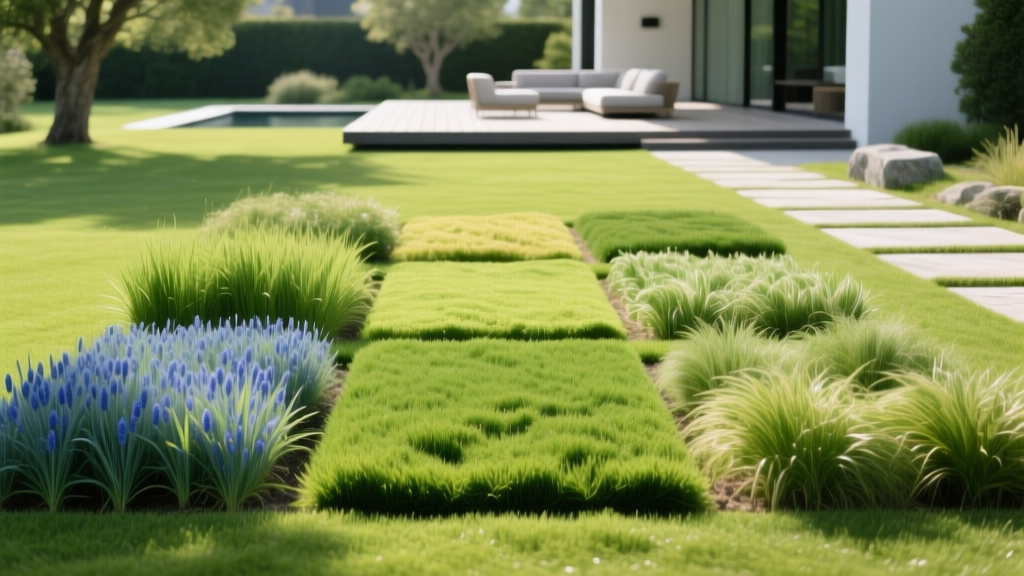
How Much Is Sod in 2026? Complete Cost & Coverage Guide
When homeowners ask how much is sod, the baseline answer for 2026 is between $0.30 and $0.85 per square foot for the material alone. However, pricing a lawn installation requires moving beyond simple square-footage multipliers. Sod costs fluctuate based on grass cultivar, regional farm availability, pallet sizing, and the often-overlooked expenses of soil preparation and heavy freight delivery.
This guide breaks down the exact material costs, coverage calculations, and hidden financial traps associated with buying and installing sod, ensuring you can budget your project down to the dollar.
The True Cost of Sod: Material Pricing by Grass Type
Not all turf is priced equally. Warm-season grasses with high drought tolerance and dense root systems command a premium over standard cool-season blends. Furthermore, patented cultivars (like TifTuf Bermuda or Zeon Zoysia) require licensing fees that push their price to the higher end of the spectrum.
| Grass Type | Avg. Cost Per Sq. Ft. | Cost Per 400 Sq. Ft. Pallet | Best Climate Zone |
|---|---|---|---|
| Bermuda (Standard) | $0.30 - $0.45 | $120 - $180 | Transition / Warm |
| Bermuda (TifTuf) | $0.55 - $0.75 | $220 - $300 | Transition / Warm |
| Zoysia (Zeon/Geo) | $0.60 - $0.85 | $240 - $340 | Warm / Transition |
| St. Augustine (Floratam) | $0.45 - $0.70 | $180 - $280 | Warm / Coastal |
| Kentucky Bluegrass | $0.35 - $0.55 | $140 - $220 | Cool / Northern |
| Tall Fescue | $0.30 - $0.50 | $120 - $200 | Cool / Transition |
The 'Pallet Size' Trap: Calculating Exact Coverage
A common mistake when budgeting is assuming a 'pallet' is a standardized unit of measurement. It is not. While 400 square feet is the industry standard for a full pallet, many regional sod farms sell 'mini-pallets' (200 sq. ft.) or oversized pallets (500 sq. ft.) without clearly disclosing the dimensions on their initial quotes.
Always ask the supplier: 'What is the exact square footage per pallet, and what are the dimensions of a single roll or slab?'
The 10% Overages Rule
Never order the exact square footage of your lawn. Between irregular lot lines, cutting around sprinkler heads, and trimming along curved garden beds, you will generate waste.
- Rectangular Lawns: Add 5% to your total square footage.
- Curved/Complex Lawns: Add 10% to 15% to your total square footage.
Hidden Costs That Destroy Sod Budgets
The material cost of the grass is often less than half of the total project expense. If you are calculating how much is sod for a full turnkey installation, you must factor in the following site-prep and logistics fees.
Warning: Freight and Delivery Fees
Sod is incredibly heavy. A 400-square-foot pallet of freshly cut sod retains massive amounts of water and soil, weighing between 2,000 and 3,000 pounds. You cannot transport this in a standard half-ton pickup truck (like an F-150 or Silverado 1500) without exceeding the vehicle's payload capacity and risking suspension damage.
Sod is incredibly heavy. A 400-square-foot pallet of freshly cut sod retains massive amounts of water and soil, weighing between 2,000 and 3,000 pounds. You cannot transport this in a standard half-ton pickup truck (like an F-150 or Silverado 1500) without exceeding the vehicle's payload capacity and risking suspension damage.
- Local Farm Pickup (Trailer Required): $0 - $50 (plus trailer rental).
- Flatbed Delivery (Within 20 miles): $75 - $150 per truckload.
- Long-Distance Freight: $200 - $400+ (often required for specialized cultivars not grown locally).
Site Preparation and Grading
Laying sod over existing weeds or compacted clay guarantees root failure and shallow establishment. Proper prep requires killing existing vegetation, rototilling to a depth of 4-6 inches, and grading for drainage.
- DIY Rototiller Rental: $50 - $80 per day.
- Professional Grading & Tilling: $0.50 - $1.50 per square foot.
- Topsoil Amendment: Adding 1-2 inches of screened topsoil or compost costs roughly $30 - $50 per cubic yard.
Old Turf Removal
If you are replacing a dead lawn, you must strip the old sod. Renting a motorized sod cutter costs about $70 to $100 per day. Hauling away the stripped turf (which is heavy and messy) will add $150 to $300 in dump fees or junk removal services.
DIY Installation vs. Professional Landscaping Quotes
According to industry data from HomeGuide, professional sod installation typically adds $1.00 to $2.50 per square foot on top of the material cost. For a 5,000-square-foot lawn, professional labor will cost between $5,000 and $12,500.
When to DIY:
- Your lawn is under 2,000 square feet.
- You have a capable crew of 3-4 friends (sod must be laid within 24 hours of delivery to prevent heat stress and yellowing).
- The site is relatively flat and requires minimal grading.
When to Hire a Pro:
- Your yard features steep slopes requiring erosion control netting and sod staples.
- You lack access to heavy machinery for moving 3,000-pound pallets to the backyard.
- The project requires complex irrigation adjustments before laying the turf.
Sod vs. Seed: The Timeline Cost Analysis
While seed is undeniably cheaper upfront (averaging $0.05 to $0.15 per square foot), the hidden cost of seeding is time and labor. Seed requires daily monitoring, vulnerability to bird predation, and a 6-to-12-month window before the lawn can withstand foot traffic. Sod provides an instant, erosion-resistant surface in 14 days. For homeowners dealing with steep slopes, heavy clay soils, or strict HOA compliance deadlines, the premium paid for sod is a functional necessity, not just an aesthetic luxury.
Seasonal Pricing Fluctuations: When to Buy
Sod farms operate on tight harvest schedules. Prices peak during the high-demand spring (April-May) and early fall (September-October) planting windows. If your schedule allows, purchasing sod during the 'shoulder seasons' (late May or late November, provided the ground isn't frozen) can yield a 10% to 15% discount from local farms eager to clear inventory before summer heat stress or winter dormancy sets in. However, buying in peak summer (July-August) is strongly discouraged; the heat stress during transit often leads to 'pallet burn,' where the center of the sod rolls turns yellow and dies before it even reaches your driveway.
Post-Installation: The Watering Investment
The financial commitment does not end when the last roll is laid. Newly installed sod requires aggressive watering to force the shallow roots into the underlying soil profile. The University of Minnesota Extension recommends keeping the top inch of soil consistently moist for the first two weeks.
Pro Tip: The Tug Test
Do not rely on a calendar to determine when your sod has established. Around day 14, gently grasp a handful of grass near the edge of a roll and pull upward. If you feel resistance and the soil lifts slightly, the roots have successfully anchored into the subsoil. At this point, you can transition from daily shallow watering to deep, infrequent soakings (1 inch of water per week) to encourage drought-tolerant root depth.
Do not rely on a calendar to determine when your sod has established. Around day 14, gently grasp a handful of grass near the edge of a roll and pull upward. If you feel resistance and the soil lifts slightly, the roots have successfully anchored into the subsoil. At this point, you can transition from daily shallow watering to deep, infrequent soakings (1 inch of water per week) to encourage drought-tolerant root depth.
Expect your water bill to spike by $50 to $150 in the first month, depending on local utility rates and the size of your lawn. Failure to water deeply and frequently in the first 14 days will result in seam shrinkage, root desiccation, and a total loss of your material investment. Budgeting accurately for how much is sod means accounting for every drop of water required to make it permanent.

