
Grass Types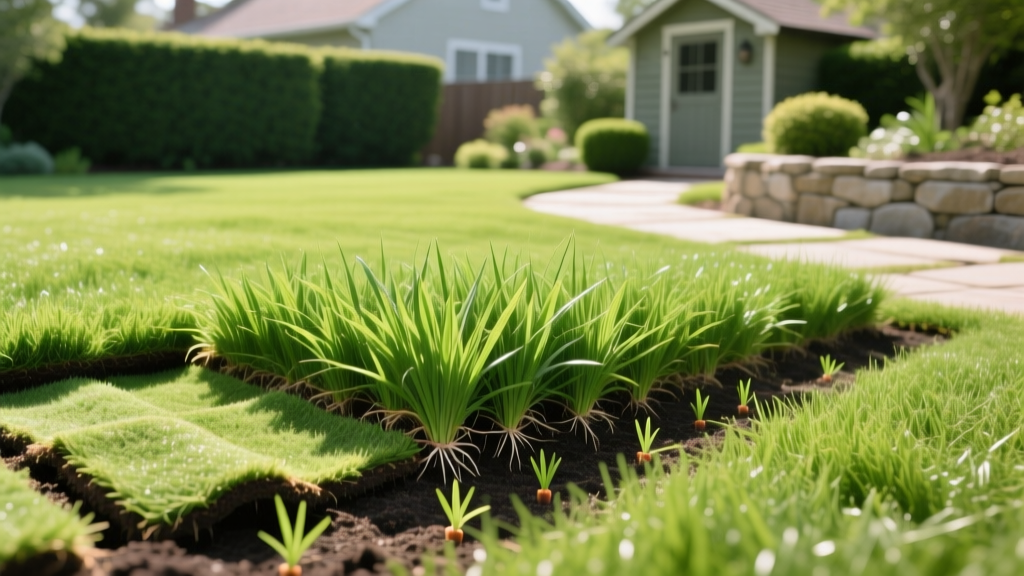
How to Grow St Augustine Grass: Sod and Plug Establishment
Selecting the Right St. Augustine Cultivar for Your Microclimate
St. Augustine grass (Stenotaphrum secundatum) is the premier warm-season turf for coastal and southern landscapes, prized for its broad blades, salt tolerance, and aggressive stolon growth. However, the generic label "St. Augustine" masks significant genetic differences between cultivars. Choosing the wrong variant for your specific light and soil conditions is the primary reason new lawns fail within the first 18 months.
According to turfgrass research from the University of Florida IFAS Extension, modern cultivars have been bred to address historical vulnerabilities, such as the St. Augustine Decline (SAD) virus and chinch bug resistance. Before purchasing sod or plugs, match your site conditions to the correct cultivar:
| Cultivar | Shade Tolerance | Blade Width | SAD Virus Resistance | Best Use Case |
|---|---|---|---|---|
| Floratam | Poor (Needs 6+ hrs sun) | Coarse | High | Full-sun residential lawns, high-traffic areas |
| Palmetto | Excellent | Fine | Moderate | Heavy tree canopy, coastal properties with salt spray |
| CitraBlue | Superior | Medium | High | Premium lawns, deep shade, drought-prone zones |
| Seville | Good | Fine (Dwarf) | Moderate | Highly manicured landscapes, saltwater environments |
Expert Insight: If your lawn receives less than 4 hours of direct, unfiltered sunlight daily, do not plant Floratam. It will thin out and invite weed invasion. Opt for CitraBlue or Palmetto, which maintain stolon density in low-light environments.
Soil Preparation and pH Correction
St. Augustine grass thrives in a soil pH range of 5.0 to 8.5, but the optimal window for nutrient uptake is 6.0 to 7.5. In highly alkaline soils (pH > 7.8), the grass will suffer from severe iron chlorosis, presenting as bright yellow leaves with dark green veins. Texas A&M AgriLife Extension recommends a baseline soil test before any tilling begins.
Step-by-Step Site Preparation
- Kill Existing Vegetation: Apply a non-selective herbicide (glyphosate) 14 days prior to planting. Wait for complete browning.
- Rototill to 6 Inches: Break up soil compaction. St. Augustine roots establish horizontally via stolons, but deep initial tilling promotes vertical root penetration for drought resistance.
- Amend the Soil: If pH is below 5.5, apply pelletized lime at 50 lbs per 1,000 sq ft. If pH is above 7.5, apply elemental sulfur at 10 lbs per 1,000 sq ft to lower it.
- Apply Starter Fertilizer: Use a high-phosphorus starter fertilizer (e.g., 10-18-10) at a rate that delivers 1 lb of actual Nitrogen per 1,000 sq ft. Note: Florida residents must adhere to the summer phosphorus blackout (June 1 – Sept 30) and use a 0-phosphorus alternative during this window.
- Grade and Level: Rake the soil smooth, ensuring a 1% slope away from foundations to prevent water pooling, which causes Pythium root rot.
Planting Methods: Sod vs. Plugs
Unlike Bermuda or Zoysia, St. Augustine produces very little viable seed. Commercial seed offerings are often scams or yield wildly inconsistent results. Professional establishment relies entirely on vegetative propagation via sod or plugs.
Sod Installation (Instant Lawn)
Sod provides immediate erosion control and instant aesthetic gratification. Expect to pay between $0.45 and $0.85 per square foot, translating to roughly $225 to $425 per standard 500-sq-ft pallet.
- Placement: Stagger sod seams in a brick-laying pattern. Never let the seams align, as this creates vulnerable channels for water runoff and weed germination.
- Rolling: After laying, use a half-filled lawn roller (approx. 150 lbs) to press the sod roots firmly into the topsoil, eliminating air pockets that dry out the roots.
Plug Planting (Budget-Friendly Establishment)
Plugs are 3-inch circular cores of grass. They cost roughly $40 to $60 per tray of 50 plugs. Because St. Augustine is an aggressive spreader, plugs will fill in a lawn within 3 to 5 months if spaced correctly.
Spacing Matrix for 3-Inch Plugs:
- 6-inch spacing (High Density): Requires 4 plugs per sq ft. Fills in 2-3 months. Highest material cost.
- 9-inch spacing (Standard): Requires 1.5 plugs per sq ft. Fills in 3-4 months. Best balance of cost and speed.
- 12-inch spacing (Economy): Requires 1 plug per sq ft. Fills in 5-6 months. High risk of weed invasion in bare gaps.
The 30-Day Establishment Watering Protocol
New St. Augustine lacks a deep root system and will die within 48 hours if the top inch of soil dries out during the summer heat. However, overwatering heavy clay soils will suffocate the roots and trigger Take-All Root Rot (TARR). Follow this precise 30-day schedule:
- Days 1–10: Water 2 to 3 times daily for 10 minutes per zone. The goal is to keep the soil surface constantly moist, not flooded.
- Days 11–20: Reduce to 1 time daily for 15 minutes. Roots should be anchoring into the soil; perform a "tug test" by gently pulling a corner of the sod or a plug. If it resists, roots are establishing.
- Days 21–30: Transition to deep, infrequent watering. Apply 0.5 inches of water twice a week. This forces roots to grow downward to seek moisture.
For accurate measurement, place three empty tuna cans in different zones of the lawn and time how long your sprinklers take to fill them to the 0.5-inch mark.
Troubleshooting Common Establishment Failures
Even with perfect soil prep, environmental stressors can derail a new lawn. The NC State Extension TurfFiles database highlights three primary threats to new St. Augustine lawns:
1. Chinch Bugs (Blissus insularis)
Chinch bugs pierce the grass blades and inject a toxin that blocks water movement. Symptoms mimic drought stress: irregular yellow patches that turn brown and die, usually starting in the hottest, sunniest areas near sidewalks. Fix: Part the grass at the edge of the dying patch and look for tiny black insects with white wings. Treat immediately with a bifenthrin-based insecticide at a rate of 0.15 lbs active ingredient per 1,000 sq ft.
2. Take-All Root Rot (TARR)
Caused by the soil-borne fungus Gaeumannomyces graminis, TARR appears as irregular, yellow-to-brown patches where the roots turn black and rot away. It is heavily exacerbated by overwatering and high soil pH. Fix: Apply a preventative fungicide containing Azoxystrobin or Propiconazole at the curative label rate. Top-dress the affected areas with 1/4 inch of acidic sphagnum peat moss to lower the surface pH and suppress fungal activity.
3. St. Augustine Decline (SAD) Virus
SAD causes a gradual, irreversible thinning of the lawn, with leaves developing a stippled, mottled yellow pattern. Unlike fungal issues, SAD does not respond to fungicides or fertilizers. Fix: There is no chemical cure. You must kill the affected turf and replant with a certified SAD-resistant cultivar, such as Floratam or CitraBlue.

