
Grass Types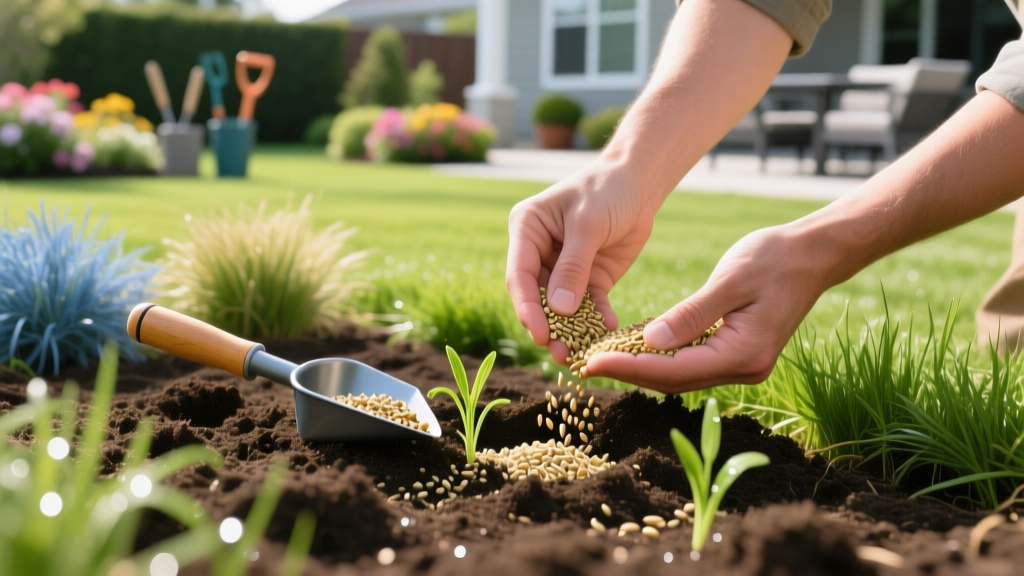
How to Plant Grass Seeds: A Step-by-Step Establishment Guide
Phase 1: Soil Preparation and Testing
Successful lawn establishment begins below the surface. Grass seed requires direct seed-to-soil contact and a hospitable pH level to germinate and develop deep roots. Before purchasing seed, conduct a professional soil test to determine your baseline nutrient levels and pH.
Expert Tip: The pH Sweet Spot
Most turfgrasses thrive in a soil pH between 6.0 and 7.0. If your soil test reveals a pH below 6.0, apply pelletized limestone at a rate of 50 lbs per 1,000 square feet to raise it. If the pH is above 7.5, apply elemental sulfur at 10 lbs per 1,000 square feet to lower it. According to Michigan State University Extension, amending soil pH takes 3 to 6 months to fully react, so test and treat well before your planting window.
Most turfgrasses thrive in a soil pH between 6.0 and 7.0. If your soil test reveals a pH below 6.0, apply pelletized limestone at a rate of 50 lbs per 1,000 square feet to raise it. If the pH is above 7.5, apply elemental sulfur at 10 lbs per 1,000 square feet to lower it. According to Michigan State University Extension, amending soil pH takes 3 to 6 months to fully react, so test and treat well before your planting window.
Tilling vs. Core Aeration
- For New Lawns (Bare Dirt): Rototill the top 4 to 6 inches of soil. Break up large clods and rake the area completely level, ensuring a slight 1% to 2% grade away from your home's foundation to prevent water pooling.
- For Overseeding Existing Lawns: Do not till. Instead, mow the existing grass to 1.5 inches and perform two passes with a core aerator, pulling 3-inch plugs. Leave the plugs on the lawn to break down naturally.
Phase 2: Selecting Seed and Calculating Rates
When figuring out how to plant grass seeds effectively, matching the cultivar to your climate and calculating the exact seeding rate is critical. Under-seeding leads to thin, weed-prone turf, while over-seeding causes seedling competition, disease, and wasted money.
In 2026, premium coated tall fescue blends (such as Jonathan Green Black Beauty or Pennington Smart Seed) typically cost between $8.50 and $12.00 per pound. Coated seeds often include fungicides and moisture-retention polymers that increase germination success by up to 30% in suboptimal conditions.
| Grass Species | Climate Zone | Seeding Rate (lbs / 1,000 sq ft) | Germination Window |
|---|---|---|---|
| Tall Fescue | Transition / Cool | 5.0 - 8.0 | 7 - 14 days |
| Kentucky Bluegrass | Cool Season | 1.5 - 2.5 | 14 - 28 days |
| Perennial Ryegrass | Cool Season | 4.0 - 6.0 | 5 - 10 days |
| Bermudagrass | Warm Season | 1.0 - 2.0 (Hulled) | 10 - 21 days |
| Centipedegrass | Warm Season | 0.25 - 0.5 | 14 - 21 days |
Phase 3: The Seeding Process
Proper distribution ensures uniform coverage without bare patches or clumped seedlings. For areas under 2,500 square feet, use a handheld broadcast spreader. For larger lawns, calibrate a walk-behind rotary or drop spreader.
- Divide the Seed: Split your total calculated seed volume exactly in half.
- First Pass (Horizontal): Load half the seed into the spreader. Walk in straight, parallel lines horizontally across the lawn. Keep a steady walking pace of 3 mph to maintain an even drop rate.
- Second Pass (Vertical): Load the remaining half. Walk in straight, parallel lines vertically, perpendicular to your first pass. This crisscross method, recommended by NC State University TurfFiles, eliminates striping and missed spots.
- Rake and Roll: Use a flexible leaf rake turned upside down (tines facing up) to gently drag the seed into the top 1/8 to 1/4 inch of soil. Follow up with an empty, water-filled lawn roller to press the seed firmly against the soil.
Warning: Seed Depth is Critical
Do not bury grass seed deeper than 1/4 inch. Kentucky Bluegrass and Bermudagrass require light to trigger germination. If buried under an inch of soil, the seed will rot or exhaust its energy reserves before reaching the surface.
Do not bury grass seed deeper than 1/4 inch. Kentucky Bluegrass and Bermudagrass require light to trigger germination. If buried under an inch of soil, the seed will rot or exhaust its energy reserves before reaching the surface.
Phase 4: Germination Watering and Starter Fertilizer
Moisture management is where most DIY planting projects fail. Grass seed must remain consistently moist, but never waterlogged, until the seedlings reach 2 inches in height.
The 3-Week Watering Matrix
- Weeks 1-2 (Germination): Water 2 to 3 times daily for 10-15 minutes per zone. The goal is to keep the top 1 inch of soil damp. If the seed dries out for even 12 hours during germination, the embryo will die.
- Weeks 3-4 (Establishment): Reduce frequency to once daily for 20 minutes. This encourages roots to begin chasing moisture slightly deeper.
- Week 5+ (Deep Rooting): Transition to standard lawn watering: 1 to 1.5 inches of water per week, applied in 2 or 3 deep, infrequent soakings.
Applying Starter Fertilizer
Standard lawn fertilizers are high in nitrogen but lack the phosphorus necessary for root development. Apply a dedicated starter fertilizer with an N-P-K ratio close to 24-25-4 or 10-18-10 on the day of seeding. Apply at a rate of 4 lbs per 1,000 square feet. Note that some municipalities restrict phosphorus applications; check local ordinances, though most exempt new lawn establishment from these bans.
Phase 5: First Mow and Weed Management
Patience is required before the first mow. Wait until the new grass reaches 3.5 to 4 inches in height. Set your mower deck to 3 inches and ensure the blade is razor-sharp; a dull blade will rip tender seedlings out of the ground by the roots.
Weed competition is a major threat to young grass. However, standard pre-emergent herbicides (like Prodiamine or Dithiopyr) will prevent grass seed from germinating. If you must control weeds during establishment, use a product containing Mesotrione (e.g., Tenacity). Mesotrione is one of the few pre-emergents safe for use at the time of seeding for most cool-season grasses, as it targets broadleaf weeds and crabgrass without harming fescue or bluegrass seedlings.
Troubleshooting Common Establishment Failures
Even with perfect execution, environmental factors can disrupt establishment. Here is how to diagnose and fix the three most common issues:
- Soil Crusting: Heavy clay soils can form a hard crust after watering, preventing seedlings from penetrating the surface. Fix: Apply a 1/4 inch layer of fine compost or peat moss over the seeded area before germination to retain moisture and prevent crusting.
- Damping Off Disease: If seedlings emerge but suddenly pinch off at the soil line and die, you are dealing with Pythium blight (damping off) caused by overwatering and poor airflow. Fix: Immediately reduce watering frequency and apply a systemic fungicide containing Azoxystrobin (e.g., Scotts DiseaseEX).
- Seed Washout: Heavy rain can wash away seed and fertilizer, leaving bare trenches. Fix: For slopes or areas prone to runoff, cover the seeded area with weed-free straw or a biodegradable erosion control blanket. Avoid using hay, which introduces thousands of agricultural weed seeds to your new lawn.
By following these precise soil preparation, seeding, and watering protocols, you will establish a dense, deeply rooted turf that naturally chokes out weeds and withstands environmental stress. For more specific guidance on selecting the right cultivar for your exact microclimate, consult the Pennington Seed Planting Guide or your local university extension office.

