
Grass Types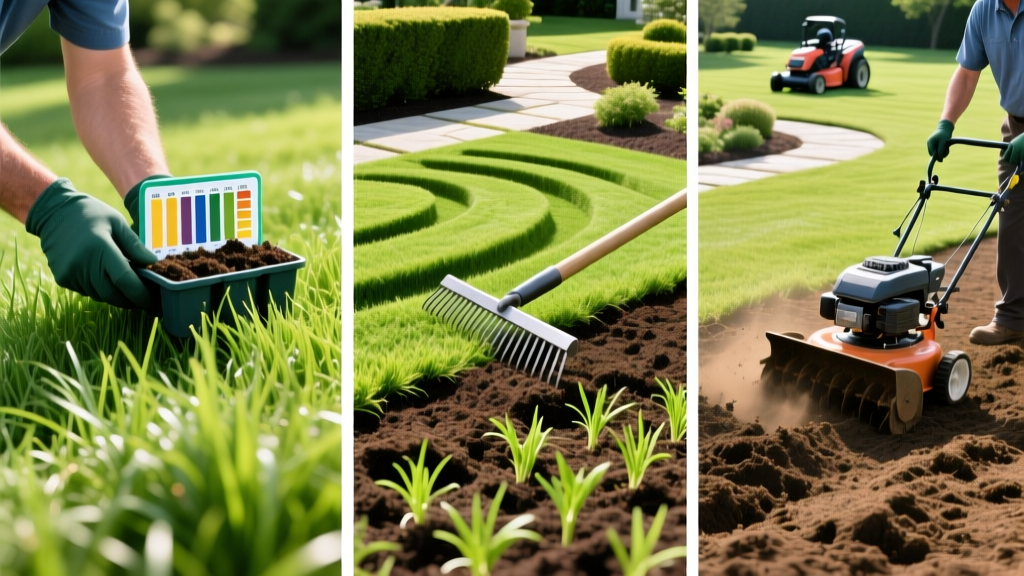
How to Prep for Sod: Soil Testing, Grading, and Tilling Steps
Knowing how to prep for sod is the difference between a lawn that thrives for decades and one that turns brown, spongy, and diseased within sixty days. Sod provides an instant lawn, but it is essentially a shallow-rooted carpet that relies entirely on the soil profile beneath it. If the underlying soil is compacted, poorly graded, or nutritionally deficient, the sod will fail to knit into the earth, leading to hydrophobic dry spots and root rot.
This establishment guide bypasses generic advice and details the exact agronomic steps, measurements, and material specifications required to engineer a flawless seedbed for sod installation in 2026.
Phase 1: Site Clearing and Complete Weed Eradication
Never lay sod directly over existing vegetation. As the old grass dies beneath the sod, it creates a spongy thatch layer that blocks water penetration and harbors fungal pathogens like Pythium blight.
- Apply a Non-Selective Herbicide: Spray the entire area with a 41% glyphosate solution (mix at 2 fluid ounces per gallon of water). For stubborn perennial weeds like Bermuda or nutsedge, a second application 7 days later is mandatory.
- Wait for Complete Necrosis: Allow 10 to 14 days for the existing vegetation to die completely down to the roots.
- Debris Removal: Use a flat-edged spade or a sod cutter (set to 1.5 inches deep) to strip away the dead turf, large rocks, and woody roots. Leave the bare soil exposed.
Warning: Do not use residual pre-emergent herbicides (like prodiamine) during this clearing phase. These chemicals create a barrier that will prevent your new sod's roots from penetrating the soil, causing the rolls to shrink and separate at the seams.
Phase 2: Soil Testing and Targeted Amendments
Before adding topsoil or compost, you must understand your native soil's chemistry. As of 2026, many municipalities strictly regulate phosphorus runoff, making a certified soil test legally and practically necessary before applying starter fertilizers.
Order a standard turfgrass soil test from a reputable lab like Penn State Extension or Logan Labs (typically $15 to $35). The lab will measure pH, cation exchange capacity (CEC), and base saturation.
Targeted Amendment Matrix
| Soil Issue | Target Metric | Required Amendment | Application Rate |
|---|---|---|---|
| Acidic Soil (pH below 6.0) | pH 6.2 - 6.8 | Calcitic or Dolomitic Lime | 25-50 lbs per 1,000 sq ft |
| Alkaline Soil (pH above 7.5) | pH 6.2 - 6.8 | Elemental Sulfur | 10-20 lbs per 1,000 sq ft |
| Heavy Clay / Poor Drainage | Flocculated structure | Calcium Sulfate (Gypsum) | 40 lbs per 1,000 sq ft |
| Low Organic Matter (< 3%) | 3% - 5% OM | Screened Leaf Compost | 1 cubic yard per 1,000 sq ft |
Note: Never add raw sand to heavy clay soil without adding organic matter. The combination of clay and sand without organic binding agents creates a concrete-like hardpan that will drown sod roots.
Phase 3: Precision Grading and Drainage Slopes
Water management is the most critical physical factor in sod establishment. According to University of Minnesota Turfgrass Science, improper grading is the leading cause of post-installation turf loss due to crown rot and ice damage in winter.
- The Foundation Rule: The soil must slope away from your home's foundation at a minimum drop of 1/4 inch per foot for the first 10 feet. This prevents basement flooding and foundation settling.
- Swales and Depressions: Fill any low spots where water pools. Use a laser level or a string line tied to grade stakes to verify your slopes before tilling.
- Subsoil vs. Topsoil: If you need to add more than 4 inches of fill dirt to achieve the proper grade, use screened subsoil for the base, and reserve your high-quality topsoil or compost for the top 2 inches.
Phase 4: Tilling, Leveling, and Pre-Compaction
Once amendments are spread and grading is verified, it is time to integrate the materials and firm the seedbed.
- Rototill to 4-6 Inches: Use a rear-tine rototiller to blend the compost, lime, and native soil to a depth of 4 to 6 inches. Do not over-till; tilling when the soil is too wet destroys soil aggregates and creates a hardpan layer just below the tiller's reach.
- Rake and Level: Use a heavy-duty steel landscaping rake to break up large clods (no larger than a golf ball) and smooth the surface. Remove any newly unearthed rocks or roots.
- Pre-Compact the Seedbed: This is the most skipped step. Fill a lawn roller with water to about 1/3 capacity (approx. 150 lbs) and roll the entire area. This firms the soil so that when you walk on it, your footprints are no deeper than 1/4 inch.
Pro Tip: If the soil is too fluffy when you lay the sod, the heavy sod rolls will sink unevenly under their own weight and subsequent watering. This creates a bumpy lawn that scalps when mowed and traps puddles that rot the sod seams.
Pre-Sodding Day Checklist Matrix
Before the delivery truck arrives, verify these critical metrics to ensure the sod roots can immediately begin their downward migration.
| Task | Specification | Status |
|---|---|---|
| Starter Fertilizer Applied | High Phosphorus (e.g., 10-18-10) at 3 lbs/1,000 sq ft | [ ] |
| Soil Moisture Check | Top 1 inch of soil lightly moistened (not muddy) | [ ] |
| Footprint Test | Footprints no deeper than 1/4 inch after rolling | [ ] |
| Surface Debris | Zero rocks, sticks, or old weed roots visible | [ ] |
Frequently Asked Questions
Can I just lay sod directly over my existing weedy lawn?
No. While it saves a weekend of labor, laying sod over existing grass guarantees failure. The dying grass underneath will ferment, creating heat and acidic conditions that burn the new sod's shallow roots. Furthermore, the thatch layer acts as a physical barrier, preventing the new roots from reaching the soil, which causes the sod to peel up like a rug during high winds or heavy rain.
Should I use a pre-emergent herbicide before laying sod?
Standard pre-emergents like prodiamine or dithiopyr will inhibit root growth and prevent the sod from knitting into the soil. If you have a severe crabgrass or weed history, apply a selective pre-emergent containing mesotrione (Tenacity). Mesotrione is one of the few active ingredients proven safe for use at the time of sodding, as it suppresses weeds without stunting new turfgrass root development.
How soon after delivery must the sod be laid?
Sod is a living, perishable product. In the heat of summer, rolled sod will begin to suffocate and yellow within 12 to 24 hours due to trapped heat and ethylene gas buildup. You must lay and water the sod within 12 hours of harvest. If you cannot lay it all in one day, unroll the pallets in a shaded area and lightly mist them with water to keep the root zone cool.
For more detailed regional advice on soil types and specific turfgrass varieties, consult your local cooperative extension office, such as the resources provided by Texas A&M AgriLife Extension.

