
Grass Types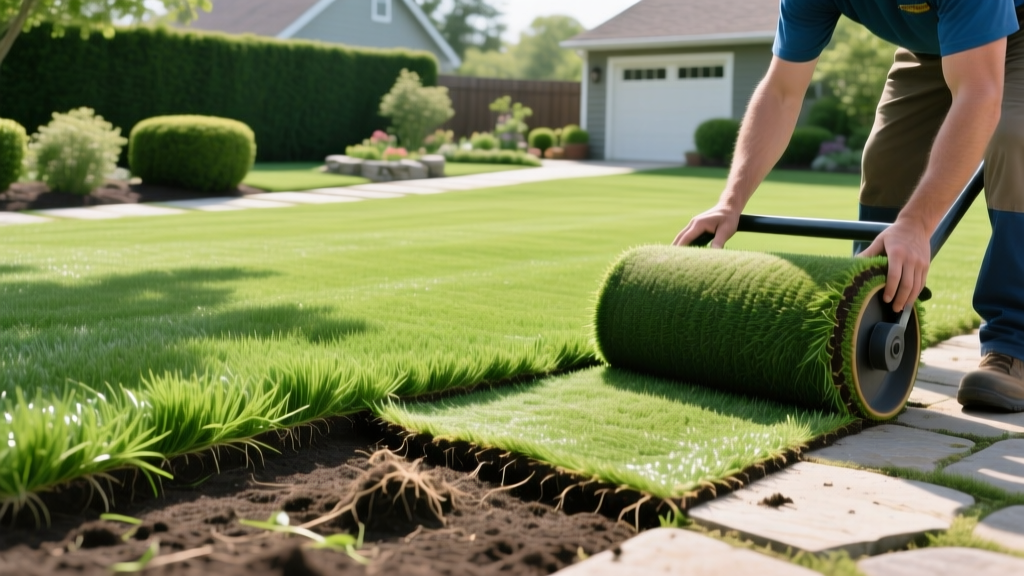
How to Put Down Sod: Step-by-Step Lawn Installation Guide
Installing sod is the fastest way to transform bare dirt into a lush, usable lawn. However, the difference between a thriving turf and a patchy, failing yard comes down to precise soil preparation, correct seam placement, and a strict post-installation watering regimen. According to University of Minnesota Extension, poor soil-to-root contact is the leading cause of sod failure in the first 30 days. This guide provides the exact measurements, material requirements, and timelines needed to establish a permanent root system.
Pre-Installation: Soil Prep and Grading
Sod cannot establish roots in compacted clay or nutrient-depleted topsoil. Before your delivery arrives, the soil bed must be engineered for drainage and root penetration.
1. Clear and Till the Site
Apply a non-selective herbicide (like glyphosate) to existing weeds two weeks prior to installation. Once the vegetation is dead, use a rear-tine rototiller to break up the soil to a depth of 4 to 6 inches. If your soil is heavy clay, incorporate 2 to 3 cubic yards of organic compost per 1,000 square feet during tilling to improve aeration and moisture retention.
2. Grade for Drainage
Water pooling against your home's foundation causes structural damage and rots sod. Rake the tilled soil to create a slope that drops 1/4 inch per foot (a 2% grade) away from all buildings, driveways, and sidewalks.
3. Apply Starter Fertilizer and Firm the Bed
Spread a high-phosphorus starter fertilizer (e.g., a 10-18-10 NPK ratio) at a rate of 1.0 lb of nitrogen per 1,000 square feet. Phosphorus is critical for initial root development. After fertilizing, use a lightweight lawn roller (filled halfway with water) to firm the soil. This prevents the sod from sinking unevenly after the first heavy watering.
Warning: Never apply lime or sulfur without a recent soil test. Most turfgrasses require a pH between 6.0 and 7.0. Applying blind amendments can lock up essential nutrients, starving the new sod before it even roots.
The Delivery: Handling Fresh Sod Pallets
Sod is a living, breathing plant that is highly susceptible to heat stress and fungal disease when stacked. A standard pallet covers 450 to 500 square feet and weighs between 2,500 and 3,000 pounds. Ensure the delivery truck can access your driveway or a stable drop zone.
Time is your biggest enemy. You must lay the sod within 12 to 24 hours of harvest. If left rolled on the pallet for more than 24 hours in warm weather, the center of the rolls will undergo anaerobic respiration, generating heat that literally cooks the grass, resulting in a yellow, slimy mess known as 'pallet burn.' If you cannot lay it all in one day, unroll the remaining pieces in a shaded area and mist them lightly.
Step-by-Step: How to Put Down Sod Correctly
Proper laying technique prevents shrinkage gaps and ensures a uniform canopy. Follow this sequence for optimal establishment:
- Start at a Straight Edge: Begin laying your first row along a long, straight boundary like a driveway or sidewalk. This ensures your entire lawn remains square.
- Use a Brick Pattern: Stagger the joints of the second row so the seams fall in the middle of the previous row's pieces, exactly like laying bricks. This prevents water from channeling down continuous vertical seams and washing away the underlying soil.
- Butt Seams Tightly: Push the edges of the sod together firmly. Do not overlap them, and do not stretch the rolls to cover more ground. Stretching causes the sod to shrink back as it loses moisture, leaving permanent dirt gaps.
- Cut with Precision: Use a sharp utility knife or a specialized sod cutting knife to trim pieces around sprinkler heads, trees, and curved beds. Change the blade frequently; a dull blade tears the root mat.
- Roll the Installed Sod: Once a section is laid, go over it with a lawn roller filled one-third with water. This is the most skipped step, yet it is vital. Rolling forces the sod roots into direct physical contact with the soil beneath, eliminating air pockets that dry out the roots.
Post-Installation Watering and Rooting Matrix
According to Clemson University HGIC, new sod requires immediate and heavy irrigation. Within 30 minutes of laying the final roll, apply at least 1 inch of water (roughly 0.62 gallons per square foot). The soil beneath the sod should be moist to a depth of 4 inches.
| Establishment Phase | Watering Frequency | Duration / Depth | Visual Indicators |
|---|---|---|---|
| Week 1 | 2 to 3 times daily | 10-15 mins per zone (keep top 1" wet) | Sod feels spongy; footprints remain |
| Week 2 | 1 time daily | 20-30 mins per zone | Sod resists gentle upward tug |
| Week 3 | Every other day | 30-40 mins per zone | Roots firmly anchored in soil |
| Week 4+ | 1 to 2 times weekly | 45-60 mins (deep soak to 4-6") | Normal turf resilience; ready to mow |
Rooting Timelines by Grass Species
The schedule above is a baseline. Actual rooting speed depends heavily on the grass species and ambient soil temperatures:
- Bermudagrass (Warm-season): Aggressive stolons and rhizomes allow rooting in 10 to 14 days during peak summer heat.
- Zoysiagrass (Warm-season): Slower establishment; expect 14 to 21 days for initial root grip.
- Tall Fescue (Cool-season): Bunch-type growth habit roots in 14 to 21 days, provided soil temps are between 50°F and 65°F.
- Kentucky Bluegrass (Cool-season): Relies on rhizomes; takes the longest, typically 21 to 28 days to fully anchor.
Troubleshooting Common Sod Establishment Failures
Even with perfect installation, environmental variables can cause issues. Here is how to diagnose and fix the most common problems identified by Penn State Extension turf specialists.
Shrinkage Gaps Between Seams
Cause: Under-watering or stretching the sod during installation. As the sod dries, the mat shrinks, pulling apart at the seams.
Fix: Do not fill gaps with topsoil, which will smother adjacent roots. Instead, increase watering frequency to rehydrate the mat, and use a flat board to kick the edges back together. If gaps persist after week 3, fill them with a mixture of 50% sand and 50% peat moss to encourage lateral stolon growth.
Yellowing or 'Melting' Turf
Cause: Overwatering leading to Pythium blight (a water mold), or pallet burn from delayed installation.
Fix: If the grass is slimy and smells sour, reduce watering immediately to let the top inch of soil dry out between cycles. Apply a systemic fungicide containing azoxystrobin or propiconazole if the disease is spreading. If the damage is from pallet burn, the dead tissue will not recover; you must rake out the dead grass and overseed the affected patches.
Sod Fails to Root After 30 Days
Cause: Compacted subsoil, incorrect soil pH, or shallow, frequent watering that never encouraged roots to chase moisture downward.
Fix: Core aerate the lawn to relieve compaction and break through the thatch-soil interface. Transition to deep, infrequent watering to force roots to grow deeper into the soil profile.
Pro Tip for the First Mow: Never mow new sod until it resists a gentle upward tug. When it is ready, set your mower deck to the highest possible setting. Never remove more than 1/3 of the grass blade in a single pass, and ensure your mower blades are freshly sharpened to prevent tearing the fragile new root system out of the ground.