
Grass Types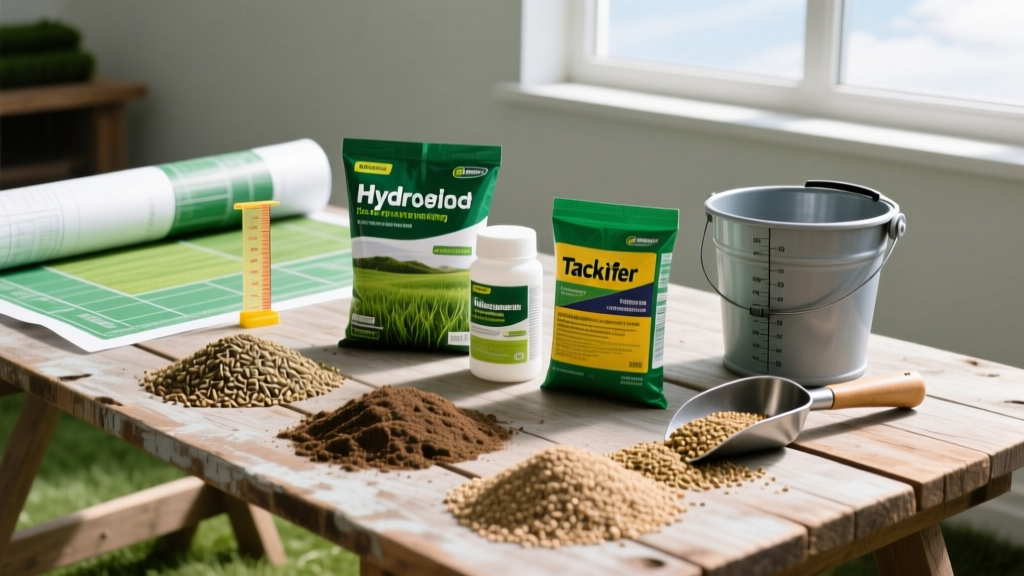
Essential Hydroseeding Materials: Mixing Ratios & Cost Guide
The Core Slurry Formula: What Goes in the Tank
Hydroseeding transforms bare soil into a stabilized, germinating seedbed in a single pass, but the success of the application hinges entirely on the exact hydroseeding materials used in the slurry. A standard hydroseeding slurry is not just water and seed; it is a precisely engineered hydraulic matrix designed to retain moisture, anchor seeds against wind and rain, and provide immediate nutrients.
The five foundational hydroseeding materials include water, seed, starter fertilizer, mulch, and a tackifier. The sequence in which these materials are introduced to the tank is critical for preventing mechanical failure and ensuring an even application.
Critical Tank Mixing Sequence
- Water: Fill the tank to 50% capacity before adding any dry materials to ensure proper agitation.
- Seed & Fertilizer: Add these while the tank is half full to allow them to dissolve and disperse evenly.
- Mulch: Introduce the bulk mulch material slowly to prevent clumping and allow the mechanical agitator to break down the fibers.
- Top Off Water: Fill the tank to the required volume, leaving room for the final additive.
- Tackifier: Add the tackifier last. Adding it too early increases the slurry viscosity prematurely, which can cavitate the pump and burn out the engine.
Mulch Matrix: Wood, Paper, and BFM Comparisons
The mulch component dictates the moisture retention capabilities and the physical protection of the seedbed. Selecting the wrong mulch for your specific topography and climate is the leading cause of hydroseeding failure. According to industry standards established by manufacturers like Profile Products, mulch is categorized by its fiber composition and water-holding capacity.
| Mulch Type | Application Rate (per 1,000 sq ft) | Water Holding Capacity | Best Use Case |
|---|---|---|---|
| 100% Wood Fiber (e.g., Finn T-400) |
15 - 20 lbs | Moderate (holds ~4x its weight in water) | Flat to mild residential lawns, standard overseeding. |
| 70/30 Wood/Paper Blend (e.g., ProMatrix) |
20 - 25 lbs | High (paper adds capillary action) | Sandy soils, arid climates, moderate slopes (up to 4:1). |
| Bonded Fiber Matrix (BFM) (e.g., Flexterra) |
30 - 40 lbs | Extreme (interlocking crimped fibers) | Steep slopes (2:1 or steeper), high rainfall zones, erosion control. |
Tackifiers and Soil Amendments: The Hidden MVPs
While mulch provides the blanket, the tackifier provides the glue. Tackifiers are natural or synthetic polymers that bind the mulch fibers to each other and to the soil surface. Choosing the right tackifier depends heavily on your soil type and expected weather patterns.
Organic vs. Synthetic Tackifiers
- Guar Gum (Organic): Extracted from guar beans, this is the most common, cost-effective tackifier for flat residential lawns. It breaks down naturally in the soil within 3 to 4 weeks. Cost: ~$45 for a 50-lb bag.
- Psyllium Husk (Organic): Offers superior moisture retention compared to guar gum and is highly effective in sandy soils where water drainage is a primary concern. It creates a gel-like matrix that keeps seeds hydrated during peak afternoon heat.
- Polyacrylamide / PAM (Synthetic): An anionic polymer used for severe erosion control on commercial slopes. Unlike organic options, PAM binds to soil particles to prevent flocculation and washouts during heavy downpours. It is strictly regulated in some municipalities due to aquatic toxicity concerns, so always check local environmental guidelines before use.
Calculating Material Volumes for a 5,000 Sq Ft Lawn
Precise calculations prevent running out of slurry mid-application or creating a mix that is too thick for the pump. For a standard 5,000 square foot residential lawn using a 70/30 wood/paper blend, here is the exact material breakdown based on Finn Corporation engineering guidelines:
5,000 Sq Ft Slurry Recipe (Standard Flat Lawn)
- Water: 300 to 350 gallons (depends on tank agitation power; more water = thinner slurry = easier pumping but requires multiple passes).
- Seed: 10 to 15 lbs (assuming a standard Kentucky Bluegrass / Perennial Ryegrass mix at 2-3 lbs per 1,000 sq ft).
- Starter Fertilizer: 25 lbs of a 16-24-8 or 10-18-8 formulation (providing high phosphorus for root development).
- Mulch (70/30 Blend): 100 to 125 lbs (targeting 20-25 lbs per 1,000 sq ft).
- Tackifier (Guar Gum): 2 to 3 lbs (typically applied at 0.5 lbs per 1,000 sq ft).
Troubleshooting Common Material Failures
Even with premium hydroseeding materials, improper application techniques or environmental misjudgments can lead to failure. Below is a diagnostic framework for the three most common hydroseeding issues.
Symptom: The slurry forms hard, thick clumps in the tank and clogs the spray nozzle.
Cause: Tackifier was added before the mulch was fully hydrated, or the tank agitator was turned off during mixing.
Fix: Always run the agitator continuously. If a clog occurs, flush the system with clean water immediately. Never let a mixed slurry sit in the tank for more than 45 minutes, as the fibers will continue to expand and solidify.
Symptom: Seed germinates but seedlings die within 10 days (crusting).
Cause: Application rate of wood mulch was too heavy (exceeding 30 lbs per 1,000 sq ft), creating a physical barrier that blocks sunlight and traps excessive heat.
Fix: Adhere strictly to manufacturer application rates. If you need more erosion control, switch to a lighter paper-blend or a specialized BFM rather than simply adding more standard wood mulch.
Symptom: Slurry washes down the slope after a light rain.
Cause: Insufficient tackifier, or using an organic tackifier (Guar) on a slope steeper than 4:1.
Fix: For slopes 3:1 or steeper, upgrade to a Bonded Fiber Matrix (BFM) mulch which has tackifier pre-integrated into the fibers, or switch to an anionic PAM synthetic tackifier.
Sourcing and Current Cost Expectations
Procuring hydroseeding materials requires balancing upfront costs with long-term establishment success. While big-box stores carry small-scale hydroseeding kits, professional-grade materials must be sourced from landscape supply distributors or directly from manufacturers.
As of current market conditions, expect the following pricing structures for bulk materials:
- Standard Wood Mulch: $0.03 to $0.05 per square foot (material cost only).
- BFM / Advanced Erosion Mulch: $0.10 to $0.15 per square foot.
- Commercial Seed Blends: $6.00 to $9.00 per pound for certified, weed-free turfgrass seed.
For homeowners attempting DIY hydroseeding using rental equipment, material costs for a 5,000 sq ft lawn will typically range between $350 and $500. However, professional contractors leverage bulk pallet pricing and commercial-grade turfgrass science data to optimize seed-to-soil contact, often making the professional route more cost-effective when factoring in the cost of equipment rental and potential material waste.

