
Grass Types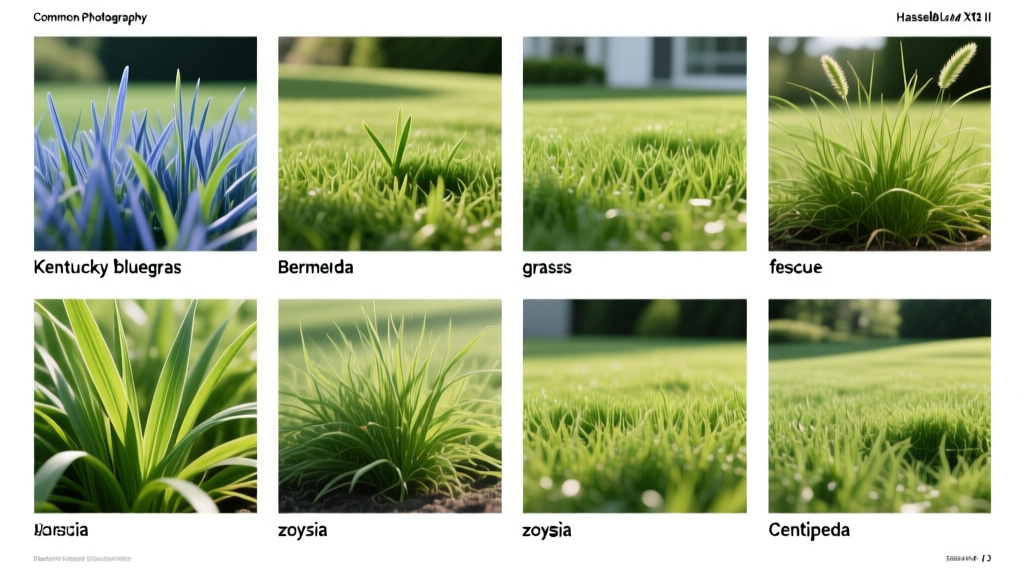
Identifying Common Types of Lawn Turf: A Visual Field Guide
The Morphological Framework: How to Read a Grass Blade
Applying the wrong herbicide or setting your mower deck to the incorrect height can devastate a lawn in a single weekend. The root cause of these errors is almost always misidentification. While regional climate dictates the broad categories of turfgrass, pinpointing the exact species requires a physical inspection of the plant's morphology. According to the NC State University TurfFiles database, homeowners can accurately identify 95% of common turfgrasses by examining four specific anatomical features: vernation, ligule, auricles, and blade tip shape.
Pro Tip: Always pull an entire grass plant from the soil, roots included, rather than just snipping a blade. You need the crown and the sheath to properly inspect the ligule and auricles.
Step 1: Vernation (The Bud Test)
Vernation refers to how the youngest, unexpanded leaf is arranged inside the sheath. Gently pull the newest leaf bud from the sheath and roll it between your thumb and forefinger. If it feels flat, the vernation is folded. If it feels round like a tiny tube, it is rolled. This single test immediately eliminates half of your potential candidates.
Step 2: The Ligule and Auricle Inspection
Peel the leaf blade back away from the stem to expose the collar region. The ligule is the membrane or fringe of hairs located exactly where the inner blade meets the sheath. Just beside the ligule, look for auricles—small, claw-like appendages that wrap around the stem. The presence, absence, or shape of these two features is the definitive fingerprint for turfgrass species.
Cool-Season Turfgrass Identification Matrix
Cool-season grasses thrive in northern climates and the upper transition zone, growing most aggressively when soil temperatures sit between 55°F and 65°F. Below is the diagnostic matrix for the four most prevalent cool-season turfgrasses.
| Species | Vernation | Ligule & Auricles | Blade Width & Tip | 2026 Avg. Sod Cost |
|---|---|---|---|---|
| Kentucky Bluegrass (KBG) | Rolled | Membranous; Short/Blunt Auricles | 1/8 to 1/4 inch; Boat-shaped tip | $0.55 - $0.80 / sq ft |
| Perennial Ryegrass | Folded | Membranous; Claw-like Auricles | 1/8 to 1/4 inch; Pointed, prominent midrib | $0.45 - $0.65 / sq ft |
| Tall Fescue | Rolled | Membranous; Absent Auricles | 1/4 to 1/2 inch; Pointed, serrated margins | $0.50 - $0.75 / sq ft |
| Fine Fescue | Folded | Membranous/Hairy; Absent Auricles | Less than 1/8 inch; Bristle tip | $0.60 - $0.90 / sq ft |
Warm-Season Turfgrass Identification Matrix
Warm-season species dominate the southern United States, entering winter dormancy and turning brown when soil temperatures drop below 55°F. These grasses spread aggressively via stolons (above-ground runners) and rhizomes (below-ground runners), making their vegetative structure just as important as their leaves for identification.
- Bermudagrass: Rolled vernation. The ligule is a distinct fringe of hairs, and auricles are absent. Blade width is narrow (1/8 inch), and it features a highly aggressive rhizome and stolon network. It feels wiry to the touch.
- Zoysiagrass: Rolled vernation. The ligule is a fringe of hairs, but it stands upright and is noticeably taller than Bermuda's. Auricles are absent. Blades are stiff, high in silica, and often fold inward along the midrib during drought stress.
- St. Augustinegrass: Folded vernation. The ligule is a short fringe of hairs; auricles are absent. The blades are broad (1/4 to 3/8 inch), flat, and have a distinct V-shape cross-section at the base. Stolons are thick and spongy.
- Centipedegrass: Folded vernation. The ligule is membranous but extremely short, almost appearing absent; auricles are absent. Blades are broad, light green, and distinctly alternating on the stolon, giving it a centipede-like appearance.
The Look-Alike Trap: Tall Fescue vs. Crabgrass
The most frequent misdiagnosis by homeowners occurs in late spring when clumps of Tall Fescue are mistaken for Crabgrass, leading to the application of post-emergent herbicides that fail to work or damage the desirable turf.
Herbicide Warning: Crabgrass is an annual grassy weed, while Tall Fescue is a desirable perennial cool-season turf. Applying fluazifop-butyl (commonly sold as 'Grass-B-Gon') to kill what you think is crabgrass will instantly eradicate your Tall Fescue. Always check the collar region: Fescue has a tall, membranous ligule and rolled vernation; Crabgrass has a short, membranous ligule, lacks auricles, and exhibits a distinct star-shaped rooting pattern at the base.
For comprehensive regional identification support, the Penn State Extension Turfgrass Program provides excellent diagnostic flowcharts specifically calibrated for transition-zone lawns where cool and warm-season grasses frequently overlap and invade one another.
Post-Identification Action Plan: Agronomic Specifics
Once you have positively identified your turf species, you must calibrate your maintenance regimen to its specific biological requirements. Guessing these parameters leads to thatch buildup, disease susceptibility, and nutrient burn.
Mowing Height Calibration
Mowing below the optimal range removes the plant's photosynthetic factory, forcing it to deplete root carbohydrate reserves. Mowing too high reduces tillering and invites shade-tolerant weeds.
- Kentucky Bluegrass & Ryegrass: Maintain at 2.5 to 3.5 inches. Raise to 4.0 inches during peak summer heat stress to shade the soil crown.
- Tall Fescue: Maintain at 3.0 to 4.0 inches year-round. Its bunch-type growth habit requires taller blades to capture sufficient sunlight.
- Hybrid Bermudagrass: Can be reel-mowed as low as 0.5 inches for golf-course aesthetics, but common residential Bermuda should be kept at 1.5 to 2.0 inches with a rotary mower.
- Zoysiagrass: Maintain at 1.0 to 2.0 inches. Note that Zoysia's high silica content will rapidly dull standard rotary mower blades; sharpen them every 15 hours of use.
Nitrogen (N) Application Limits
Over-fertilizing is a primary driver of turf failure. Centipedegrass, for example, requires a maximum of 1.0 to 1.5 lbs of Nitrogen per 1,000 sq. ft. annually. Exceeding this causes severe iron chlorosis (yellowing) and accelerates thatch accumulation. Conversely, Kentucky Bluegrass requires 2.0 to 4.0 lbs of Nitrogen per 1,000 sq. ft. annually to maintain rhizome density and recover from foot traffic.
Pre-Emergent Herbicide Timing
Pre-emergents like prodiamine or dithiopyr must be applied based on soil temperature, not calendar dates. Target a soil temperature of 50°F to 55°F at a 2-inch depth for spring crabgrass prevention. However, if your lawn is composed of Tall Fescue and you plan to overseed in the fall, you must avoid prodiamine applications after May, as its residual soil activity lasts up to 4 months and will inhibit Fescue seed germination.

