
Grass Types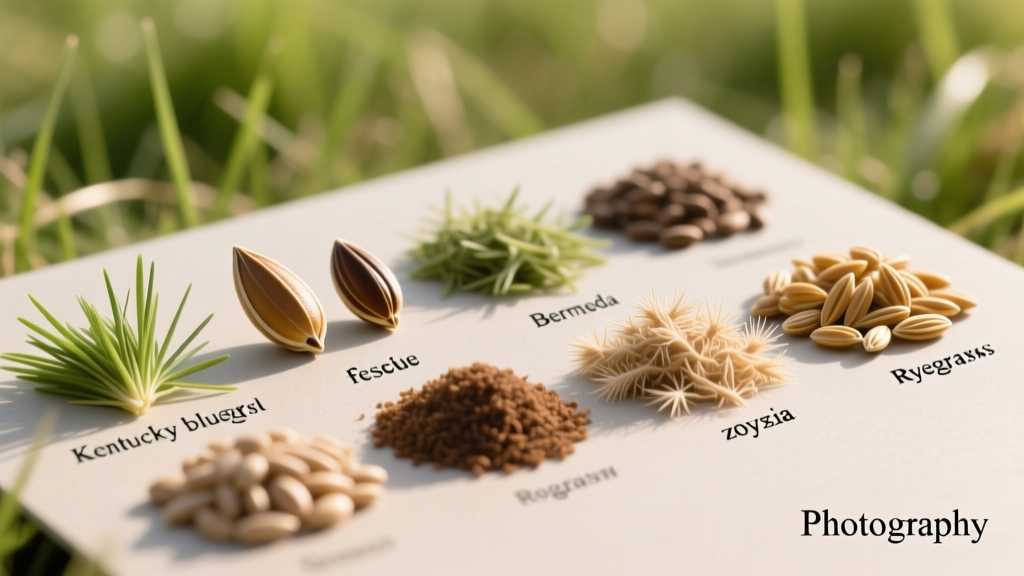
What Does Grass Seed Look Like? Visual Turf Identification Guide
When purchasing turfgrass for a new lawn or overseeding project, the contents of the bag often look like a uniform mix of dry, brownish-yellow husks. However, asking "what does grass seed look like" requires a species-specific answer. Turfgrass seeds vary drastically in size, shape, and botanical structure depending on whether they are cool-season or warm-season varieties. Understanding these visual differences is critical for verifying seed purity, calculating accurate seeding rates, and identifying potential weed contaminants before they take root in your soil.
The Botanical Anatomy of a Grass Seed
What you hold in your hand is rarely just the seed itself. In botanical terms, a grass seed is a caryopsis—a dry fruit where the seed coat is fused to the ovary wall. To protect the embryo and aid in dispersal, the caryopsis is encased in structural bracts:
- Lemma and Palea: The outer husks that enclose the seed. These give the seed its characteristic elongated or boat-like shape and color (usually pale yellow, tan, or light brown).
- Awn: A bristle-like appendage extending from the lemma. The presence, length, and texture of the awn are primary visual identifiers for differentiating species like tall fescue from perennial ryegrass.
- Caryopsis: The actual seed kernel inside the husk, which contains the endosperm (energy storage) and the embryo (the future plant).
Cool-Season Grass Seeds: Visual Profiles
Cool-season grasses thrive in northern climates with distinct seasonal temperature shifts. Their seeds are generally larger and more uniformly shaped than warm-season varieties.
Kentucky Bluegrass (KBG)
Kentucky bluegrass seed is exceptionally small, measuring just 1 to 2 millimeters in length. It features a distinct boat-shaped or tear-drop profile with a light brown to pale yellow husk. Because of its tiny size, KBG requires a very shallow planting depth (no more than 1/4 inch) and has a notoriously slow germination period of 14 to 30 days. According to NC State Extension Turfgrass, KBG is often blended with faster-germinating species to prevent soil erosion while the bluegrass establishes.
Tall Fescue
Tall fescue seeds are significantly larger, typically 4 to 6 millimeters long. They are oblong, slightly flattened, and range from pale yellow to dull brown. The most defining visual characteristic of tall fescue is its prominent, stiff awn protruding from the tip of the lemma. This awn makes the seed feel slightly rough or prickly when rubbed between your fingers.
Perennial Ryegrass
Perennial ryegrass seeds are similar in size to tall fescue (4 to 5 millimeters) but lack the prominent awn. They are elongated, slightly tapered at the ends, and have a dull gray-brown color. The lemma often features distinct, parallel veins visible under magnification. Ryegrass is prized for its rapid germination (5 to 7 days), making it a common nurse grass in seed blends.
Warm-Season Grass Seeds: Visual Profiles
Warm-season grasses dominate southern lawns. Many of these species are primarily propagated vegetatively (via sod, sprigs, or plugs) because their seeds are difficult to harvest or exhibit high dormancy rates. However, seeded varieties do exist.
Bermudagrass
Bermudagrass seed is tiny, roughly 1 to 1.5 millimeters, and often sold "hulled" (with the lemma and palea removed). Hulled bermudagrass seed looks like tiny, roundish, reddish-brown grains. Unhulled seed is slightly larger and enclosed in a pale, fibrous husk. Because the seeds are so small, they are frequently sold in coated forms to allow for even broadcasting from a spreader.
Centipedegrass
Centipedegrass seed is small, flat, and oval-shaped, measuring about 2 to 3 millimeters. It has a light brown color and a smooth texture. It is rarely sold in pure stands and is often mixed with a carrier like sand or clay due to its minute size and low seeding rate requirements (typically just 0.25 to 0.5 lbs per 1,000 square feet).
Decoding the Seed Tag: Purity vs. Contaminants
Visual identification is only the first step. The most accurate way to know exactly what is in your bag is by reading the seed analysis tag, which is regulated by state and federal agricultural departments and often verified by the National Turfgrass Evaluation Program (NTEP). The tag breaks down the visual mix into hard data.
The Pure Live Seed (PLS) Formula
Never compare seed bags by total weight alone. Calculate the Pure Live Seed percentage to find the true value:
Example: A 50lb bag with 99% purity and 90% germination yields 44.5 lbs of live seed (89% PLS). A cheaper 50lb bag with 85% purity and 80% germination yields only 34 lbs of live seed (68% PLS). The "cheaper" bag actually costs more per pound of viable turf.
Never compare seed bags by total weight alone. Calculate the Pure Live Seed percentage to find the true value:
PLS % = (Purity % × Germination %) / 100Example: A 50lb bag with 99% purity and 90% germination yields 44.5 lbs of live seed (89% PLS). A cheaper 50lb bag with 85% purity and 80% germination yields only 34 lbs of live seed (68% PLS). The "cheaper" bag actually costs more per pound of viable turf.
Identifying Weed Seed Contaminants
Federal law requires seed tags to list the percentage of "Weed Seed" (capped at 0.5% for high-quality turf). While 0.3% sounds negligible, in a 50lb bag containing 250 million seeds, 0.3% equates to 750,000 weed seeds. Here is how common weed seeds visually differ from turf seeds:
| Seed Type | Visual Characteristics | Size (Approx.) | Common Contaminant In |
|---|---|---|---|
| Poa annua (Annual Bluegrass) | Light tan, boat-shaped, slightly wrinkled lemma | 1.5 - 2.5 mm | Kentucky Bluegrass blends |
| Crabgrass (Smooth/Large) | Flat, oval, pale gray-green, distinct central ridge | 2 - 3 mm | Tall Fescue and Ryegrass |
| Orchardgrass | Clustered, wedge-shaped, pale yellow with stiff awns | 5 - 7 mm | Tall Fescue and Bluegrass |
Coated vs. Uncoated Seeds: What You Are Actually Buying
Modern agronomy has introduced seed coatings that drastically alter what grass seed looks like in the bag. According to USDA Agricultural Marketing Service testing standards, coatings must be declared on the tag, but they fundamentally change the physical product.
- Uncoated Seed: Looks natural, dusty, and lightweight. The husks are visible. You get 100% seed weight, but the seeds are prone to clumping in high humidity and are easily blown away by wind during application.
- Clay-Coated Seed: The seeds are encased in a smooth, uniform, pellet-like shell (often dyed green, blue, or purple). The coating adds weight for better spreader calibration and retains moisture to speed up germination. However, the coating can account for 30% to 50% of the total bag weight. A 50lb bag of coated seed may only contain 25lbs of actual grass seed.
- Fungicide-Treated Seed: Often features a bright pink or red chemical dusting directly on the husk to prevent damping-off disease during the vulnerable germination phase.
Frequently Asked Questions
Why does my grass seed look like it has white fuzz on it?
If you notice a white, fuzzy substance on your grass seed after planting and watering, it is likely saprophytic fungus (often Mucor or Rhizopus species) feeding on dead organic matter in the soil or on the seed husk itself. It is generally harmless to the germinating grass embryo and will dissipate as the soil surface dries out between waterings. It is not mold growing on the seed kernel.
Can I identify grass species just by looking at the seed?
While major categories (like the large, awned seeds of tall fescue versus the tiny, boat-shaped seeds of Kentucky bluegrass) are easy to differentiate, identifying specific cultivars (e.g., 'Midnight' KBG vs. 'NuGlade' KBG) by visual seed inspection is impossible. Cultivar differences only manifest in the vegetative traits of the mature plant, such as leaf width, color, and rhizome spread.
What do the "Other Crop" seeds on the tag look like?
"Other Crop" refers to non-weed agricultural seeds, often from previous crops grown in the same field (like wheat, barley, or rye). These seeds are typically much larger, plumper, and rounder than turfgrass seeds, measuring 6 to 10 millimeters. While they will germinate, they grow in aggressive, thick clumps that disrupt the uniform aesthetic of a turfgrass lawn and usually die off after one season.

