Grass Types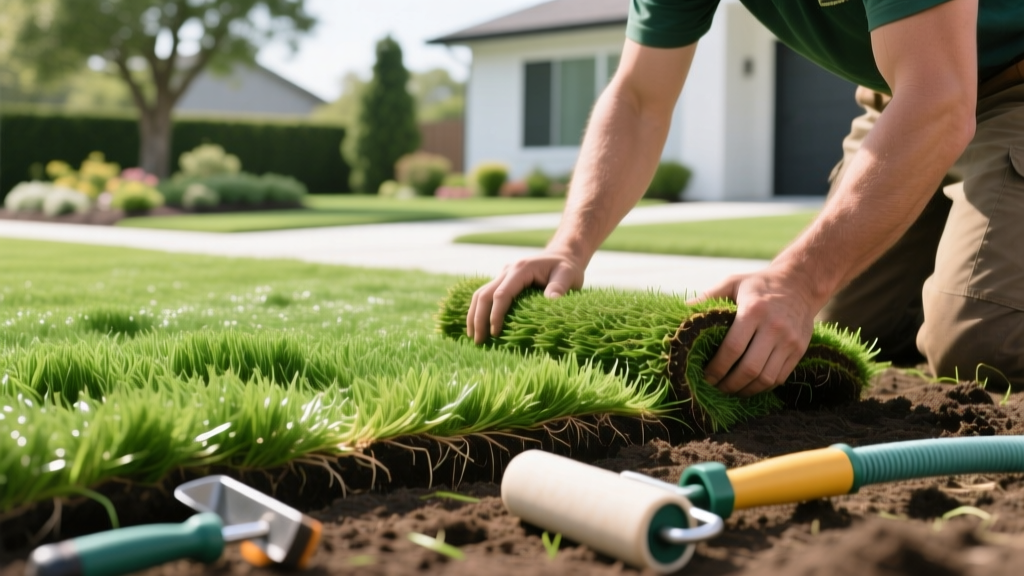
How to Install and Maintain Wintergreen Couch Turf Sod
The Wintergreen Couch Advantage: Beyond Standard Bermudagrass
Wintergreen couch turf (Cynodon dactylon x Cynodon transvaalensis) is a premium hybrid bermudagrass cultivar engineered for superior winter color retention, fine leaf texture, and high wear tolerance. Unlike common bermudagrass that browns completely at the first frost, Wintergreen maintains a viable green hue longer into the autumn and greens up faster in early spring, provided winter temperatures remain above hard-freeze thresholds. Its dense stolon and rhizome network makes it the premier choice for high-traffic residential lawns, sports fields, and commercial landscapes in USDA Hardiness Zones 8 through 11.
Terminology Note: In North America, this species is universally referred to as Bermudagrass. In Australia, New Zealand, and parts of the UK, the exact same species is called Couch. 'Wintergreen' is a specific vegetative cultivar of this species, meaning it must be established via sod, sprigs, or plugs—it cannot be grown from seed.
Pre-Installation Site Assessment and Soil Preparation
Wintergreen couch requires a minimum of 6 to 7 hours of direct, unfiltered sunlight daily. Attempting to establish this turf under dense tree canopies or alongside north-facing structures will result in thinning, etiolation, and eventual failure. Before ordering sod, conduct a comprehensive soil test to establish your baseline pH and nutrient profile.
- Clear and Grade: Remove all existing vegetation, rocks, and debris. Apply a non-selective herbicide (glyphosate) 14 days prior to tilling if killing off an existing lawn. Grade the site to ensure a minimum 2% slope away from foundations to prevent water pooling.
- Till and Amend: Rototill the native soil to a depth of 100mm to 150mm (4 to 6 inches). Wintergreen couch thrives in well-draining sandy loam. If your soil test indicates heavy clay, incorporate 2 to 3 cubic yards of washed river sand and 10 lbs of agricultural gypsum per 1,000 square feet to improve flocculation and drainage.
- Adjust pH: Target a soil pH between 5.8 and 6.5. Apply pelletized dolomitic lime if the pH is below 5.5, or elemental sulfur if it exceeds 7.0, working it into the top 50mm of the soil profile.
- Pre-Plant Fertilization: Broadcast a high-phosphorus starter fertilizer (such as a 10-18-10 N-P-K ratio) at a rate of 1 lb of actual nitrogen per 1,000 square feet just before laying the sod to stimulate immediate root development.
2026 Material and Sod Cost Breakdown
Budgeting accurately prevents project stalling. Below are the current average market rates for Wintergreen couch turf installation materials in 2026.
| Material / Service | Unit | Estimated 2026 Cost |
|---|---|---|
| Wintergreen Couch Sod (Premium) | Pallet (450 sq ft) | $260 - $315 |
| Sandy Loam Topsoil Blend | Cubic Yard | $45 - $65 |
| Starter Fertilizer (10-18-10) | 50 lb Bag | $38 - $48 |
| Pallet Delivery Fee | Flat Rate (Local) | $125 - $180 |
Installation Protocol: Laying the Sod
Order your Wintergreen couch turf to arrive on the exact day of installation. Sod left on pallets for more than 24 hours will begin to compost internally, generating heat that kills the crown tissue.
- Stagger the Joints: Lay the sod in a brickwork pattern, ensuring the short edges do not align in continuous trenches. This prevents water channels from forming and washing away the underlying soil.
- Butt Tightly: Push the edges of each roll tightly together without overlapping. Gaps will dry out rapidly and invite weed infiltration.
- Roll the Surface: Once laid, use a water-filled lawn roller (weighing approximately 150-200 lbs) to press the sod stolons firmly into the topsoil. This eliminates air pockets and ensures immediate soil-to-root contact, which is critical for moisture uptake.
The 30-Day Establishment Watering Matrix
Wintergreen couch has an aggressive root system, but it requires precise moisture management during the first month to transition from the sod farm soil to your native profile. According to NC State University Turfgrass Extension, shallow, frequent watering is mandatory initially to prevent stolon desiccation before roots penetrate the subgrade.
| Phase | Timeframe | Frequency | Duration per Zone |
|---|---|---|---|
| Phase 1 | Days 1 - 10 | 3 times daily | 8 - 12 minutes |
| Phase 2 | Days 11 - 20 | 1 time daily | 20 - 25 minutes |
| Phase 3 | Days 21 - 30 | Every 2nd day | 35 - 45 minutes |
| Phase 4 | Day 31+ | 1 - 2 times weekly | 45 - 60 minutes |
Note: Durations assume standard pop-up spray heads outputting 1.5 inches per hour. Adjust accordingly for rotary nozzles.
Long-Term Maintenance: Mowing and Fertilization
Precision Mowing Heights
The visual density of Wintergreen couch is directly correlated to mowing height and equipment type. For a premium, golf-course-style carpet effect, use a manual or motorized reel mower set to 10mm - 15mm (0.4 - 0.6 inches). Reel mowing prevents the tearing of the fine leaf blades, reducing disease entry points. If using a standard rotary mower, maintain a height of 20mm - 25mm (0.8 - 1.0 inches) to avoid scalping the uneven soil surface. Never remove more than one-third of the leaf blade in a single pass.
Aggressive Nitrogen Feeding
As a high-growth hybrid, Wintergreen is a heavy feeder. Texas A&M AgriLife Extension recommends applying 3 to 4 lbs of actual nitrogen per 1,000 square feet annually during the active growing season (late spring through early autumn). Utilize a slow-release granular fertilizer with a 3-1-2 or 4-1-2 ratio (e.g., 24-6-12) applied every 6 to 8 weeks. Cease all nitrogen applications 6 weeks prior to your region's historical first frost date to allow the turf to harden off for winter.
Troubleshooting Edge Cases and Failure Modes
Expert Insight on Thatch Accumulation: Wintergreen couch produces aggressive lateral stolons that can create a thatch layer exceeding 12mm (0.5 inches) within two growing seasons. Thick thatch repels water, harbors fungal pathogens like Spring Dead Spot, and causes the mower to scalp the lawn. Schedule mechanical vertimowing (dethatching) in early spring only after soil temperatures consistently reach 18°C (65°F) and the grass has fully broken dormancy.
- Problem: Turf is thinning and turning pale yellow despite regular watering.
Diagnosis: Iron chlorosis or high soil pH locking out micronutrients.
Fix: Apply a chelated iron foliar spray immediately, followed by a soil application of elemental sulfur to lower the pH over the next 60 days. - Problem: Circular brown patches appearing in autumn or early spring.
Diagnosis: Large Patch disease (Rhizoctonia solani), exacerbated by excessive late-season nitrogen and poor drainage.
Fix: Apply a preventative fungicide containing azoxystrobin or propiconazole in early fall when soil temperatures drop below 21°C (70°F). - Problem: Severe winter browning and slow spring recovery.
Diagnosis: Winterkill from prolonged sub-freezing temperatures combined with desiccating winds.
Fix: While Wintergreen retains color better than standard cultivars, it is not immune to hard freezes. Overseed thin areas with vegetative plugs in late spring once nighttime temperatures remain above 15°C (60°F).