
Grass Types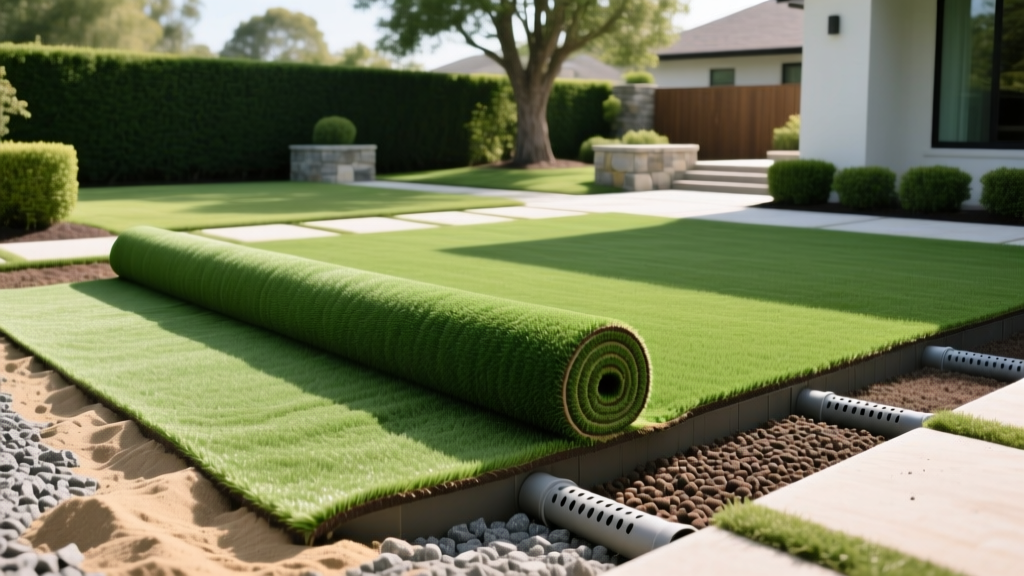
How to Install Super Turf: Base Prep, Infill, and Drainage Guide
Understanding Super Turf Specifications and Material Science
Super Turf represents the upper echelon of synthetic grass systems, engineered for high-traffic residential lawns, pet enclosures, and commercial landscapes. Unlike entry-level big-box store artificial grass, genuine Super Turf systems are defined by three critical material specifications: a face weight exceeding 60 ounces per square yard, a dual-polymer yarn construction (typically a polyethylene thatch blend with polypropylene curl), and a fully permeable polyurethane backing rather than standard latex.
Core Super Turf Metrics (2026 Standards):
- Face Weight: 60 oz to 85 oz per sq. yd. (dictates blade density and durability)
- Pile Height: 1.5 to 2.0 inches (optimal for residential aesthetics and infill retention)
- Drainage Rate: >28 inches per hour (requires fully perforated polyurethane backing)
- Yarn Shape: W-shaped or diamond-shaped extrusion (prevents matting and reflects UV light to reduce heat retention by up to 15%)
Installing a premium synthetic system requires abandoning the 'roll it out and pin it down' mentality. The longevity of your Super Turf installation—typically 15 to 20 years before UV degradation necessitates replacement—is dictated almost entirely by the sub-base preparation and the precision of your seaming mechanics. According to the Synthetic Turf Council (STC), 80% of synthetic lawn failures, including wrinkling, seam separation, and sub-surface pooling, stem from improper base compaction and inadequate drainage planning.
Phase 1: Site Evaluation and Percolation Testing
Before excavating, you must determine the native soil's percolation rate. Super Turf drains at over 28 inches per hour, but if your native soil cannot absorb water at a minimum of 1 inch per hour, the water will pool beneath the backing, leading to anaerobic bacterial growth and foul odors.
Conducting a Ribbon and Perc Test
- Dig a test hole 12 inches deep and 12 inches wide in the center of the proposed lawn area.
- Fill the hole with water and let it drain completely to saturate the soil.
- Refill the hole and measure the water level drop over a 60-minute period.
- Result Analysis: If the water drops less than 1 inch, you must install a subsurface French drain system tied to your municipal storm drain or a dry well.
For heavy clay soils failing the perc test, integrate NDS Pro drainage channels or 4-inch perforated corrugated pipes wrapped in filter fabric, laid in a herringbone pattern at a 1% slope toward the discharge point.
Phase 2: Excavation and Sub-Base Engineering
The sub-base is the foundation of your Super Turf. A failed base guarantees a failed lawn. You must excavate to a depth of 4 to 5 inches below your desired finished grade, accounting for the 1.5-inch pile height of the turf.
Step-by-Step Base Construction
- Weed Barrier: Lay a heavy-duty, woven geotextile weed barrier directly on the native soil. Do not use cheap spun-bonded landscape fabric, which degrades and allows aggressive weeds like nutgrass to pierce the Super Turf backing.
- Base Material: Import 3 to 4 inches of Class II Road Base (a mix of crushed rock and fines up to 3/4-inch). Avoid using pure gravel, which lacks the fines necessary for a rigid, interlocking surface.
- Moisture Conditioning: Lightly mist the road base with water. Optimal compaction occurs at a 5% to 7% moisture content. Dry rock will not compact; wet rock will turn to mud.
- Compaction: Use a vibratory plate compactor (minimum 5,000 lbs of compaction force). Make at least three overlapping passes. The goal is 95% Standard Proctor Density.
- Fines Cap (Optional but Recommended): Add a 1-inch layer of Decomposed Granite (DG) or crushed limestone dust over the compacted road base. Wet and compact this layer to create a perfectly smooth, hard surface that prevents sharp rocks from pushing up into the turf backing.
Phase 3: Laying, Stretching, and Seaming Mechanics
Super Turf rolls are typically 12 or 15 feet wide. When unrolling, ensure the grass grain (the direction the blades naturally lean) points toward the primary viewing angle—usually the back door or patio. This prevents the lawn from looking shiny or artificial.
The Chemistry of Synthetic Seaming
Seam failure is the most common aesthetic flaw in synthetic lawns. Standard landscape staples are insufficient for joining Super Turf rolls; you must use chemical bonding.
| Seaming Method | Materials Required | Cure Time (70°F) | Best Application |
|---|---|---|---|
| Urethane Adhesive + Tape | 12-inch seam tape, dual-component urethane glue | 4 to 6 hours | Primary seams, high-traffic zones, pet areas |
| Self-Adhesive Tape | Pre-glued 12-inch peel-and-stick tape | Immediate (requires 24hr set) | Low-traffic residential, DIY budget installations |
| Staples / Nails Only | 6-inch non-galvanized landscape nails | N/A | Perimeter edges only (never for joining rolls) |
Warning: Thermal Expansion and Wrinkling
Synthetic grass expands and contracts with temperature fluctuations. Super Turf can expand up to 1/2 inch per 100 linear feet when temperatures swing from 40°F to 100°F. Always install the turf when ambient temperatures are between 50°F and 70°F. If installed during peak summer heat, the turf will contract in the winter, tearing the seams. If installed in freezing cold, it will expand and wrinkle in the summer. Use a power stretcher (knee kicker) to apply 50-75 lbs of lateral tension before securing the perimeter with 6-inch galvanized spikes placed every 4 inches.
Synthetic grass expands and contracts with temperature fluctuations. Super Turf can expand up to 1/2 inch per 100 linear feet when temperatures swing from 40°F to 100°F. Always install the turf when ambient temperatures are between 50°F and 70°F. If installed during peak summer heat, the turf will contract in the winter, tearing the seams. If installed in freezing cold, it will expand and wrinkle in the summer. Use a power stretcher (knee kicker) to apply 50-75 lbs of lateral tension before securing the perimeter with 6-inch galvanized spikes placed every 4 inches.
Phase 4: Infill Selection and Application Rates
Infill is not optional. It weighs down the turf, protects the primary backing from UV degradation, and keeps the yarn blades standing upright. For premium Super Turf, the choice of infill directly impacts surface temperature, drainage, and pet odor management.
Comparing Modern Infill Technologies
According to current landscape material data, Envirofill and antimicrobial coated sands have largely replaced raw silica sand in high-end residential installations due to health concerns regarding silica dust and superior odor control.
- Raw Silica Sand: ($0.15 - $0.25/lb) Cheap and heavy, but retains moisture, promotes bacterial growth, and poses inhalation risks during installation. Not recommended for pet-friendly Super Turf.
- Durafill / Coated Sand: ($0.45 - $0.60/lb) Angular, coated sand that resists compaction and limits moisture retention. Excellent for general landscaping.
- Envirofill (Antimicrobial): ($0.65 - $0.85/lb) Rounded, acrylic-coated sand infused with Microban technology. Actively inhibits the growth of odor-causing bacteria from pet urine. The industry standard for 2026 pet-turf installations.
- Zeolite (Volcanic Ash): ($0.80 - $1.10/lb) Highly porous. Used as a top-dressing (0.5 lbs/sq ft) specifically to trap ammonia gases from pet urine. Must be used in conjunction with a primary sand infill.
Application Protocol
Apply infill using a drop spreader calibrated to a high setting. For a 1.75-inch pile height Super Turf, the target application rate is 1.5 to 2.0 pounds per square foot. Apply in two passes: spread 1 lb/sq ft, then use a motorized power broom with stiff nylon bristles to drive the infill down to the backing. Follow with the second 1 lb/sq ft pass and broom again. Leaving infill on the surface will cause it to migrate into the house on shoes and paws.
Troubleshooting Common Installation Failures
Even with meticulous planning, edge cases occur. Use this diagnostic framework to address post-installation anomalies.
Symptom: Visible Seam Lines or Peaking
Cause: The two rolls were not trimmed perfectly straight before seaming, or the adhesive was applied too thickly, creating a hardened ridge beneath the backing.
Fix: Seam lines cannot be fixed once the urethane cures. Prevention requires using a sharp utility knife and a straight edge to trim 1 inch off the factory edge of both rolls before joining, ensuring the stitch rows align perfectly.
Symptom: Persistent Pet Odor After Rain
Cause: Urine has trapped itself in the base material because the base lacked proper slope, or raw silica sand was used, harboring anaerobic bacteria.
Fix: Flush the area heavily with water. Apply a commercial enzymatic turf deodorizer (containing live bacillus bacteria) that breaks down uric acid crystals. For chronic issues, pull back the turf, remove the top inch of base material, replace it with fresh DG mixed with zeolite, and reinstall.
Symptom: Surface Wrinkles Appearing in Mid-Summer
Cause: Insufficient perimeter nailing or installation during freezing temperatures caused the turf to expand as it heated.
Fix: Cut the perimeter spikes on the affected side. Use a turf stretcher to pull the material taut toward the edge, re-trim the excess with a carpet knife, and re-secure with 6-inch spikes spaced 3 inches apart along the header board.
Installing Super Turf is an exercise in civil engineering disguised as landscaping. The grass itself is virtually indestructible; it is the ground beneath it that dictates whether your investment lasts five years or twenty. Prioritize your budget on base materials and compaction equipment over aesthetic upgrades.

