
Grass Types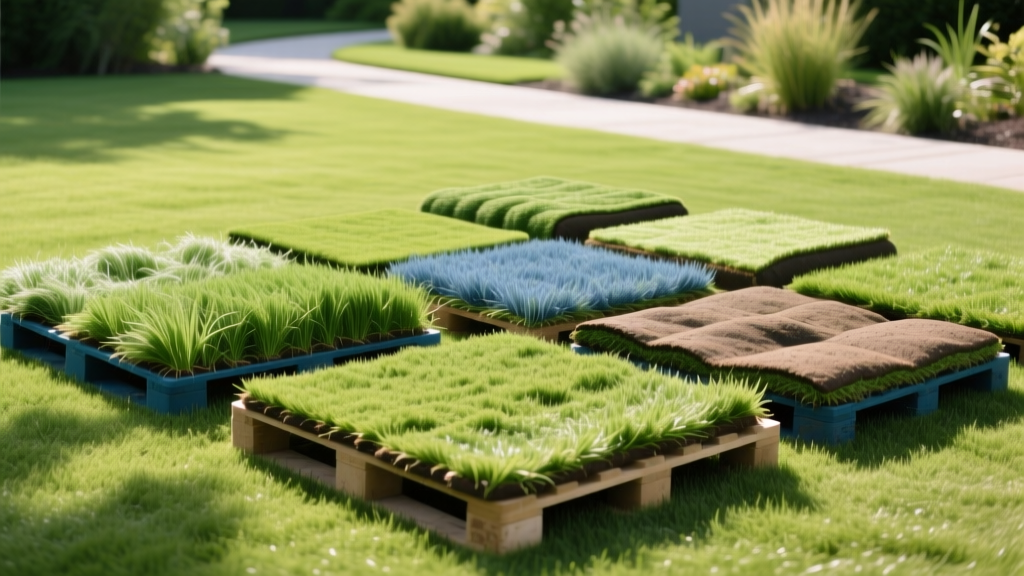
Installed Sod Prices in 2026: Cost per Pallet, Sq Ft & Grass Type
2026 Quick Cost Answer
The national average for installed sod prices in 2026 ranges from $1.50 to $3.50 per square foot. For a standard 1,000-square-foot lawn, expect to pay between $1,500 and $3,500 fully installed. Material costs alone range from $0.35 to $0.85 per square foot, while professional labor and site prep account for $1.00 to $2.50 per square foot.
The True Cost Breakdown: Sod Material vs. Labor
When contractors quote installed sod prices, they are combining three distinct cost centers: the raw turf material, site preparation, and physical installation labor. Understanding this split prevents you from overpaying for premium grass varieties when your soil base cannot support them.
According to recent home improvement pricing data from Angi, the physical laying of the sod is actually the cheapest part of the process. The heavy lifting in your invoice comes from earthmoving. If your yard requires significant regrading to ensure proper drainage away from your foundation, labor costs will push toward the $3.50+ per square foot ceiling.
- Raw Sod Material: $0.35 – $0.85 per sq. ft. (Harvested and delivered)
- Site Prep (Tilling & Grading): $0.50 – $1.50 per sq. ft.
- Installation Labor: $0.50 – $1.00 per sq. ft.
Installed Sod Prices by Grass Type (2026 Data)
Not all turf is priced equally. Proprietary, patented cultivars command a premium over public-domain varieties due to their superior drought tolerance, disease resistance, and deeper root structures. Below is a comparison matrix of the most requested residential sod types.
| Grass Type | Specific Cultivar | Material Cost (per sq. ft.) | Fully Installed (per sq. ft.) | Best Climate Zone |
|---|---|---|---|---|
| Bermuda | Tifway 419 | $0.35 - $0.45 | $1.50 - $2.00 | Warm / Transition |
| Zoysia | Zeon / Geo | $0.65 - $0.85 | $2.20 - $3.20 | Warm / Transition |
| St. Augustine | Palmetto / CitraBlue | $0.50 - $0.70 | $1.80 - $2.60 | Warm / Coastal |
| Tall Fescue | Titan Ultra / RTF | $0.45 - $0.60 | $1.70 - $2.50 | Cool / Transition |
| Kentucky Bluegrass | Midnight / Blue Note Blend | $0.40 - $0.55 | $1.60 - $2.40 | Cool |
Warm-Season Grasses: The Premium Tier
Zoysia cultivars like Zeon and Geo represent the highest tier of installed sod prices. These patented grasses require specialized licensing for sod farms to grow, which restricts supply and drives up the wholesale cost. However, their dense, weed-choking growth habit and exceptional shade tolerance (for a warm-season grass) often justify the 40% price premium over standard Bermuda grass.
Cool-Season Grasses: The Blend Factor
For northern lawns, sod farms rarely grow single-variety Kentucky Bluegrass. Instead, they sell 80/20 or 90/10 blends of Bluegrass and Perennial Ryegrass. When requesting quotes, explicitly ask the contractor for the seed tag certification. Installing a generic 'contractor mix' fescue at premium Bluegrass prices is a common industry bait-and-switch.
Hidden Costs That Inflate Your Final Quote
Homeowners frequently experience sticker shock when the final invoice arrives. HomeGuide pricing reports indicate that ancillary site-work accounts for the majority of budget overruns. Watch for these specific line items:
Budget Killers to Anticipate
- Old Turf Removal: If you have an existing dead lawn, tearing it out and hauling it to a landfill adds $1.00 to $2.00 per square foot.
- Topsoil Import: Sod farms harvest their turf with only 1/2 inch of soil attached. If your native soil is heavy clay, you must import 2 to 3 inches of loam topsoil, adding $0.50 to $1.25 per square foot.
- Irrigation Head Adjustments: Adding 2 inches of topsoil and sod will bury your existing sprinkler heads. Raising each head costs $35 to $65 per zone.
- Sod Shrinkage Waste: Always order 5% to 7% more sod than your exact square footage. Sod shrinks slightly as it dries during transit, and you will need offcuts to fit irregular curves along garden beds.
Pallet Coverage & Calculation Guide
A common point of confusion in turf purchasing is the 'pallet.' A pallet is a logistical shipping unit, not a standardized measurement of area. When comparing installed sod prices quoted 'by the pallet,' you must verify the actual square footage.
- Standard Slab Pallets: Most southern sod farms use 16-inch by 24-inch slabs. A standard pallet holds 50 slabs, equating to exactly 400 square feet.
- Large Roll Pallets: Northern farms and large-scale commercial growers often use mini-rolls (e.g., 18 inches by 6 feet). These pallets typically cover 500 square feet.
- The Math: If Contractor A quotes $600 per 400-sq-ft pallet ($1.50/sq ft) and Contractor B quotes $700 per 500-sq-ft pallet ($1.40/sq ft), Contractor B is cheaper per square foot despite the higher pallet price.
Expert Tip: Never let sod sit on the pallet for more than 24 hours after delivery. In temperatures above 75°F, the center of the pallet will begin to compost, generating heat that will permanently kill the grassroots (a failure mode known as 'pallet burn'). If you cannot lay it the same day, unroll it in a shaded area and water it lightly.
DIY vs. Professional Installation: The ROI Decision
Can you save money by buying the sod yourself and laying it? Yes, but the physical toll is immense. A single 400-square-foot pallet weighs between 2,000 and 3,000 pounds depending on soil moisture content.
When to DIY: Small areas under 500 square feet, flat terrain, and when you have access to a tractor or multiple strong helpers. You will save roughly $1.00 per square foot in labor.
When to Hire a Pro: Slopes greater than a 15% grade, yards requiring extensive rototilling and laser-grading, or when installing premium Zoysia where improper seam-butting will result in visible scarring that takes two growing seasons to heal.
Frequently Asked Questions
How long does it take for installed sod to root?
Under optimal conditions (daily light watering and soil temperatures above 65°F), sod will develop shallow anchor roots in 10 to 14 days. Deep, structural root establishment takes 4 to 6 weeks. Do not mow the lawn until you can tug on the grass blades and feel resistance from the soil.
Is it cheaper to seed or install sod?
Seeding is significantly cheaper upfront, costing $0.10 to $0.25 per square foot for professional hydroseeding. However, seeding requires 6 to 12 months of intensive weed management, strict watering schedules, and carries a high risk of washout during heavy rains. Sod provides an instant, weed-free lawn and immediate erosion control, making it the superior ROI for steep slopes or homes preparing for immediate sale.
Should I put fertilizer down before laying sod?
Yes. Apply a high-phosphorus starter fertilizer (such as a 10-18-10 NPK ratio) directly to the bare, raked soil immediately before unrolling the sod. The phosphorus is critical for stimulating rapid root growth, and placing it beneath the sod ensures it reaches the root zone without burning the tender new grass blades.

