Grass Types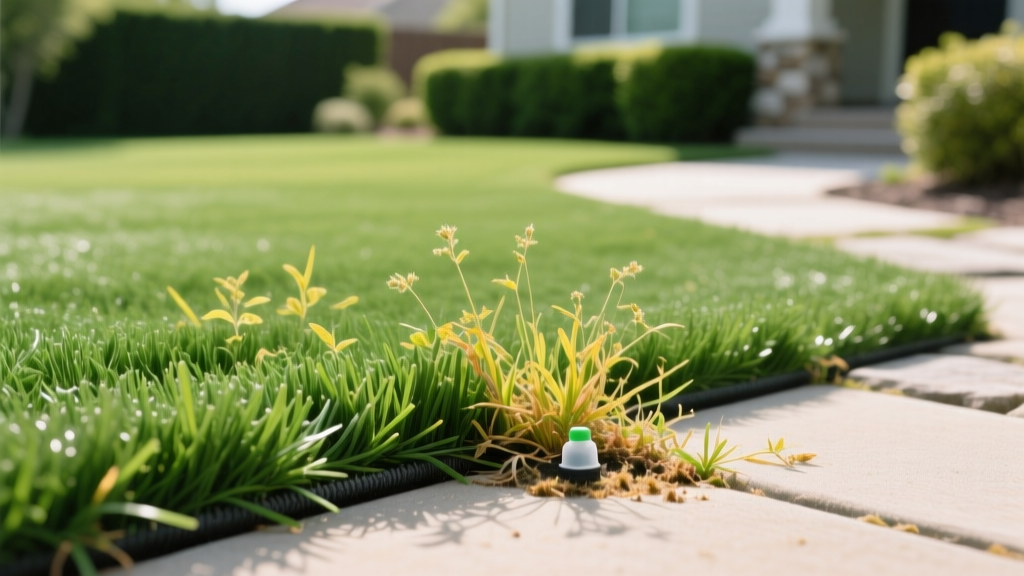
How to Kill Weeds in Artificial Turf: Spot-Treatment Guide
Synthetic turf eliminates the need for mowing, edging, and fertilization, but it is not immune to biological invasion. Weeds in artificial turf exploit windblown seeds, organic debris accumulation, and compromised sub-base drainage. Because synthetic fibers lack the dense, competitive root matrix of natural grass, even a single dandelion or crabgrass plant can rapidly colonize the infill, damage the backing, and create unsightly bare patches. This guide details exact spot-treatment protocols, chemical and organic herbicide specifications, and preventative pre-emergent strategies to maintain a sterile synthetic lawn environment.
The Anatomy of a Synthetic Turf Weed Problem
Understanding where weeds originate on a synthetic lawn dictates the treatment approach. Weeds in artificial turf typically exploit three specific vulnerability zones:
- The Infill Layer: Windblown seeds settle into the silica sand or crumb rubber infill. When organic matter (leaves, grass clippings) decomposes on the surface, it creates a shallow soil layer where weed seeds germinate without ever touching the sub-base.
- Drainage Holes: Perforations in the polyurethane or latex backing are prime targets. Seeds wash into these holes during rain, germinating directly through the backing and anchoring into the compacted aggregate base below.
- Perimeter Seams and Edging: The transition zones between the turf and hardscaping (concrete, pavers) often suffer from infill migration, exposing the backing and allowing aggressive rhizomatous weeds to creep underneath.
Critical Warning: Never use metal-edged weed whips, wire brushes, or standard steel garden hoes on synthetic turf. These tools will slice the polyethylene or nylon fibers and puncture the primary backing, voiding manufacturer warranties and creating permanent entry points for future weeds.
Weed Identification & Failure Point Matrix
Different weed species require distinct extraction and chemical strategies based on their root architecture and how they interact with synthetic materials.
| Weed Species | Primary Entry Point | Rooting Behavior | Spot-Treatment Strategy |
|---|---|---|---|
| Dandelion (Taraxacum) | Infill / Surface debris | Deep taproot penetrating drainage holes | Systemic glyphosate application + manual taproot extraction |
| Crabgrass (Digitaria) | Perimeter seams | Shallow, fibrous lateral spread | Post-emergent glufosinate + pre-emergent barrier |
| White Clover (Trifolium) | Surface organic layer | Stolons rooting at nodes in infill | 20% acetic acid burn-down + infill grooming |
| Moss / Algae | Shaded, poorly drained zones | Surface matting, blocks drainage holes | Potassium salts of fatty acids (insecticidal soap) + aeration |
Spot-Treatment Protocols: Chemical vs. Organic
When manual removal fails or the weed density is too high, targeted chemical or organic applications are necessary. According to guidelines from the Environmental Protection Agency (EPA), all herbicides must be applied strictly according to label directions, with special consideration for pet-safe zones and local runoff regulations.
Chemical Systemic Herbicides
For deep-rooted perennials like dandelions or thistle, contact herbicides are insufficient. You must use a systemic active ingredient that translocates to the root.
- Glyphosate (41% Concentrate): Products like Roundup Pro Concentrate remain the industry standard for spot-treating synthetic turf. Mix at a rate of 1.5 oz per gallon of water. Apply using a shielded pump sprayer to prevent drift onto adjacent natural landscaping. Glyphosate is deactivated upon contact with the soil sub-base, meaning it will not cause long-term soil sterilization beneath your turf.
- Glufosinate-ammonium: Sold under brands like Finale, this is a non-selective contact herbicide with limited systemic action. It is ideal for young, annual grasses (like crabgrass) that have not yet developed deep taproots. It acts faster than glyphosate (visible browning in 48 hours) but costs approximately 30% more per application.
Organic & Non-Toxic Burn-Downs
For homeowners with pets or children who frequently use the lawn, organic burn-down herbicides offer a safer, albeit more labor-intensive, alternative.
- 20% to 30% Acetic Acid (Horticultural Vinegar): Products like Green Gobbler 20% Vinegar Weed Killer destroy the waxy cuticle of broadleaf weeds, causing rapid desiccation. This treatment only kills the foliage; the root may survive and require a second application 10 days later. Cost: ~$35 per gallon.
- d-Limonene (Citrus Oil): Extracts the protective oils from weed cell walls. Highly effective on young clover and chickweed in the surface infill layer. Requires application in direct sunlight and temperatures above 70°F for maximum efficacy.
Step-by-Step Manual Extraction & Seam Repair
Chemical treatments leave dead organic matter in the infill, which eventually breaks down and creates a seedbed for the next generation of weeds. Manual extraction is mandatory for long-term turf health. The Synthetic Turf Council recommends regular grooming and debris removal as the primary defense against biological growth.
- Soften the Infill: Lightly water the affected area to soften the silica sand or zeolite infill, reducing friction against the weed roots.
- Use a Synthetic-Safe Tool: Insert a plastic synthetic turf weeding knife or a pair of long needle-nose pliers at the base of the weed. Avoid standard stand-up weed pullers, as their metal claws will tear the primary backing.
- Extract at the Root Angle: Pull slowly at a 45-degree angle, following the natural path of the root through the drainage hole. If the root snaps, apply a 1ml drop of 41% glyphosate directly into the hole using a syringe.
- Replenish and Groom: Pour a handful of fresh infill (matching your existing sand/zeolite blend) into the depression. Use a stiff-bristled push broom (nylon bristles only) to brush the fibers upright and distribute the infill evenly.
Pre-Emergent Application for Synthetic Turf
Spot-treating is reactive; pre-emergents are proactive. Applying a pre-emergent herbicide in early spring prevents windblown seeds from germinating in the infill layer. University of Minnesota Turfgrass Science notes that timing is critical for pre-emergent efficacy, relying on soil temperatures rather than calendar dates.
Expert Timing Framework: Apply pre-emergents when soil temperatures at a 2-inch depth consistently reach 50°F to 55°F for three consecutive mornings. In most northern climates, this is mid-April; in southern zones, it is late February.
Product Selection: Use Prodiamine 65 WDG (Barricade). Unlike granular pre-emergents designed to be watered into natural soil profiles, Prodiamine can be mixed as a liquid spray (0.5 oz per 1,000 sq ft) and applied directly over the synthetic fibers. Water it in lightly with a hose to wash the chemical off the blades and down into the top inch of the infill, where it forms a chemical barrier that halts cell division in germinating seeds. One pound of Prodiamine costs approximately $90 and treats up to 10,000 square feet, making it highly cost-effective for large installations.
Troubleshooting Edge Cases: Sub-Base Failures
If you are pulling weeds that have thick, woody roots extending more than 4 inches deep, or if weeds are pushing up through the seams in the middle of the lawn, you are likely dealing with a sub-base failure. This occurs when the weed barrier fabric beneath the aggregate base has degraded, or when the base material (usually decomposed granite or crushed limestone) was not properly compacted during installation, allowing deep-rooted native weeds to push upward. In these cases, spot-treatment is a temporary fix. The affected turf section must be cut back, the sub-base re-compacted, a new commercial-grade woven geotextile weed barrier installed, and the turf seamed back together using polyurethane adhesive and seam tape.