Grass Types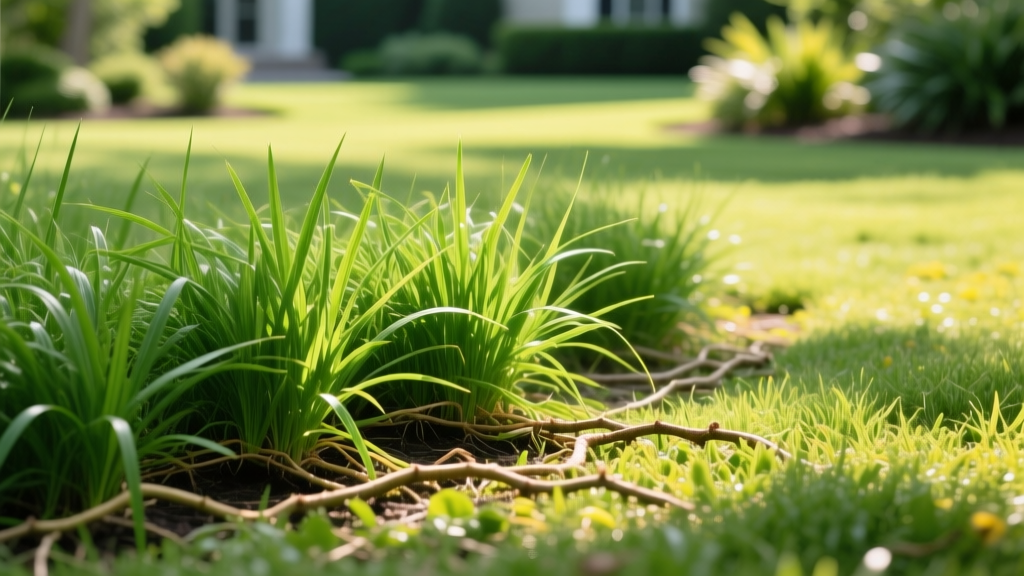
Managing St Augustine Runners: Encourage Spread or Control
The Biology of St Augustine Runners (Stolons)
St. Augustine grass (Stenotaphrum secundatum) lacks the underground rhizomes found in Bermuda or Zoysia grasses. Instead, it relies entirely on above-ground runners, botanically known as stolons, to spread and recover from damage. These horizontal stems creep across the soil surface, dropping nodes that root into the earth to establish new turf. Understanding how to manipulate these stolons is the cornerstone of warm-season lawn care.
While cultivars like 'Floratam' produce thick, aggressive runners that can quickly conquer a bare patch, newer shade-tolerant varieties like 'CitraBlue' or 'Palmetto' exhibit slightly different stolon vigor and internode spacing. Managing these runners requires a dual approach: accelerating their growth when you need to fill thin spots, and aggressively containing them when they threaten to invade hardscapes and mulched garden beds.
Decision Framework: Encourage vs. Control
Scenario A: Bare Spots & Thinning Turf
Goal: Maximize stolon elongation and node rooting.
Action: Raise mowing height, apply targeted nitrogen, and top-dress with compost.
Scenario B: Garden Beds & Driveways
Goal: Halt stolon advance and prevent climbing.
Action: Install 6-inch physical barriers, maintain a 2-inch mulch gap, and apply chemical growth regulators if necessary.
Protocols to Accelerate Runner Spread (Filling Bare Spots)
If your lawn has suffered from chinch bug damage, fungal die-off, or heavy foot traffic, you need the existing perimeter runners to stretch and colonize the bare soil. According to NC State TurfFiles, St. Augustine requires specific environmental triggers to push aggressive stolon growth during the peak summer months.
1. Nitrogen Timing and Application Rates
Stolons require high nitrogen levels to elongate. During the active growing season (June through August), apply 0.5 to 1.0 pound of nitrogen per 1,000 square feet every 6 to 8 weeks.
- Fast-Release Synthetic: A 32-0-10 formulation (like Scotts Turf Builder Southern) provides an immediate flush of growth. Expect runners to extend 2 to 4 inches within a week. Cost: $45 to $60 per 50 lb bag covering 12,500 sq ft.
- Slow-Release Organic: Milorganite (5-2-0) is ideal for steady, sustained runner growth without the risk of fertilizer burn during July heat. Apply at 14 lbs per 1,000 sq ft.
2. Strategic Mowing Heights
The most common mistake homeowners make is mowing St. Augustine too short, which physically severs the stolons before they can root. Set your mower deck to 3.5 to 4.0 inches. This height shades the soil, retains moisture for the delicate new root nodes, and prevents the mower blades from chopping the primary lateral runners.
3. Topdressing for Node Contact
Runners that hover over dry, compacted soil will desiccate before rooting. Apply a 1/4-inch layer of screened compost directly over the advancing stolons. This ensures the nodes maintain constant moisture and physical contact with the soil microbiome, accelerating root initiation by up to 40%.
Containing Runners: Edging and Bed Protection
St. Augustine runners are notorious for climbing over curbs, scaling tree trunks, and smothering landscape plants. Because they root at every node, simply pulling them out of a flower bed leaves behind broken stem fragments that will resprout within weeks. The Clemson Home & Garden Information Center emphasizes physical exclusion as the primary defense.
Physical Barrier Specifications
Standard 4-inch landscape edging is insufficient for mature St. Augustine. You must install barriers that are at least 6 inches deep with a minimum of 1 inch protruding above the soil grade to stop surface-level stolon creep.
- Steel Edging (Col-Met or Dimex): Costs $12 to $18 per 4-foot section. Provides a rigid, impenetrable wall that runners cannot deform or push through.
- Polyethylene Edging (ProLiner): Costs $2.50 to $4.00 per linear foot. Must be secured with 10-inch steel stakes every 2 feet to prevent the thick stolons from pushing the plastic outward over time.
Chemical Containment (Use with Caution)
If physical edging is impossible, you can use a non-selective herbicide like glyphosate (Roundup) applied with a precision shield or sponge applicator directly to the invading runners. Never spray near the main lawn canopy. For a safer alternative in beds containing broadleaf shrubs, apply a grass-specific herbicide containing Fluazifop (e.g., Ortho Grass B Gon), though you must verify the label's safety for your specific ornamental plants, as St. Augustine stolons can absorb the chemical and translocate it back into the main turf if the runner is not severed first.
Warning: The Thatch Trap
St. Augustine runners are the primary contributors to thatch buildup. If your thatch layer exceeds 0.5 inches, the stolons will root into the thatch rather than the soil. This creates a shallow root system that is highly vulnerable to drought stress and Take-All Root Rot. Dethatch or core aerate annually if the spongy layer becomes too thick.
Troubleshooting Stunted or Dying Runners
When runners fail to establish or begin dying back at the tips, it indicates an underlying cultural or pathological issue. Use this diagnostic matrix to identify the problem.
| Symptom | Primary Cause | Corrective Action |
|---|---|---|
| Runner tips turning brown and shriveling | Moisture stress or Take-All Root Rot (TARR) | Water deeply to 6 inches; apply peat moss topdressing to lower soil pH to 5.5 if TARR is suspected. |
| Runners hovering above soil, failing to root | Soil compaction or excessive thatch (>0.5 in) | Core aerate the lawn and rake out excess thatch to expose bare soil for node contact. |
| Stolons climbing tree trunks or walls | Excessive shade and high nitrogen pushing vertical growth | Prune lower tree branches to increase light; reduce nitrogen applications by 25% in shaded zones. |
| Yellowing nodes with stunted internodes | Iron chlorosis or chinch bug feeding at the crown | Apply chelated iron spray; part the grass and inspect the base of runners for tiny black/white insects. |
Frequently Asked Questions
Can I cut St Augustine runners and plant them elsewhere?
Yes. St. Augustine is rarely established from seed; commercial sod farms and homeowners propagate it via sprigging or plugging. You can sever healthy, rooted sections of runners (plugs) using a 2-inch bulb planter and transplant them to bare areas on a 12-inch grid. Keep the transplants consistently moist for 14 to 21 days until the new stolons begin to spread outward.
Do pre-emergent herbicides stop St Augustine runners?
No. Pre-emergent herbicides like prodiamine or dithiopyr only prevent weed seeds from germinating by creating a chemical barrier at the soil surface. They have zero effect on the vegetative spread of above-ground stolons. However, applying a pre-emergent in early spring is still critical to prevent weeds from outcompeting your newly establishing St. Augustine runners.
How fast do St Augustine runners spread under ideal conditions?
During peak summer heat with adequate moisture and nitrogen, a healthy St. Augustine stolon can grow 1 to 2 inches per week. A single bare patch of 2 square feet can be entirely colonized by surrounding runners within 8 to 10 weeks if the soil is kept lightly top-dressed and mowed at the proper 4-inch height.