
Grass Types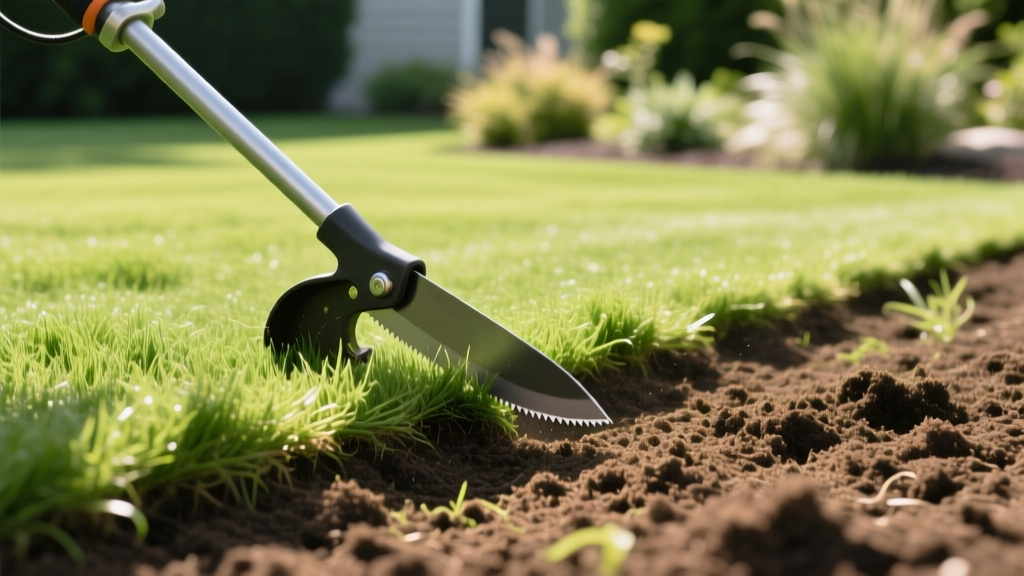
Manual Sod Cutter Guide: Prepping Soil for Grass Seed
Why Choose a Manual Sod Cutter Over Gas-Powered Alternatives?
Stripping an existing lawn before seeding is non-negotiable for high-success establishment. While renting a motorized sod cutter costs between $110 and $150 per day in 2026, these 150-pound machines are overkill for residential yards under 2,000 square feet. They tear through irrigation lines, struggle with tight gate access, and often scalp the topsoil unevenly.
A manual sod cutter (often called a sod lifter or kick plow) offers surgical precision. Priced between $45 and $65, these tools allow you to control the exact cutting depth, preserving the nutrient-rich topsoil layer required for new grass seed germination. According to the University of Minnesota Turfgrass Science program, preserving the uppermost soil horizon is critical because it contains the highest concentration of organic matter and microbial activity necessary for seedling root development.
Information Gain: The Topsoil Preservation Metric
Motorized cutters typically remove 1.5 to 2.5 inches of soil profile. A manual sod cutter, when angled correctly, removes only 0.5 to 0.75 inches of turf and thatch. This leaves up to 1.5 inches of prime topsoil intact, saving you roughly $400 to $600 in topsoil replacement costs for a standard 1,000 sq. ft. lawn.
Motorized cutters typically remove 1.5 to 2.5 inches of soil profile. A manual sod cutter, when angled correctly, removes only 0.5 to 0.75 inches of turf and thatch. This leaves up to 1.5 inches of prime topsoil intact, saving you roughly $400 to $600 in topsoil replacement costs for a standard 1,000 sq. ft. lawn.
Selecting the Right Manual Sod Cutter
Not all manual cutters are built for heavy clay or dense rhizomatous turf. When selecting a tool, evaluate the blade steel, width, and shaft ergonomics.
- Bulldog Tools 1112 All-Steel Sod Lifter (~$55): Features a 15-inch wide, 2.5mm thick forged steel blade. Ideal for dense clay soils and thick Kentucky Bluegrass lawns. The solid steel shaft prevents flexing under heavy downward pressure.
- Truper 15-Inch Sod Cutter (~$45): Utilizes a slightly thinner blade with a fiberglass handle. Better suited for sandy loam soils and lighter fescue blends. The fiberglass handle reduces overall tool weight to 4.8 lbs, minimizing user fatigue.
- Corona SS 3234 (~$60): Features a sharpened, serrated edge designed specifically for cutting through aggressive warm-season grasses like Bermuda and Zoysia without the blade snagging on thick stolons.
Blade Maintenance: The 20-Degree Bevel
A dull sod cutter will tear grass roots rather than severing them, leaving behind rhizomes that will regrow and compete with your new grass seed. Before starting, use a 10-inch flat mill file to sharpen the cutting edge. Maintain the factory 20-degree bevel angle. Apply 5 to 7 forward strokes per side. Do not use a power grinder; the heat will draw the temper out of the carbon steel, causing the edge to roll when it strikes buried rocks.
Step-by-Step Execution: Stripping Turf Without Scalping
Proper technique dictates the difference between a clean seedbed and a ruined soil profile. Follow this exact sequence to prepare your lawn for seeding.
Step 1: Moisture Calibration (24 Hours Prior)
Dry soil will shatter the sod into unmanageable chunks, while saturated mud will clog the blade. Apply exactly 0.25 inches of water 24 hours before cutting. This lubricates the soil pores, allowing the blade to glide through the root zone cleanly. Use a straight-sided tuna can placed on the lawn to measure the sprinkler output.
Step 2: The 15-Degree Attack Angle
Position the blade flat against the turf. Push the D-grip handle forward to drop the blade to a 15-degree angle relative to the soil surface. Step firmly onto the cross-bar (the kick plate) with your dominant foot, driving the blade horizontally under the thatch layer.
Failure Mode: If you push the handle backward (creating a 45-degree downward angle), you will dig a trench and remove valuable topsoil. If the angle is too shallow (under 10 degrees), the blade will pop out of the ground every 12 inches.
Step 3: Cutting and Rolling Strips
Cut in continuous 12-inch wide strips, pushing forward in 2-foot increments. Once a strip is 6 to 8 feet long, use a spade to sever it from the main lawn. Roll the strip tightly, grass-side out. Stack the rolls in a shaded area.
Warning: Invasive Rhizome Management
If you are removing Quackgrass, Bermudagrass, or Creeping Bentgrass, a manual sod cutter will leave behind deep rhizomes. The Wisconsin Horticulture Division of Extension recommends applying a non-selective herbicide 14 days prior to cutting, or planning a secondary pass with a heavy-duty garden fork to manually extract remaining white rhizomes before seeding.
If you are removing Quackgrass, Bermudagrass, or Creeping Bentgrass, a manual sod cutter will leave behind deep rhizomes. The Wisconsin Horticulture Division of Extension recommends applying a non-selective herbicide 14 days prior to cutting, or planning a secondary pass with a heavy-duty garden fork to manually extract remaining white rhizomes before seeding.
Soil and Turf Matrix: Adjusting Your Technique
Soil composition and turf species require adjustments to your cutting depth and prep work. Use the matrix below to calibrate your approach.
| Soil / Turf Condition | Blade Angle | Target Depth | Pre-Cut Prep |
|---|---|---|---|
| Heavy Clay / Tall Fescue | 15 degrees | 0.75 in. | Water 48 hrs prior |
| Sandy Loam / Fine Fescue | 10 degrees | 0.5 in. | Water 12 hrs prior |
| Compacted Soil / Bluegrass | 20 degrees | 1.0 in. | Core aerate 1 week prior |
Post-Removal Seedbed Preparation
Once the old sod is removed, you are left with a bare, uneven soil surface. Do not broadcast grass seed directly onto this exposed earth. The soil will be compacted from your foot traffic during the cutting process, leading to poor seed-to-soil contact and massive runoff during the first irrigation.
Grading and Amendment
Use a heavy landscaping bow rake to break up the top 1 inch of soil. Grade the surface to ensure a 2% slope away from your home's foundation. If a soil test indicates a pH below 6.0, apply pelletized lime at a rate of 50 lbs per 1,000 sq. ft. and incorporate it into the top 2 inches of soil using a manual tiller or garden fork.
Seed-to-Soil Contact Parameters
Different grass species require specific burial depths for optimal germination. After raking the seedbed smooth, broadcast your seed and use an empty lawn roller (filled with water to roughly 50 lbs) to press the seed into the soil.
- Kentucky Bluegrass: Requires extremely shallow contact. Press seed into the top 1/8 to 1/4 inch of soil. Cover lightly with peat moss or compost to retain moisture.
- Tall Fescue: Tolerates slightly deeper planting. Target a 1/4 to 1/2 inch depth. The heavier seed will naturally settle into soil crevices when rolled.
- Perennial Ryegrass: Germinates rapidly but is sensitive to deep burial. Keep strictly at the 1/4 inch mark.
Composting the Removed Sod
Do not send your stripped sod to the landfill. Stack the rolled sod in a corner of your property, grass-side down. Cover the stack with a black UV-resistant tarp to block sunlight and retain heat. Within 6 to 8 months, the grass will decompose, leaving you with a pile of highly structured, nutrient-dense topsoil that can be screened and used for future garden beds or topdressing your newly established lawn.

