
Grass Types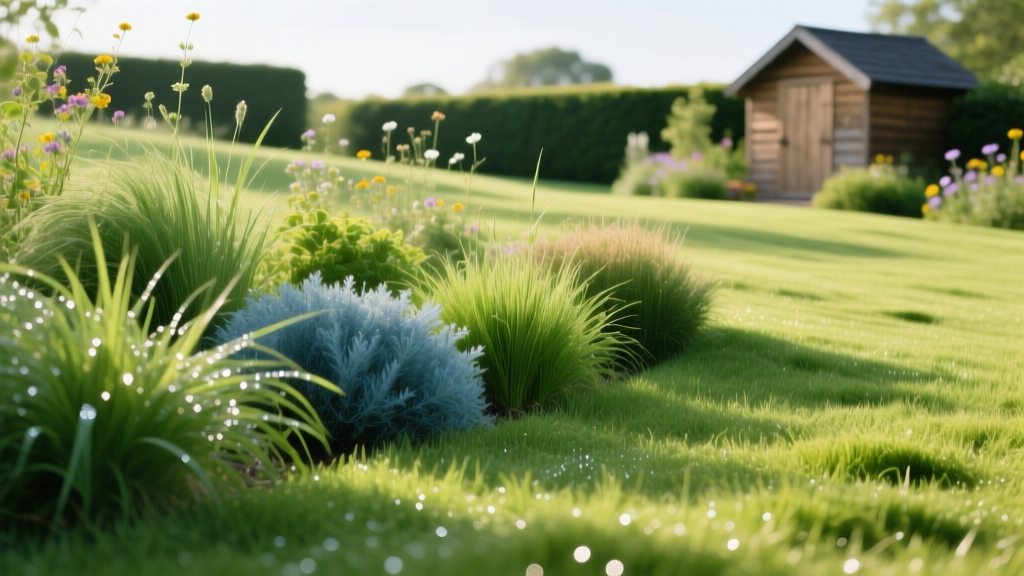
Organic DIY Hydroseeding: Chemical-Free Lawn Establishment
The Case for Chemical-Free Hydroseeding
Conventional hydroseeding relies heavily on synthetic polyacrylamide (PAM) tackifiers, chemically treated seeds, and high-salt synthetic fertilizers. While effective for rapid commercial erosion control, these chemicals can disrupt the soil microbiome, harm local pollinators, and introduce heavy metals into residential watersheds. Organic DIY hydroseeding achieves the same 30-day germination and uniform coverage by substituting petrochemical binders with natural polysaccharides and utilizing untreated, non-GMO grass cultivars. According to the USDA National Organic Program, maintaining organic land requires avoiding prohibited synthetic substances for at least three years; starting your lawn with a 100% organic slurry ensures your soil biology remains intact from day one.
Formulating a 100% Organic Hydroseed Slurry
A successful hydroseed slurry requires four components: seed, mulch, tackifier, and fertilizer. In an organic system, every input must be scrutinized for hidden synthetics.
Natural Tackifiers vs. Synthetic Polymers
Synthetic tackifiers form a plastic-like crust that can suffocate soil microbes and delay root penetration. For an organic approach, use psyllium husk powder or guar gum. Psyllium contains high levels of mucilage, a natural polysaccharide that swells in water to create a viscous, biodegradable gel. This gel binds the mulch and seed to the soil matrix while allowing oxygen and water to permeate, actively feeding soil bacteria as it breaks down over 14 to 21 days.
Mulch and Dye Considerations
Avoid recycled paper mulches sourced from unknown origins, as they may contain residual chemical weed killers or heavy metal inks. Opt for 100% virgin wood fiber or certified organic straw mulch. Furthermore, conventional DIY kits use Brilliant Blue FCF (a synthetic petroleum-based dye) to track spray coverage. For organic tracking, use food-grade spirulina powder to tint the slurry green, or simply rely on the natural tan/brown color of virgin wood fiber and adjust your spraying technique to ensure even overlap.
⚠️ Warning: The Fungicide Seed Coating Trap
Over 80% of commercial grass seeds are coated with Apron Maxx (metalaxyl), a systemic fungicide that is strictly prohibited in organic landscaping. When sourcing your seed, you must explicitly verify with the supplier that the seed is raw and untreated. Because untreated seed is more vulnerable to damping-off disease (Pythium), soil preparation becomes your primary biological defense.
Selecting Untreated, Organic Grass Cultivars
Not all grass species are readily available in certified organic, untreated formats. Cool-season grasses generally have a wider organic availability than warm-season varieties due to the economics of organic seed farming in the Pacific Northwest. The University of Minnesota Extension emphasizes matching the seed to your exact microclimate to reduce the need for chemical interventions later.
| Grass Species | Climate Zone | Organic Availability | Hydroseeding Viability |
|---|---|---|---|
| Perennial Ryegrass | Cool-Season / Transition | High (Readily available raw) | Excellent (Fast germination) |
| Creeping Red Fescue | Cool-Season / Shade | High | Very Good |
| Tall Fescue (RTF) | Transition Zone | Moderate | Excellent (Deep roots) |
| Bermudagrass | Warm-Season | Low (Often pelleted/coated) | Good (Requires high heat) |
Exact Mixing Ratios for 1,000 Square Feet
Precision in the slurry mix is critical. Too much psyllium will create an impermeable mat; too little will result in seed washout during the first rain. The following recipe is calibrated for a standard 15-gallon DIY hydroseeder tank (like the Chapin HydroSeeder or Agri-Fab hose-end sprayers) covering exactly 1,000 square feet.
- Biological Soil Prep (Day 1): Before mixing, spray the bare soil with a liquid Bacillus subtilis biological fungicide (such as Serenade Garden). This colonizes the soil surface and protects your raw, untreated seeds from Pythium damping-off disease during the vulnerable germination window.
- Hydrate the Tackifier (Day 2): Fill your tank with 10 gallons of water. Slowly pour in 1.5 lbs of finely milled psyllium husk powder while the agitator is running. Allow it to hydrate for 20 minutes until the water achieves a syrup-like viscosity.
- Add Mulch and Amendments: Add 12 lbs of virgin wood fiber mulch. Follow with 16 oz of liquid kelp extract (provides trace minerals and cytokinins for root growth) and 4 oz of liquid humic acid to buffer soil pH.
- Incorporate the Seed: Add 6 lbs of raw, untreated organic perennial ryegrass (or your chosen cultivar). Never add the seed before the mulch, as the seed can become trapped in the agitator pump and suffer mechanical damage to the seed coat.
- Application: Spray using a wide fan nozzle at 30-40 PSI. Walk at a steady pace of 3 feet per second, overlapping passes by 30% to ensure a uniform 1/4-inch slurry blanket.
Post-Application: Organic Weed & Pest Defense
The most common mistake organic lawn owners make is applying Corn Gluten Meal (CGM) immediately after hydroseeding to prevent weeds. CGM is a natural pre-emergent herbicide that inhibits root formation in all germinating seeds. Applying it over your new hydroseed will kill your grass before it establishes.
"Organic weed control in a newly hydroseeded lawn relies entirely on canopy competition. You must wait until the new grass has been mowed at least three times before applying any organic pre-emergents like corn gluten meal. Until then, hand-pull broadleaf weeds or use a targeted 20% horticultural vinegar spray strictly on isolated weed leaves, avoiding the grass blades." — Integrated Pest Management Guidelines, EPA Safe Pest Control
For watering, organic hydroseed requires the same frequent, light irrigation as conventional seed (3 to 4 times daily for 10 minutes during the first 14 days). However, because organic mulch lacks synthetic water-retention polymers, you must monitor the soil moisture closely on windy days, as the wood fiber can dry out slightly faster than synthetic PAM matrices.
Cost Breakdown: Organic vs. Conventional DIY Kits
While organic inputs carry a premium, the cost difference at the DIY residential scale is marginal when calculated per square foot. Below is a real-world cost comparison for treating a 5,000 square foot lawn in 2026.
| Material Category | Conventional DIY Kit | 100% Organic DIY Mix |
|---|---|---|
| Seed (30 lbs total) | $120 (Coated/Blue Tag) | $185 (Raw/Organic Certified) |
| Mulch & Tackifier | $60 (Paper/PAM Polymer) | $85 (Wood Fiber/Psyllium) |
| Fertilizer & Amendments | $30 (Synthetic 10-10-10) | $55 (Kelp/Humic Acid) |
| Total Cost (5,000 sq ft) | $210 ($0.04/sq ft) | $325 ($0.065/sq ft) |
The organic route costs approximately 2.5 cents more per square foot. For the average homeowner, this $115 premium eliminates the introduction of synthetic fungicides, petroleum-based dyes, and salt-heavy fertilizers into your immediate ecosystem, yielding a lawn with a naturally resilient, microbially active soil food web from the moment the first seed sprouts.

