
Grass Types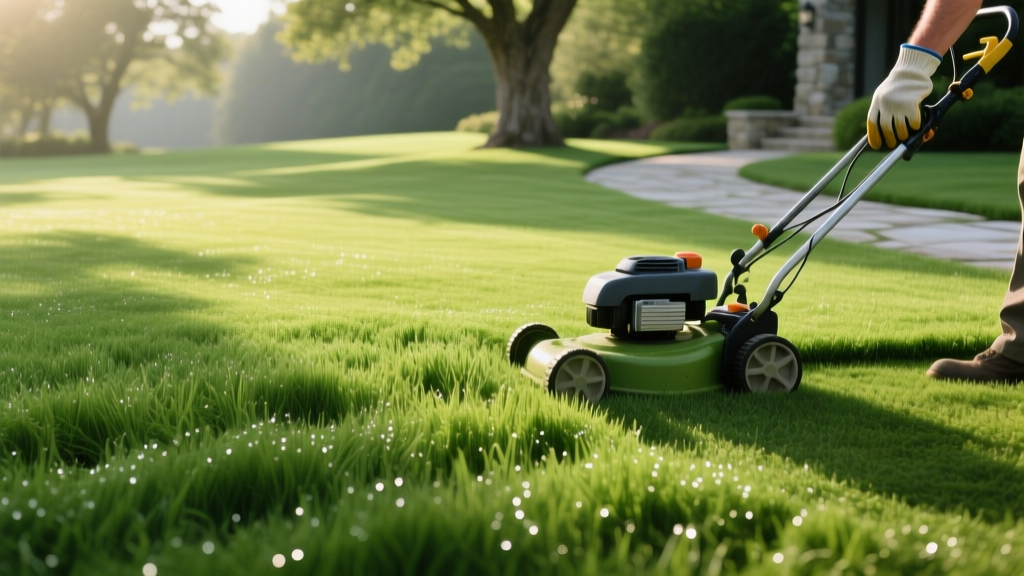
Palisade Zoysia Care: Mowing, Fertilizing, and Shade Tolerance Tips
The Palisade Zoysia Profile
Developed by the Texas A&M AgriLife Extension service, Palisade Zoysia (Zoysia japonica 'Palisade') remains one of the most reliable warm-season cultivars for homeowners balancing full-sun durability with moderate shade requirements. Unlike fine-bladed zoysias that demand reel mowers and intensive chemical regimens, Palisade offers a medium-to-coarse leaf texture that thrives under standard rotary mowers while maintaining a dense, carpet-like turf.
Quick Specifications: Palisade Zoysia
- USDA Hardiness Zones: 6 through 11
- Leaf Texture: Medium to coarse (wider than Emerald, narrower than standard Meyer)
- Light Requirement: 4 to 5 hours of direct or filtered sunlight daily
- Ideal Mowing Height: 2.0 to 2.5 inches
- Soil pH Preference: 5.8 to 7.0
- Drought Recovery: Excellent (deep taproot system up to 8 feet in uncompacted soils)
Establishment: The Vegetative Reality
A common mistake among homeowners is searching for Palisade Zoysia seed. Palisade is a vegetative-only cultivar. It does not produce viable seed, meaning establishment is strictly limited to sod, plugs, or sprigs.
Sod vs. Plugs: Cost and Timeline
As of 2026, Palisade sod typically ranges from $0.65 to $0.95 per square foot, depending on regional farm availability and freight distances. For a 5,000-square-foot lawn, expect to invest between $3,250 and $4,750 in materials alone. Plugs offer a budget-friendly alternative at roughly $45 to $65 per tray of 72 plugs. When planted on 12-inch centers in early summer, plugs will fully knit together in 14 to 18 months, provided you apply a starter fertilizer (like Scotts Turf Builder Starter Food for New Grass) and maintain consistent soil moisture during the first 45 days.
Mowing Protocols for Medium-Coarse Blades
Because of its coarse texture, Palisade is highly forgiving of rotary mowers, unlike the fine-bladed Zoysia matrella varieties that scalp easily and require expensive reel mowers. However, improper mowing is the primary cause of thinning in mature Palisade lawns.
⚠️ The One-Third Rule Warning: Never remove more than one-third of the blade height in a single pass. If your target height is 2.0 inches, mow when the grass reaches 3.0 inches. Scalping Palisade below 1.5 inches exposes the thatch layer to UV radiation, shocks the root system, and invites invasive weeds like crabgrass and spurge.
- Spring Green-Up: Set your mower to 1.5 inches for the first mow to remove dormant, brown tissue and allow sunlight to reach the soil, accelerating soil warming.
- Summer Maintenance: Raise the deck to 2.0 - 2.5 inches. Taller grass shades the soil, reducing evaporation and suppressing weed seed germination.
- Blade Maintenance: Sharpen rotary blades every 25 hours of use. Dull blades tear the coarse zoysia tissue, leaving frayed, white tips that increase susceptibility to fungal pathogens.
Annual Fertilization and Soil Chemistry
Palisade Zoysia is a light feeder compared to Bermuda grass. Over-fertilizing leads to excessive thatch buildup and increased vulnerability to Large Patch disease. According to NC State TurfFiles, zoysiagrass generally requires 1 to 2 pounds of actual nitrogen per 1,000 square feet annually.
| Application Timing | N-P-K Ratio Example | Rate per 1,000 sq ft | Purpose |
|---|---|---|---|
| Late Spring (Post-Green-Up) | 20-0-10 or 16-4-8 | 0.5 - 1.0 lb Nitrogen | Kickstarts lateral growth and canopy density. |
| Early Summer | Slow-Release Urea | 0.5 lb Nitrogen | Sustains color during peak heat stress. |
| Early Autumn (Potassium Focus) | 0-0-60 (Muriate of Potash) | 1.0 lb Potassium (K2O) | Enhances winter cold hardiness and disease resistance. |
Pro Tip: Palisade is prone to iron chlorosis in high-pH soils (above 7.2), manifesting as yellowing between the leaf veins. If a soil test confirms high pH, apply chelated iron (Fe-EDDHA) at 2 ounces per 1,000 square feet rather than attempting to lower the soil pH with sulfur, which is often ineffective in calcareous soils.
Shade Tolerance and Drought Mechanics
Marketing materials often label zoysia as "shade tolerant," but this requires strict definition. Palisade Zoysia requires a minimum of 4 to 5 hours of direct sunlight or bright, all-day filtered light (such as under a high-canopy pine tree). It will outperform Bermuda grass in shade but will eventually thin out under dense hardwood canopies or near north-facing foundations.
When drought conditions hit, Palisade employs a survival mechanism called "leaf rolling." The blades fold inward to reduce surface area and minimize transpiration. While the lawn may take on a grayish-blue hue, the deep root system keeps the crown alive. Once 0.5 inches of water is applied, the leaves will unroll and recover within 24 hours. To encourage maximum root depth, water deeply and infrequently—aim for 1 inch of water per week, delivered in a single session rather than daily light sprinklings.
Disease Management: Large Patch Prevention
The most significant threat to Palisade Zoysia is Large Patch, caused by the soil-borne fungus Rhizoctonia solani. This disease attacks the leaf sheaths during the cool, wet transitions of spring and fall, creating expanding circular patches of brown, sunken turf.
Preventative Fungicide Strategy
Once Large Patch damages the sheath, the leaf dies, and recovery relies entirely on lateral stolon growth, which can take months. Prevention is mandatory in humid climates:
- Timing: Apply preventative fungicides in early autumn when soil temperatures drop to 70°F, and again in early spring at green-up.
- Active Ingredients: Look for products containing azoxystrobin (e.g., Heritage SC) or pyraclostrobin. Rotate chemical classes (FRAC codes) to prevent fungal resistance.
- Cultural Controls: Avoid applying nitrogen fertilizer after September 1st in the transition zone. Late-season nitrogen forces tender new growth that is highly susceptible to fungal infection before winter dormancy.
Frequently Asked Questions
How often should I dethatch Palisade Zoysia?
Palisade produces a dense thatch layer due to its high lignin content. Do not dethatch on a calendar schedule; instead, measure the thatch. Extract a core sample using a soil probe or trowel. If the thatch layer exceeds 0.75 inches, perform vertical mowing (verticutting) or core aeration in late May or early June when the grass is actively growing and can rapidly heal. Never dethatch a dormant or drought-stressed Palisade lawn.
Can Palisade Zoysia survive dog urine?
No warm-season grass is entirely immune to the high nitrogen and salt concentration in dog urine. However, Palisade's aggressive lateral growth via rhizomes and stolons allows it to recover from minor urine burns faster than bunch-type grasses. Keep a shaker of gypsum (calcium sulfate) on hand; applying a handful to fresh urine spots helps displace sodium ions in the soil, mitigating root burn.
Is Palisade better than Zeon or Geo Zoysia?
It depends on your equipment and light conditions. Zeon and Geo are fine-bladed Zoysia matrella crosses that offer superior shade tolerance (down to 3 hours of light) and a softer feel underfoot. However, they require reel mowers for a clean cut and are significantly more expensive to establish. Palisade remains the superior choice for homeowners who want a low-maintenance, rotary-mower-friendly lawn that handles heavy foot traffic and full-sun exposure without issue.

