
Grass Types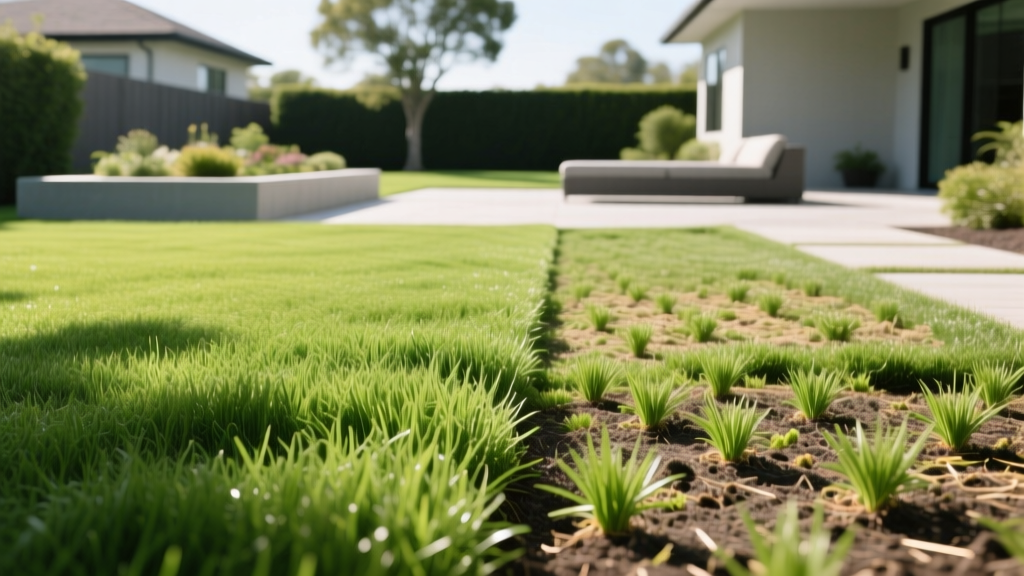
The Truth About Palisades Zoysia Seed: Plugs vs Seeded Alternatives
Homeowners transitioning to warm-season lawns frequently search for Palisades Zoysia seed hoping to achieve the cultivar's legendary shade tolerance, deep green color, and drought resistance at the low cost of a seeded establishment. However, this search is built on an agronomic misconception. Commercially viable Palisades Zoysia seed does not exist.
Palisades (Zoysia japonica 'Palisades') is a vegetative cultivar. It was developed and released by Texas A&M University specifically for its stolon and rhizome production, not for seed viability. If you attempt to harvest and plant seed heads from an existing Palisades lawn, the resulting grass will not be true to type; it will exhibit severe genetic drift, resulting in a patchy, weedy, and inconsistent turf. To establish a genuine Palisades lawn, you must use vegetative methods (sod or plugs) or pivot to a genetically distinct seeded Zoysia alternative.
The Agronomic Reality: Vegetative vs. Seeded Zoysia
Understanding why you cannot buy Palisades Zoysia seed requires a brief look into turfgrass breeding. According to the NC State TurfFiles database, Zoysia japonica species are generally propagated vegetatively to preserve specific cultivar traits like leaf width, disease resistance, and winter hardiness. While some Zoysia japonica varieties have been specifically bred for seed production (such as Zenith and Compadre), Palisades was selected purely for its vegetative vigor and aesthetic density.
When you see listings on third-party marketplaces advertising "Palisades Zoysia Seed," you are almost certainly encountering a scam. These sellers typically ship generic, unbranded Zoysia japonica seed, or worse, cheap pasture grasses like orchardgrass that will quickly invade and ruin your lawn bed.
How to Actually Establish Palisades Zoysia
Since seed is off the table, you must rely on vegetative propagation. The two primary methods for residential establishment are solid sodding and plug planting. Your choice depends entirely on your budget and your timeline for a fully established lawn.
Cost and Timeline Matrix: Sod vs. Plugs
| Establishment Method | Material Cost (per 1,000 sq ft) | Labor / Effort | Time to Full Coverage | Weed Competition Risk |
|---|---|---|---|---|
| Solid Sod | $450 - $650 | High (Heavy lifting, soil prep) | Instant (2-3 weeks to root) | Very Low |
| Plugs (12"x12" Spacing) | $90 - $130 (approx. 70 plugs) | Medium (Digging holes, planting) | 10 - 14 Months | Moderate |
| Plugs (18"x18" Spacing) | $45 - $70 (approx. 35 plugs) | Low (Fewer holes to dig) | 18 - 24 Months | High |
Pro Tip for Plug Establishment: If you choose the plug route to save money, you must aggressively manage weeds in the bare soil between the plugs. Palisades Zoysia is a slow grower compared to Bermuda grass. Apply a pre-emergent herbicide labeled for use during Zoysia establishment (such as prodiamine, applied at reduced rates) and use a selective post-emergent like quinclorac to fight off crabgrass while the plugs send out their stolons.
The Best Seeded Zoysia Alternatives
If your budget strictly prohibits the cost of sod or plugs, and you are committed to planting from seed, you must select a cultivar specifically bred for sexual reproduction. The UC Davis Center for Turfgrass Research notes that modern seeded Zoysia varieties have closed the visual gap with vegetative cultivars, offering excellent turf quality at a fraction of the material cost.
Cultivar Comparison: Palisades vs. Seeded Alternatives
| Cultivar | Propagation | Leaf Texture | Shade Tolerance | Seed Cost (per lb) |
|---|---|---|---|---|
| Palisades | Sod / Plugs Only | Medium-Coarse | Excellent | N/A (Not available) |
| Zenith | Seed / Sod / Plugs | Medium | Good | $25 - $35 |
| Compadre | Seed / Sod / Plugs | Medium-Fine | Good | $30 - $45 |
Zenith Zoysia is the industry standard for seeded Zoysia. It offers remarkable cold tolerance and a slightly lighter green color than Palisades. Compadre (formerly known as Zen-300) features a darker green hue and a slightly denser growth habit, making it the closest visual match to Palisades among seeded options. Both require 2 to 3 pounds of seed per 1,000 square feet for proper establishment.
Step-by-Step Protocol for Seeding Zoysia
Establishing Zoysia from seed is notoriously difficult due to its slow germination rate and strict temperature requirements. Follow these exact parameters to ensure success:
- Timing and Soil Temperature: Do not seed based on the calendar; seed based on soil temperature. Zoysia requires a consistent soil temperature of at least 70°F at a 2-inch depth. In most transitional and southern zones, this means planting between late May and early July.
- Seedbed Preparation: Till the top 4 inches of soil. Rake it perfectly level. Zoysia seed is incredibly small and will wash away in low spots or fail to germinate if buried too deep in high spots.
- Sowing: Use a broadcast spreader to apply 2.5 lbs of seed per 1,000 sq ft. Split the seed in half and apply in two perpendicular passes (north-south, then east-west) to prevent striping.
- Seed-to-Soil Contact: This is the most critical step. Do not bury the seed. Lightly drag a leaf rake or a piece of chain-link fence over the soil to press the seed into the top 1/8th inch of dirt. Roll the area with a lightweight water-filled lawn roller.
- Moisture Management: Zoysia takes 21 to 28 days to germinate. The top 1 inch of soil must remain constantly moist (but not pooling) during this entire window. You will likely need to run your irrigation for 5 minutes, 4 to 6 times a day, depending on evaporation rates.
⚠️ Warning: The "Cheap Seed" Trap
If you find a listing offering Zoysia seed for under $15 per pound, it is almost certainly a scam or a mislabeled forage grass. High-quality, hulled, and coated Zenith or Compadre seed requires specialized processing to remove the sterile outer hull, which drives up the wholesale cost. Always buy from reputable turf seed distributors, not general e-commerce marketplaces.
Frequently Asked Questions
Can I overseed an existing Palisades lawn with Zenith seed?
No. Introducing a seeded variety into an established vegetative cultivar will result in a lawn with two distinct textures, colors, and growth rates. The visual mismatch will be highly noticeable, and the different water/nutrient requirements will make maintenance a nightmare. Always stick to one cultivar per lawn.
How long does it take for Palisades Zoysia plugs to fill in?
Under optimal conditions—proper soil pH (6.0 to 6.5), aggressive nitrogen fertilization (up to 3 lbs of N per 1,000 sq ft during the growing season), and adequate moisture—Palisades plugs planted on 12-inch centers will knit together into a solid turf in roughly one full growing season (10 to 14 months).
Is Palisades Zoysia more shade tolerant than seeded varieties?
Yes. Palisades is widely considered one of the most shade-tolerant warm-season grasses available, capable of thriving with as little as 4 hours of filtered sunlight. Seeded varieties like Zenith and Compadre require a minimum of 5 to 6 hours of direct sunlight to maintain density and resist disease pressure.

