
Grass Types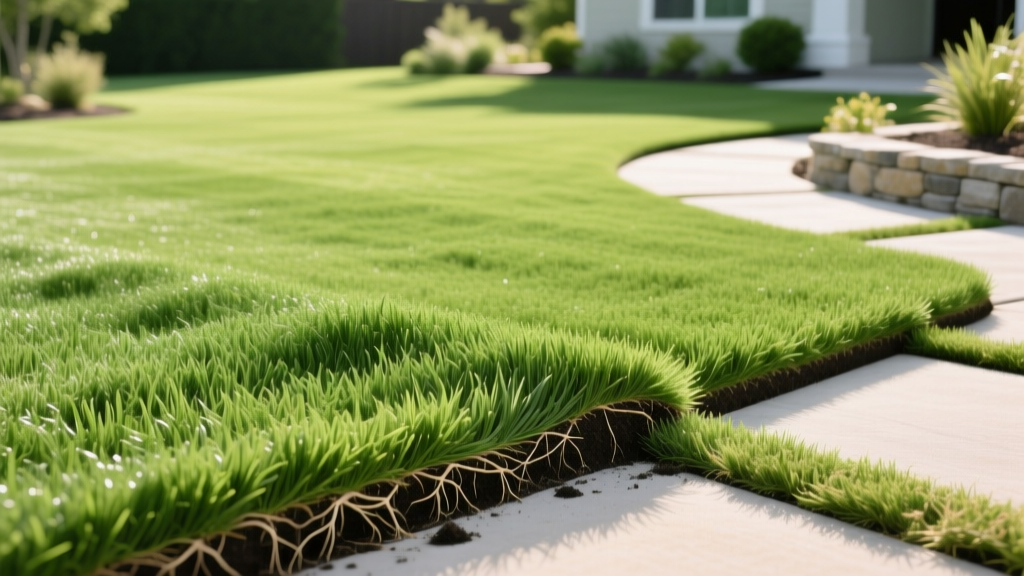
Palisades Zoysia Sod: The Ultimate Establishment & Planting Guide
The "Seed" Myth: Why Palisades Requires Sod
Palisades Zoysia (Zoysia japonica) is a premium, medium-to-coarse textured turfgrass renowned for its exceptional shade tolerance, requiring only three to four hours of direct sunlight daily. Developed by Texas A&M AgriLife Research, it has become a top choice for homeowners dealing with challenging canopy cover. However, a critical misunderstanding plagues many DIYers attempting to establish this cultivar: the search for seed.
⚠️ Critical Establishment Warning: Palisades Zoysia is a proprietary, vegetatively propagated cultivar. Commercial seed for true Palisades does not exist. Any online retailer claiming to sell "Palisades Zoysia seed" is mislabeling generic Zoysia japonica seed, which will not yield the specific shade tolerance, dense growth habit, or disease resistance of the patented Palisades strain. You must establish this grass via sod, plugs, or sprigs. For immediate erosion control and a mature lawn aesthetic, sod is the only recommended establishment method.
According to the Texas A&M AgriLife Extension Turfgrass Guide, vegetative propagation ensures genetic purity, meaning the sod you lay will perform exactly as the cultivar was bred to perform. This guide details the exact protocols for soil preparation, installation, and the critical 30-day rooting phase to ensure your Palisades Zoysia sod establishes deep, drought-resistant roots.
Phase 1: Precision Soil Preparation
The most common cause of Palisades Zoysia sod failure is poor soil-to-root contact. Zoysia grasses are notorious for slow initial rooting; if the soil bed is compacted or improperly graded, the sod will dry out and die before the stolons can penetrate the earth.
Soil Testing and Amendment
Before tilling, conduct a soil test. Palisades thrives in a pH range of 6.0 to 6.5. If your soil is highly acidic (below 5.5), incorporate pelletized lime at the rate recommended by your local extension office—typically 50 lbs per 1,000 square feet for every 0.5 pH point increase. If the soil is alkaline (above 7.0), apply elemental sulfur.
Tilling and Grading
- Tilling Depth: Rototill the top 4 to 6 inches of soil. This breaks up compaction layers and allows the Zoysia roots to penetrate deeply, which is vital for the cultivar's celebrated drought tolerance.
- Organic Matter: Incorporate 1 to 2 inches of screened compost into the tilled soil to improve moisture retention and microbial activity.
- Grading: Rake the area to create a smooth, firm surface. Ensure a 1% to 2% slope away from your home’s foundation to prevent water pooling, which can lead to root rot and fungal pathogens like Pythium blight.
- Starter Fertilizer: Apply a high-phosphorus starter fertilizer (such as a 10-18-10 NPK ratio) at a rate of 1 lb of actual nitrogen per 1,000 square feet. Phosphorus is critical for stimulating rapid root development in newly laid sod.
Phase 2: The Installation Protocol
Timing is everything. The optimal window for laying Palisades Zoysia sod is late spring to early summer, when soil temperatures consistently exceed 65°F and the grass is entering its peak vegetative growth phase. Avoid laying sod in late fall, as the grass will enter winter dormancy before establishing a sufficient root hold, making it vulnerable to winter kill and frost heave.
- Lay the Perimeter First: Start along the longest straight edge (like a driveway or sidewalk) to ensure clean, straight lines. Do not start in the middle of the lawn.
- Stagger the Joints: Lay the sod pieces in a brickwork pattern. Staggering the seams prevents water from channeling down continuous lines and washing away the topsoil beneath the sod.
- Butt Seams Tightly: Push the edges of the sod rolls tightly together without overlapping. Palisades Zoysia has a tendency to shrink slightly as it acclimates; overlapping will create ridges, while leaving gaps will result in dry, brown seams.
- Cut with Precision: Use a heavy-duty serrated landscaping knife or a sharp spade to cut pieces around sprinkler heads, trees, and curved beds. Avoid using small, fragmented pieces of sod at the edges, as they dry out rapidly. Cut full pieces to fit instead.
- Roll the Lawn: Once installed, go over the entire area with a water-filled lawn roller weighing approximately 200 to 300 lbs. This step is non-negotiable. Rolling eliminates air pockets between the sod roots and the soil, ensuring immediate capillary action for water and nutrient uptake.
Phase 3: The 30-Day Rooting & Watering Matrix
Watering is the single most critical variable in the first month. The goal is to keep the root zone consistently moist without waterlogging the soil, which deprives roots of oxygen and invites fungal diseases. The NC State University TurfFiles Zoysiagrass Profile emphasizes that Zoysia requires careful moisture management during establishment to prevent both desiccation and rot.
| Timeline | Watering Frequency | Volume per Session | Total Weekly Volume |
|---|---|---|---|
| Week 1 | 2 to 3 times daily | 0.25 inches (15 mins) | 3.5 - 5.25 inches |
| Week 2 | 1 time daily | 0.5 inches (30 mins) | 3.5 inches |
| Week 3 | Every other day | 0.5 inches (30 mins) | 1.75 - 2.0 inches |
| Week 4 | Twice per week | 0.5 to 0.75 inches | 1.0 - 1.5 inches |
Pro Tip: To measure volume, place three empty tuna cans in different zones of your lawn and time how long your sprinklers take to fill them to the desired depth.
Troubleshooting Establishment Failures
Even with meticulous preparation, environmental variables can cause issues. Here is how to diagnose and fix common Palisades Zoysia establishment failures:
- Sod Shrinkage (Visible Seams): If gaps appear between the sod rolls during Week 2 or 3, the grass is dehydrating. Increase watering frequency immediately and topdress the gaps with washed masonry sand to protect the exposed root edges from drying out.
- Brown, Crunchy Edges: This indicates the edges of the sod rolls were not butted tightly enough during installation, or the edges are elevated and not making soil contact. Press them down firmly and apply a light layer of topsoil over the seams.
- Sod Pulls Up Easily After 3 Weeks: Poor soil-to-root contact or compacted soil beneath the sod. If the soil underneath is bone dry, your watering isn't penetrating deep enough. Increase the duration of your watering sessions while decreasing the frequency to force water deeper into the soil profile.
- Yellowing or Fungal Patches: Palisades is susceptible to Brown Patch (Rhizoctonia solani) if kept constantly wet in high humidity. If you see circular brown lesions with dark margins, reduce watering to early morning only and apply a systemic fungicide containing azoxystrobin or propiconazole according to label rates.
2026 Cost Breakdown & Sourcing
When budgeting for a Palisades Zoysia installation, factor in both the material and the intensive labor required for soil prep. As of 2026, pricing generally falls within the following ranges:
- Sod Pallet Cost: $280 to $380 per pallet. A standard pallet covers approximately 450 to 500 square feet.
- Delivery Fees: $75 to $150 per load, depending on proximity to the sod farm. Palisades is primarily grown in the Southern U.S. (Texas, Florida, Georgia), so transport costs escalate significantly in transition zones.
- Professional Installation: If hiring a landscaping crew, expect to pay $0.90 to $1.50 per square foot for a complete turnkey job (including soil tilling, grading, starter fertilizer, and laying).
- Total DIY Cost: For a 5,000 sq ft lawn, expect to spend roughly $3,200 to $3,800 on sod, delivery, compost, starter fertilizer, and equipment rentals (tiller and lawn roller).
Always source Palisades from a certified sod farm to guarantee genetic purity. Ask the supplier for a certificate of variety verification before the pallets are unloaded on your driveway.
Frequently Asked Questions
How long does it take for Palisades Zoysia to fully establish?
Under optimal summer conditions with strict adherence to the watering matrix, Palisades Zoysia will root firmly into the soil within 21 to 30 days. However, full lateral establishment—where the stolons completely knit together to form an impenetrable, weed-resistant mat—takes one to two full growing seasons.
Can I lay Palisades Zoysia sod over an existing lawn?
No. Laying sod directly over existing grass or weeds will result in total failure. The decaying grass beneath will create an air gap, preventing the new Zoysia roots from reaching the soil, while the heat generated by decomposition can burn the new sod's root system. You must completely kill and remove the existing vegetation and till the soil before installation.
When should I mow my newly installed Palisades Zoysia?
Wait until the sod is firmly rooted and cannot be easily pulled up by hand—typically around Week 3 or 4. Set your mower deck to 2.5 inches for the first cut. Never remove more than one-third of the leaf blade at a single time, and ensure your mower blades are freshly sharpened to prevent tearing the coarse Zoysia leaf tissue, which invites disease.

