
Grass Types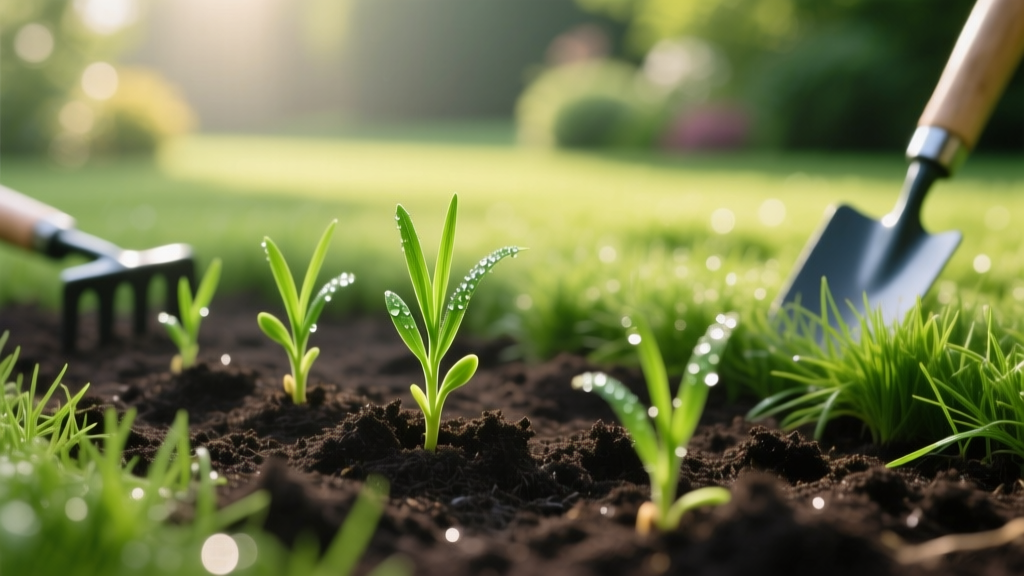
How to Plant Perennial Ryegrass Seed for Rapid Establishment
The Speed Demon of Cool-Season Turf: Understanding Perennial Ryegrass
Perennial ryegrass (Lolium perenne) is the undisputed champion of rapid establishment among cool-season turfgrasses. Capable of germinating in as little as 3 to 5 days under optimal soil temperatures (50°F to 65°F), it is the go-to species for high-traffic athletic fields, quick erosion control, and winter overseeding in the transition zone. However, its aggressive establishment phase requires precise soil engineering and moisture management. If you mismanage the first 21 days, you risk severe damping-off diseases or shallow root systems that fail during summer heat stress.
Cultivar Selection Matrix: Turf-Type vs. Forage-Type
Buying generic perennial ryegrass seed from a big-box store often results in forage-type varieties that grow vertically, require frequent mowing, and lack disease resistance. For a residential lawn, you must select turf-type or dwarf turf-type cultivars. Furthermore, seek out endophyte-enhanced seed. These cultivars contain the Epichloë festucae var. lolii fungus, which lives symbiotically within the plant tissue and produces alkaloids that deter surface-feeding insects like chinch bugs, sod webworms, and billbugs.
| Cultivar Profile | Growth Habit | Endophyte Status | Best Use Case | 2026 Avg. Seed Cost |
|---|---|---|---|---|
| Forage-Type (e.g., 'Gulf') | Upright, rapid vertical | None | Agricultural pasterosion control | $3.00 - $4.50 / lb |
| Standard Turf-Type (e.g., 'Palmer IV') | Dense, moderate lateral | Enhanced | New residential lawns, overseeding | $7.00 - $9.00 / lb |
| Dwarf Turf-Type (e.g., 'Caddyshack') | Low-growing, high tiller | Enhanced | Premium lawns, golf course roughs | $10.00 - $14.00 / lb |
Source: National Turfgrass Evaluation Program (NTEP) perennial ryegrass trials and current 2026 turf seed market pricing.
Soil Preparation & Seedbed Engineering
Perennial ryegrass seed is small and requires intimate seed-to-soil contact to pull moisture from the earth. Broadcasting seed over existing thatch or compacted dirt guarantees a 70% failure rate.
Step 1: Core Aeration and Grading
For overseeding, run a core aerator over the lawn making two passes in perpendicular directions to pull 2-to-3-inch plugs every 3 inches apart. For new lawns, grade the soil to a 1% to 2% slope away from foundations to prevent water pooling, which triggers Pythium blight.
Step 2: pH Adjustment and Starter Fertilizer
Test your soil. Perennial ryegrass demands a pH between 6.0 and 7.0 for optimal nutrient uptake. If pH is below 6.0, apply pelletized calcitic limestone at 50 lbs per 1,000 sq ft. Apply a high-phosphorus starter fertilizer (such as a 10-18-10 NPK ratio) at a rate that delivers exactly 1.0 lb of Nitrogen per 1,000 sq ft. Phosphorus is critical for the explosive root development required in the first 14 days.
⚠️ Warning: Pre-Emergent Herbicide Conflict
Do NOT apply standard pre-emergent crabgrass preventers (like Prodiamine or Dithiopyr) within 60 days of seeding perennial ryegrass. If you need weed control at the time of seeding, use a starter fertilizer containing mesotrione (the active ingredient in Tenacity), which is safe for ryegrass germination and will bleach out competing broadleaf weeds.
Calibrating Seeding Rates & Application
Over-seeding creates competition for light and water, leading to weak, spindly seedlings that die off during the first heat wave. Calibrate your broadcast spreader to hit these exact targets:
- New Lawn Establishment: 8 to 10 lbs per 1,000 sq ft.
- Overseeding Existing Turf: 4 to 5 lbs per 1,000 sq ft.
- Erosion Control / Winter Color: 6 to 8 lbs per 1,000 sq ft.
Pro-Tip: Split your seed in half. Apply the first half walking North-to-South, and the second half walking East-to-West. This cross-hatching eliminates striping and ensures uniform distribution.
The 14-Day Germination & Establishment Timeline
Water management is the single biggest point of failure. Ryegrass seed will die if it dries out after imbibition (the initial water uptake), but it will rot if left in standing water.
- Days 1–5 (Imbibition & Radicle Emergence): Water 3 to 4 times a day for 5 to 10 minutes per cycle. The goal is to keep the top 1/2 inch of soil consistently moist, not muddy. If you see puddling, reduce watering time immediately.
- Days 6–10 (Shoot Emergence): As bright green needles break the surface, reduce frequency to 2 times a day, but increase duration to 15 minutes to encourage roots to chase the moisture deeper.
- Days 11–14 (Tillering Begins): Drop to 1 watering session per day (early morning only) for 20–30 minutes. This delivers roughly 1/2 inch of water and forces the root zone to expand into the top 2 inches of soil.
- Days 15–28 (Deep Root Establishment): Transition to standard deep-and-infrequent watering: 1 inch of water per week, split across 2 or 3 morning irrigation cycles.
First Mow & Post-Emergent Restrictions
Do not mow until the ryegrass reaches 3.5 inches in height. Set your mower deck to 2.5 inches and ensure the blade is freshly sharpened. A dull blade will shred the tender ryegrass shoots, opening the tissue to Dollar Spot and Leaf Spot pathogens. Never remove more than 1/3 of the leaf blade in a single pass. Leave the clippings on the lawn to return nitrogen to the soil, provided they are not clumping and smothering the new seedlings.
The 60-Day Herbicide Rule
Wait until the new perennial ryegrass has been mowed at least three times before applying any post-emergent broadleaf herbicides (like 2,4-D or Triclopyr). Applying these chemicals to immature turf will severely stunt root development and cause permanent chlorosis.
Troubleshooting Establishment Failures
Even with perfect preparation, environmental factors can disrupt establishment. Here is how to diagnose and fix the three most common ryegrass seeding failures.
1. Pythium Blight (Cottony Blight)
Symptoms: Greasy, dark green or brown patches that appear overnight during hot, humid weather (above 80°F with high night temperatures). White, cottony mycelium is visible in the morning dew.
The Fix: Pythium thrives in excessive moisture. Immediately halt evening watering. Apply a preventative fungicide containing azoxystrobin or pyraclostrobin if weather forecasts predict prolonged humidity during the germination window.
2. Seed Washout
Symptoms: Bare streaks down slopes or accumulation of seed in low-lying areas after a heavy rainstorm.
The Fix: For slopes greater than a 15% grade, seed must be covered with a biodegradable excelsior erosion control blanket or a hydroseed tackifier. If washout occurs, rake the bare streaks lightly, re-apply seed at 5 lbs per 1,000 sq ft, and cover with a thin layer of weed-free straw.
3. Damping-Off
Symptoms: Seedlings emerge but suddenly collapse, turn yellow, and thin out at the soil line.
The Fix: Caused by overwatering and poor soil drainage. Reduce irrigation frequency and apply a systemic fungicide labeled for seedling diseases. Ensure your soil is not heavily compacted clay; amending with 1/4 inch of compost topdressing at the time of seeding improves drainage significantly.
For comprehensive regional planting dates and localized cultivar performance data, consult the NC State University TurfFiles database or your local university extension office, such as the UMass Extension Turf Program.

