
Grass Types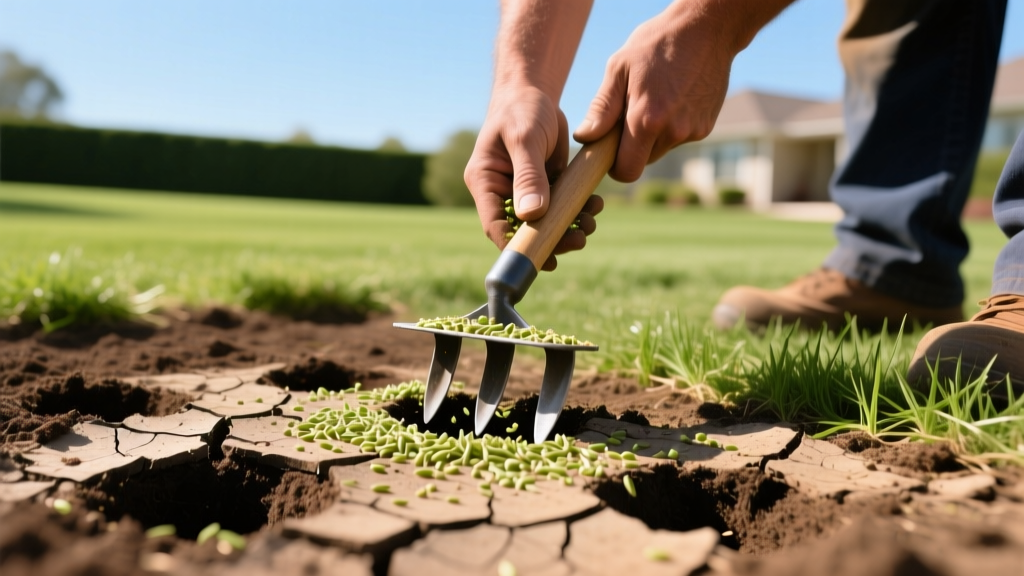
How to Plant Grass Seed on Hard Dirt: Core Aeration & Prep
Planting grass seed directly onto hard, compacted dirt is one of the most common reasons for turf establishment failure. When soil bulk density exceeds 1.6 g/cm³, pore space collapses. Water pools on the surface, oxygen is deprived, and grass roots physically cannot penetrate the crust. According to the USDA Natural Resources Conservation Service, severe compaction reduces water infiltration rates by up to 90%, meaning your expensive seed will either wash away in the first rain or desiccate in the sun.
To successfully establish turf on hard dirt, you must alter the soil's physical structure before the seed touches the ground. This guide details the exact mechanical and biological interventions required to transform compacted clay into a viable seedbed, including specific equipment, cultivar selections, and irrigation protocols for unforgiving soils.
Diagnosing Soil Compaction: The Screwdriver Test
Before renting equipment, verify your soil's compaction level. While professional turf managers use a penetrometer to measure soil resistance in PSI, homeowners can use the 6-inch screwdriver test.
- Low Resistance: Screwdriver slides in easily to the handle. (Standard prep applies).
- Moderate Resistance: Screwdriver stops at 3-4 inches. (Requires single-pass aeration).
- High Resistance (Hard Dirt): Screwdriver bends or stops at 1-2 inches. (Requires aggressive multi-pass core aeration and topdressing).
Essential Equipment and 2026 Material Costs
Attempting to plant on hard dirt without mechanical intervention relies on topsoil bagging, which is cost-prohibitive for anything over 500 square feet. Below is the realistic cost breakdown for soil remediation and seeding based on current 2026 pricing.
| Item / Service | Estimated Cost | Purpose & Specification |
|---|---|---|
| Walk-Behind Core Aerator Rental (e.g., Classen CA-18) | $85 - $120 / day | Pulls 3-inch deep soil plugs to fracture hardpan. |
| Screened Organic Compost (Bulk) | $35 - $55 / cubic yard | Topdressing to introduce organic matter and buffer seed. |
| Liquid Soil Aerator (e.g., Nature's Lawn & Garden SLS) | $25 - $35 / bottle | Ammonium Laureth Sulfate to reduce soil surface tension. |
| Push Lawn Roller (Water-filled) | $70 - $110 (Purchase) | Ensures critical seed-to-soil contact on uneven clay. |
| RTF Grass Seed (e.g., 'Titan Ultra' or 'Houndog 8') | $8 - $12 / lb | Deep-rooting cultivars capable of penetrating dense subsoils. |
Step-by-Step: How to Plant Grass Seed on Hard Dirt
Follow this sequential framework to break the hardpan and create a micro-environment where seed can germinate and anchor.
Step 1: Scalp the Existing Vegetation
Mow the area down to 1.5 inches. If the hard dirt is entirely bare, skip this step. The goal is to minimize competition and allow the aeration tines to reach the soil surface without getting tangled in thatch or long weeds. Bag all clippings.
Step 2: Aggressive Core Aeration
Do not use spike aerators; they simply punch holes and further compress the surrounding clay walls. You must use a core aerator that physically removes soil plugs.
Run the machine over the hard dirt in a grid pattern. Make one pass horizontally, and a second pass diagonally. For severely compacted clay, a third pass is necessary. You want to pull 20 to 40 plugs per square foot. Leave the plugs on the lawn—they will break down and help topdress the holes.
Step 3: Apply Liquid Aeration Surfactants
Immediately after core aeration, apply a liquid soil aerator containing Ammonium Laureth Sulfate (ALS). ALS is a powerful surfactant that breaks the chemical bonds of sodium in clay soils, allowing water to penetrate deeper into the freshly opened aeration holes. Mix at a rate of 2 oz per 1,000 sq ft and water it in lightly.
Step 4: Compost Topdressing (The Seedbed Buffer)
Hard dirt forms a hydrophobic crust when it dries, which will kill germinating seedlings. To prevent this, spread a 1/4-inch layer of finely screened compost over the entire area.
Use a leveling rake or a push broom to work the compost into the aeration holes and across the surface. This compost layer acts as a moisture-retaining buffer, keeping the seed hydrated while the radicle (first root) searches for the mineral soil below.
⚠️ CRITICAL WARNING: Pre-Emergent Herbicides
If you have applied a pre-emergent crabgrass preventer (like Prodiamine or Dithiopyr) within the last 4 months, do not plant grass seed. Pre-emergents create a chemical barrier in the top inch of soil that stops cell division in all seeds, including your turfgrass. You must wait out the residual window or purchase seed treated with mesotrione (e.g., Scott's Turf Builder Starter with Mesotrione) which safely bypasses this barrier.
Step 5: Seed Selection and Application
Not all grass survives hard dirt. Shallow-rooted species like Kentucky Bluegrass will suffer severe drought stress once the topsoil dries. You need cultivars bred for aggressive downward root growth.
- Cool-Season Lawns: Use Rhizomatous Tall Fescue (RTF). Cultivars like Titan Ultra or K-31 develop deep, massive root systems that can fracture compacted subsoils. Apply at 5 to 6 lbs per 1,000 sq ft.
- Warm-Season Lawns: Use seeded Bermudagrass varieties like Yukon or Riviera. Apply at 2 to 3 lbs per 1,000 sq ft. (Note: Sodding 'TifTuf' Bermuda is often more successful than seeding on extreme clay).
Step 6: Roll and Water
After broadcasting the seed, use a water-filled lawn roller to press the seed firmly into the compost topdressing. Seed-to-soil contact is non-negotiable for germination.
Post-Planting Irrigation: Beating the Clay Crust
The most frequent point of failure when planting on hard dirt is the irrigation schedule. Clay holds water tightly, but its surface dries and cracks rapidly. If you water deeply and infrequently, the surface crust will form, snapping the delicate new roots of the germinating seed.
'The goal of the first 14 days is not to water the soil; it is to water the seed. You must keep the top 1/4 inch of the compost layer consistently damp without creating runoff on the impermeable clay below.' - Turfgrass Management Principles, University of Minnesota Extension
The 14-Day Hard Dirt Watering Protocol:
- Weeks 1-2 (Germination): Water 3 to 4 times per day for just 3 to 5 minutes per zone. Set your smart controller to run multiple short cycles. The surface must never dry out, but water must never pool.
- Weeks 3-4 (Establishment): Reduce frequency to once daily for 10-15 minutes. This encourages the new roots to follow the retreating moisture down into the aeration holes.
- Week 5+ (Deep Rooting): Transition to standard deep-and-infrequent watering (1 inch per week, split into two sessions).
Troubleshooting Matrix: Common Hard Dirt Failure Modes
If your grass seed is failing to thrive on compacted soil, use this diagnostic matrix to identify and correct the issue immediately.
| Visual Symptom | Underlying Cause | Corrective Action |
|---|---|---|
| Seed pools in puddles or washes into low spots. | Hydrophobic soil crust preventing immediate infiltration. | Apply a 1/4 inch compost topdressing to absorb surface water and hold seed in place. |
| Seed sprouts but dies within 48 hours. | Desiccation; the shallow roots hit dry, hard clay and cannot penetrate. | Increase watering frequency to 4x daily; ensure compost buffer was applied. |
| Patchy, highly uneven germination. | Poor seed-to-soil contact on uneven, hardened terrain. | Run a lightweight lawn roller over the dry areas to press exposed seed into the soil. |
| Yellowing seedlings with stunted growth. | Alkaline clay soil locking up iron and nitrogen (high pH). | Apply chelated iron and a starter fertilizer high in phosphorus to boost root development. |
Long-Term Soil Remediation
Planting grass seed on hard dirt is a triage measure; true soil transformation takes time. As your deep-rooted RTF or Bermudagrass matures, its roots will act as biological drills, slowly fracturing the hardpan from the inside out. Combine this with annual fall topdressing of 1/2 inch of compost, and within three to four seasons, your soil bulk density will drop below the 1.4 g/cm³ threshold required for a resilient, self-sustaining lawn. For more on ongoing turf management, consult the University of Minnesota Extension planting guidelines to ensure your seasonal timing aligns with your specific hardiness zone.

