
Grass Types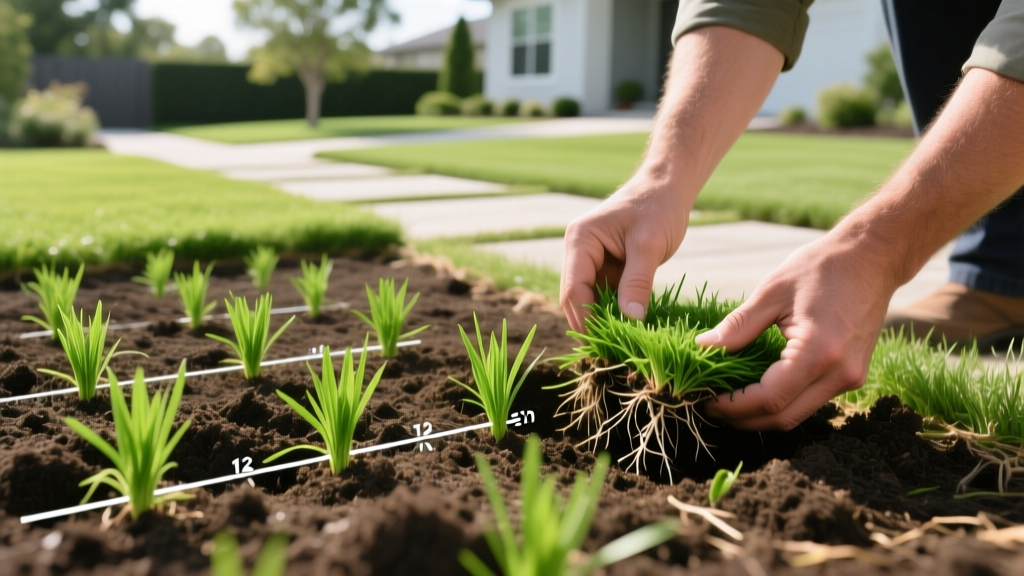
How to Plant St. Augustine Plugs: Spacing, Soil & Rooting Guide
The Economics and Agronomy of St. Augustine Plugs
Establishing a Stenotaphrum secundatum (St. Augustinegrass) lawn from plugs is a strategic compromise between the immediate gratification of solid sod and the unreliability of seed. Because St. Augustine produces very little viable seed, commercial cultivars like Palmetto, CitraBlue, and Floratam must be propagated vegetatively. While sod installation costs between $0.45 and $0.75 per square foot (totaling $450–$750 per 1,000 sq ft), learning how to plant St. Augustine plugs correctly can reduce your material costs to roughly $150–$250 for the same area, provided you are willing to invest the labor and wait 3 to 6 months for full canopy closure.
However, plug failure rates can exceed 40% when homeowners ignore soil pH calibration, improper planting depth, and post-planting herbicide restrictions. According to turfgrass researchers at Texas A&M AgriLife Extension, St. Augustine requires specific soil conditions and aggressive initial watering to push stolons across bare soil before weed competition takes over.
Key Agronomic Profile:
• Optimal Soil pH: 6.0 to 7.5
• Hardiness Zones: 8–10 (USDA)
• Shade Tolerance: Moderate to High (CitraBlue outperforms Floratam in shade)
• Rooting Depth: Plugs must be planted 2.5 to 3 inches deep to reach subsoil moisture.
• Optimal Soil pH: 6.0 to 7.5
• Hardiness Zones: 8–10 (USDA)
• Shade Tolerance: Moderate to High (CitraBlue outperforms Floratam in shade)
• Rooting Depth: Plugs must be planted 2.5 to 3 inches deep to reach subsoil moisture.
Spacing Matrix: Calculating Plug Density and Fill Time
The distance between your plugs dictates your total material cost, the volume of bare soil exposed to weeds, and the timeline for a fully knit lawn. St. Augustine spreads via above-ground stolons, which can grow up to 3 inches per week during peak summer temperatures (80°F–95°F). Use the matrix below to plan your purchase based on your budget and patience.
| Spacing Grid | Plugs per 1,000 Sq Ft | Estimated Material Cost* | Time to Full Coverage |
|---|---|---|---|
| 6 inches (High Density) | ~400 | $200 – $280 | 2 to 3 months |
| 12 inches (Standard) | ~100 | $50 – $80 | 4 to 5 months |
| 18 inches (Budget) | ~45 | $22 – $35 | 6 to 8 months |
*Cost estimates based on 2026 retail pricing of $0.50 to $0.80 per plug for standard cultivars, excluding shipping and soil amendments.
Phase 1: Soil Preparation and pH Calibration
St. Augustinegrass is highly susceptible to iron chlorosis in alkaline soils (pH above 7.5). Before purchasing plugs, pull a 6-inch core soil sample and send it to your local university extension lab. If your soil pH exceeds 7.5, you must incorporate elemental sulfur at a rate of 1 to 2 pounds per 1,000 square feet to lower the pH. Conversely, if the pH is below 5.5, apply dolomitic limestone.
Till the planting area to a depth of 4 to 6 inches. Remove all existing weeds, rocks, and debris. If your native soil is heavy clay, which impedes the stolon rooting of St. Augustine, incorporate 2 cubic yards of organic compost per 1,000 square feet to improve drainage and cation exchange capacity (CEC). Rake the area completely level; any low spots will result in water pooling and subsequent plug rot.
Phase 2: The 4-Step Planting Protocol
Timing is critical. Plant St. Augustine plugs in late spring or early summer when soil temperatures consistently exceed 65°F at a 2-inch depth. Planting in early fall risks frost damage before the root system is established.
- Dig the Holes: Use a manual bulb planter or a gas-powered auger with a 3-inch bit. The hole must be exactly 3 inches deep and slightly wider than the plug's root ball. Never use a dibble bar, as it compacts the sides of the hole and restricts lateral root growth.
- Apply Starter Fertilizer: Drop 1 teaspoon of a high-phosphorus starter fertilizer (such as a 10-18-10 NPK ratio) into the bottom of each hole. Phosphorus is relatively immobile in soil; placing it directly in the root zone accelerates initial root hair development.
- Seat the Plug: Remove the plug from its tray. Place it into the hole so that the soil line of the plug is exactly flush with the surrounding native soil. If planted too deep, the stolons will rot. If planted too high (proud), the exposed roots will desiccate within hours in the summer sun.
- Backfill and Tamp: Push the loose soil back around the sides of the plug. Step firmly on the soil immediately surrounding the plug to eliminate air pockets and ensure direct soil-to-root contact. Water each plug immediately with a hose nozzle set to a gentle shower.
Critical Herbicide Warning: Do not apply pre-emergent herbicides containing pendimethalin or dithiopyr for at least 60 days after planting. These active ingredients inhibit root tip cell division and will completely halt the rooting process of your new plugs. For weed control during establishment, use post-emergent spot treatments containing Atrazine, which is safe for St. Augustinegrass once the plugs have anchored.
Phase 3: The 30-Day Watering and Rooting Schedule
The most common failure mode when planting St. Augustine plugs is underwatering during the first two weeks. The plugs have a severely restricted root mass and cannot draw moisture from the surrounding dry soil.
Weeks 1 and 2: The Establishment Phase
Water the plugs twice daily (morning and early afternoon) for 10 to 15 minutes per zone. The goal is to keep the top 2 inches of soil consistently moist but not saturated. If the plugs wilt and turn a blue-gray color in the afternoon, they are experiencing moisture stress. According to the University of Georgia Turfgrass Program, maintaining high surface moisture encourages the stolons to push horizontally across the bare dirt.
Weeks 3 and 4: The Tapering Phase
Once you can gently tug on the plug and feel resistance (indicating the roots have anchored into the native soil), reduce watering to once daily, but increase the duration to deliver 0.5 inches of water per session. This encourages roots to grow deeper into the soil profile rather than staying near the surface.
Troubleshooting Common Plug Failures
If your plugs are struggling to establish, diagnose the issue using these specific symptoms:
- Symptom: Plugs turn bright yellow and pull out of the ground with zero resistance after 3 weeks.
Cause: Root rot from overwatering in heavy clay, or planting the crown too deep.
Fix: Reduce watering frequency immediately. Ensure soil drainage is adequate. - Symptom: Plugs remain green but do not spread stolons across the bare soil.
Cause: Nitrogen deficiency or soil pH above 7.5 locking up iron and manganese.
Fix: Apply a liquid chelated iron spray and a balanced 16-4-8 granular fertilizer at 1 lb of nitrogen per 1,000 sq ft. - Symptom: The center of the plug dies out while the edges remain green.
Cause: Take-all root rot (Gaeumannomyces graminis var. graminis), a soil-borne fungus.
Fix: Apply a preventative fungicide containing azoxystrobin (e.g., Heritage SC) at the curative label rate. Avoid applying high-nitrogen synthetic fertilizers, which exacerbate the fungus.
Successfully establishing a St. Augustine lawn from plugs requires precision in spacing, strict adherence to planting depth, and a disciplined watering schedule. By calibrating your soil pH beforehand and avoiding root-inhibiting herbicides during the critical first 60 days, your plugs will knit together into a dense, traffic-tolerant turf that outcompetes summer weeds.

