
Grass Types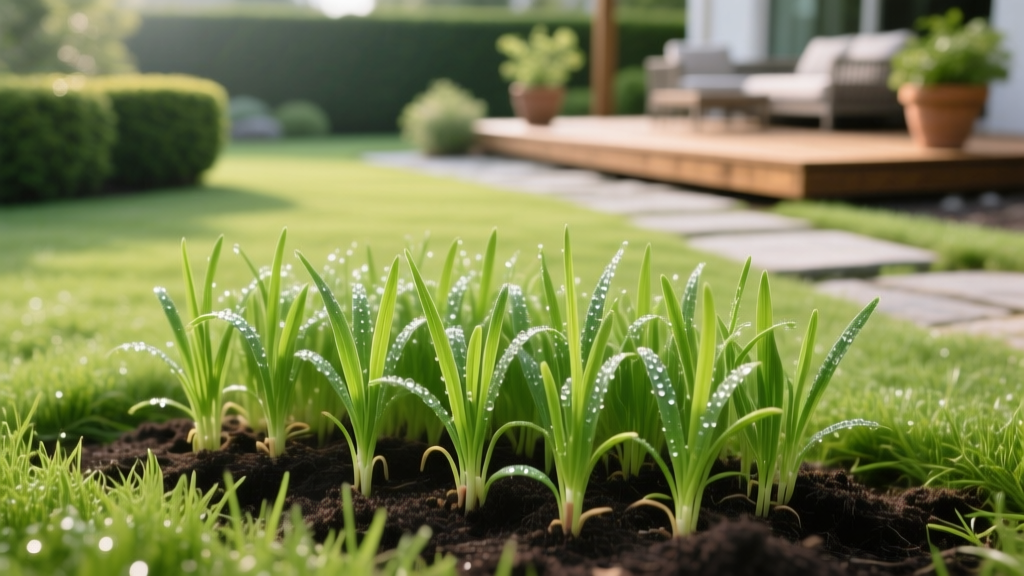
Planting Annual Ryegrass Seed: Timing, Rates, and Winter Care
The Strategic Role of Annual Ryegrass in Turf Management
Annual ryegrass (Lolium multiflorum) is a cool-season bunchgrass engineered by nature for rapid germination and aggressive establishment. Unlike its perennial cousin, annual ryegrass completes its lifecycle in one year, making it the premier choice for winter overseeding on warm-season lawns (Bermudagrass, Zoysiagrass) and short-term erosion control. When planting annual ryegrass seed, the objective is never long-term permanence; the goal is to provide a dense, dark green canopy during the winter months when warm-season turf goes dormant, without competing with the base grass during spring green-up.
⚠️ Critical Distinction: Annual vs. Perennial Ryegrass
Do not confuse annual ryegrass with perennial ryegrass (Lolium perenne). Perennial ryegrass survives summer heat in many climates and will aggressively choke out your dormant Bermudagrass or Zoysiagrass in the spring. Annual ryegrass naturally thins and dies as soil temperatures exceed 75°F in late spring, allowing a seamless transition back to your warm-season base turf.
Germination Science and Soil Temperature Thresholds
Successful establishment hinges entirely on soil temperature. Annual ryegrass seed requires a 2-inch soil temperature between 60°F and 68°F for optimal germination. Planting too early (when soil is above 72°F) invites severe competition from the still-active warm-season base grass and increases the risk of Pythium blight. Planting too late (when soil drops below 55°F) delays germination, leaving seedlings vulnerable to early frost heave.
Under ideal moisture and temperature conditions, annual ryegrass germinates in 5 to 7 days. This is significantly faster than Kentucky bluegrass (14-21 days) or tall fescue (10-14 days), which is why it is the undisputed champion for quick winter cover. According to NC State University TurfFiles, the rapid seedling vigor of annual ryegrass allows it to establish a functional root system within 14 days of emergence, provided the seed-to-soil contact is uncompromised.
Site Preparation: Scalping and Canopy Management
You cannot simply broadcast seed over an existing lawn and expect high germination rates. The warm-season canopy must be managed to allow sunlight to reach the soil surface.
- Scalping: Lower your mower deck to 0.5 to 0.75 inches. Mow the dormant or semi-dormant warm-season grass tightly.
- Debris Removal: Bag all clippings. Leaving a mat of dead grass on the soil will block sunlight and trap moisture, creating a breeding ground for fungal pathogens.
- Aeration (Optional but Recommended): Core aeration is generally avoided right before overseeding to prevent damaging the warm-season root system during its winter dormancy prep. Instead, rely on heavy scalping and a light dethatching (power raking) if thatch exceeds 0.5 inches.
Seeding Rates and Application Matrix
Seeding rates vary drastically based on your primary objective. Over-seeding requires lighter rates to prevent spring competition, while erosion control demands maximum density. Note that if you purchase coated seed (seed treated with a clay or polymer moisture-retention coating), you must increase your application rate by 20% to 25% by weight to account for the non-seed filler material.
| Application Scenario | Uncoated Seed Rate (lbs/1,000 sq ft) | Coated Seed Rate (lbs/1,000 sq ft) | Expected Coverage Timeline |
|---|---|---|---|
| Overseeding Bermudagrass (Residential) | 5.0 - 8.0 | 6.5 - 10.0 | 21 - 28 Days |
| Overseeding Zoysiagrass | 4.0 - 6.0 | 5.0 - 7.5 | 21 - 28 Days |
| Slope Erosion Control | 15.0 - 20.0 | 18.0 - 25.0 | 10 - 14 Days |
| Agricultural Cover Crop | 20.0 - 30.0 | 25.0 - 35.0 | 10 - 14 Days |
Step-by-Step Establishment Protocol
Follow this precise 21-day protocol to ensure maximum seedling survival. Failure at any watering stage will result in patchy establishment.
Phase 1: Sowing and Initial Hydration (Days 1-3)
- Calibrate the Spreader: Set your rotary spreader to the specific setting listed on the seed bag. Split your total seed volume in half. Apply the first half walking North-South, and the second half walking East-West to ensure uniform distribution.
- Starter Fertilizer: Immediately after sowing, apply a starter fertilizer high in phosphorus (e.g., 18-24-6 or 19-26-6) at a rate of 0.5 lbs of actual Nitrogen per 1,000 sq ft to fuel rapid root development.
- Watering: Irrigate immediately. Apply 0.1 to 0.15 inches of water. The goal is to moisten the top 1 inch of soil without creating runoff that washes the seed away.
Phase 2: Germination Maintenance (Days 4-10)
During germination, the seed must never dry out, but it must also never sit in standing water. Switch to a light, frequent watering schedule. Run your irrigation 3 to 4 times a day for 3 to 5 minutes per zone. If you see seedlings emerging with a white, fuzzy root (the radicle), you are on track.
Phase 3: Root Deepening (Days 11-21)
Once the grass reaches 1 inch in height, reduce watering frequency to once daily, but increase the duration to 15-20 minutes. This forces the roots to chase the moisture deeper into the soil profile, building drought tolerance for the winter months.
Winter Maintenance and Disease Management
Annual ryegrass requires active management through the winter. Maintain a mowing height of 1.5 to 2.0 inches. Mow frequently, never removing more than one-third of the blade height in a single pass. Because ryegrass grows vertically, infrequent mowing will result in scalping and a weak, thin canopy.
💡 Expert Tip: Managing Winter Nitrogen
Apply 0.5 to 0.75 lbs of Nitrogen per 1,000 sq ft every 4 to 6 weeks during the winter using a fast-release source like Urea (46-0-0). Avoid slow-release nitrogen in winter; soil microbes are too cold to break down coated urea or methylene urea, meaning the grass will starve while the fertilizer sits inert on the soil surface.
The most common threat to winter ryegrass is Pythium Blight, which thrives in cool, wet, and humid conditions. If you notice greasy, dark, water-soaked lesions on the grass blades that quickly turn brown and mat together, apply a preventative fungicide containing Azoxystrobin or Propiconazole immediately. According to Texas A&M Agrilife Extension, proper morning watering schedules (watering between 4 AM and 8 AM) significantly reduce the leaf wetness duration that triggers Pythium outbreaks.
The Spring Transition: Eradicating the Cover Crop
The most critical phase of planting annual ryegrass seed is knowing how to kill it. As spring approaches, your warm-season base grass (Bermuda or Zoysia) needs sunlight and warmth to break dormancy. If the ryegrass remains thick, it will shade out the base turf, leading to a thin, weedy summer lawn.
- Drop the Mowing Height: In early April, lower your mower deck to 1.0 inch. Scalping the ryegrass stresses its root system and opens the canopy to allow solar radiation to hit the soil.
- Reduce Irrigation: Stop supplemental watering. Allow the spring sun to dry the topsoil, which stresses the cool-season ryegrass while the deeper-rooted warm-season grass begins to wake up.
- Chemical Assistance (If Necessary): If the ryegrass is stubbornly holding on by late April, apply a low rate of a sulfonylurea herbicide (such as Metsulfuron-methyl) or a specialized transition herbicide like Revolver (for Bermudagrass only) to chemically suppress the ryegrass without harming the emerging warm-season turf.
Troubleshooting Common Establishment Failures
Symptom: Seed germinated but seedlings turned yellow and died within 10 days.
Diagnosis: Damping-off disease caused by overwatering and poor drainage, or severe nitrogen deficiency.
Fix: Reduce watering frequency immediately. Apply a light dose of liquid iron and fast-release nitrogen.
Symptom: Patchy, uneven germination with bare spots remaining.
Diagnosis: Poor seed-to-soil contact due to excessive thatch, or seed washed away by heavy irrigation.
Fix: For bare spots, lightly rake the soil, re-seed at half the normal rate, and cover with a thin layer of compost or peat moss to retain moisture.
Symptom: Grass turns a rusty orange color in late winter.
Diagnosis: Crown Rust (Puccinia coronata), a common fungal issue in annual ryegrass during periods of mild, humid weather.
Fix: Mow the lawn and immediately bag the clippings to remove the fungal spores. Apply a DMI or QoI class fungicide if the infection is severe.

